




Metal Tavern Mug
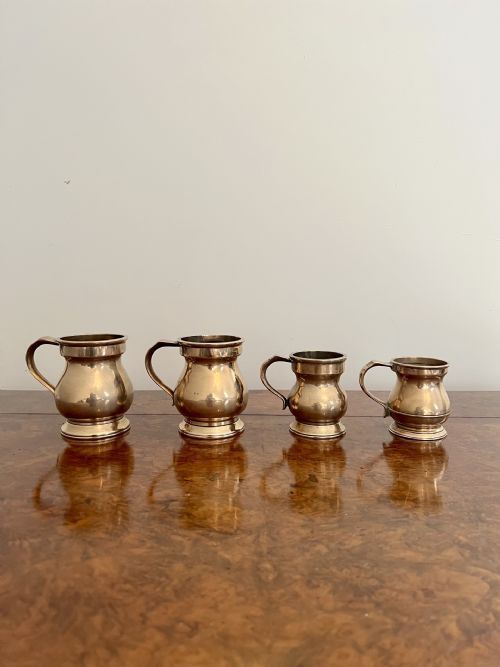
These metal tavern mug examples bring solid drinking vessels from Georgian and Victorian public houses straight into everyday modern settings.
Metal Tavern Mug
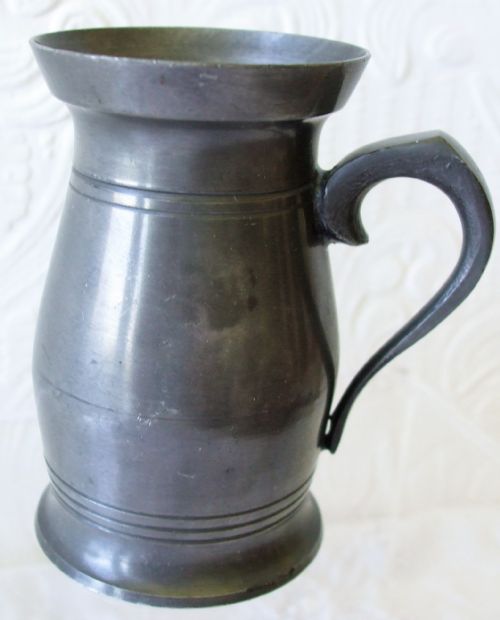
A metal tavern mug is a functional drinking vessel originating from public houses and commercial establishments across the British Isles during the Georgian and Victorian eras. The selection on this page centres primarily on sturdy pewter and copper vessels designed for serving ale and spirits in busy drinking establishments.
Buyers encounter various forms ranging from lidded flagons and imperial half-pint measures to quart jugs and sets of bell-shaped tankards. These drinking vessels often display specific regional characteristics, including Glasgow touchmarks or origins linked to the Scottish market.
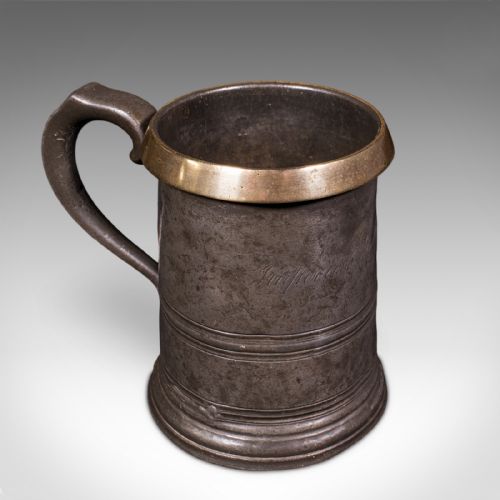
The materials span traditional pewter alongside copper and nickel-plated metalware, reflecting the robust utility required of barware from the eighteenth and nineteenth centuries. Each piece carries the distinct marks of its service in public houses, from capacity stamps to simple makers' marks.
Materials and construction
Pewter dominates the construction of these drinking vessels, utilised for its durability and suitability for shaping into tankards, flagons and measures. Metalworkers cast and soldered these components together, incorporating sturdy handles and often reinforcing rims for heavy daily use.
Copper and nickel-plating appear on specific ale tankards and measures, particularly during the Victorian period, offering an alternative metallic finish to traditional grey pewter. Makers fashioned these vessels into distinct bell shapes and cylindrical jugs, incorporating heavy bases to prevent tipping on tavern tables.
Metal Tavern Mug Retail Price Guide 2026
Typical asking prices for metal tavern mug among the pieces listed under this phrase on Sellingantiques today, from the lower quarter to the upper quarter. They describe what is for sale here now, not the wider market.
Victorian patrons could order their ale knowing exact imperial measures were enforced down to the half-pint.
Assessing quality and character
Quality in a metal tavern mug rests upon the crispness of capacity marks, the integrity of the soldered joints and the overall weight of the metal. Thicker gauge pewter and substantial copper retain their form better over centuries of handling.
The presence of clear regional provenance, such as London casting or Glasgow manufacture, elevates a piece beyond standard utilitarian barware. Complete sets of matching tankards also distinguish certain groups from solitary surviving measures.
The Metal Tavern Mug Glossary
- Flagon
- A large drinking vessel with a lid and handle, often used for serving larger quantities of ale in public houses. These pieces typically feature flat lids and sturdy thumbpieces.
- Measure
- A standardised container used in taverns to ensure accurate dispensing of liquid volumes such as gills, half-pints or quarts. Measures usually bear official verification stamps.
- Tankard
- A tall, cylindrical drinking cup with a single handle, frequently fitted with a hinged lid during earlier periods. Victorian examples often adopt a characteristic bell shape.
- Pewter
- A malleable metal alloy composed primarily of tin, combined with copper, antimony or lead. It serves as the primary material for historic tavern drinking vessels.
- Breweriana
- Collectable items associated with the brewing and serving of beer, including public house tankards and measures. This category encompasses the commercial barware of past centuries.
Metal Tavern Mug: Frequently Asked Questions
What are metal tavern mugs made from?
These drinking vessels are constructed primarily from pewter, alongside copper and nickel-plated metal. Pewter provides a traditional grey finish, while copper offers a warmer metallic tone.
Craftsmen shaped these materials into durable tankards, flagons and measures designed for heavy use in public houses.
How do I date a metal tavern mug?
Dating relies on stylistic clues such as the bell shape of Victorian tankards or the flat lids characteristic of earlier George II flagons. Official capacity marks and touchmarks stamped into the metal also help place pieces within the Georgian or Victorian eras.
Makers' details and regional origins recorded on the vessels further narrow down their production period.
Were these mugs used for daily drinking?
Yes, these vessels served as functional barware in public houses, inns and alehouses for measuring and consuming drinks like ale and spirits. Their robust construction was specifically intended to withstand the rigours of busy tavern environments.
Capacity stamps indicate they met official standards for commercial serving.
How should I clean my tavern mug?
Historic metalware requires gentle cleaning with mild soap and warm water, followed by immediate drying with a soft cloth to protect the surface. Aversive metal polishes or harsh abrasives should be avoided to preserve the historic patina.
Keeping the vessels dry prevents oxidation and maintains the character of the aged metal.