





Metal Spirit Kettle
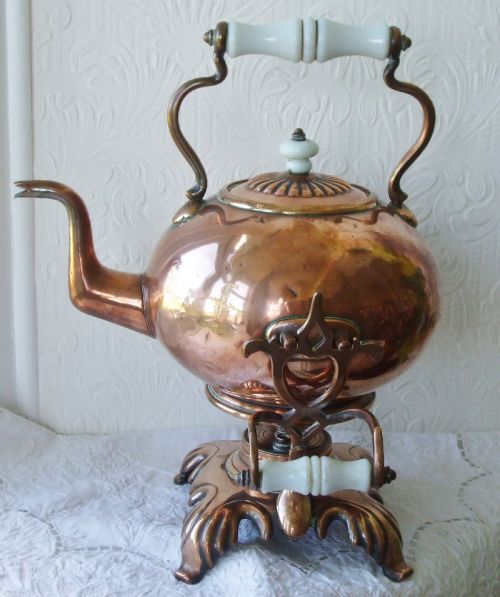
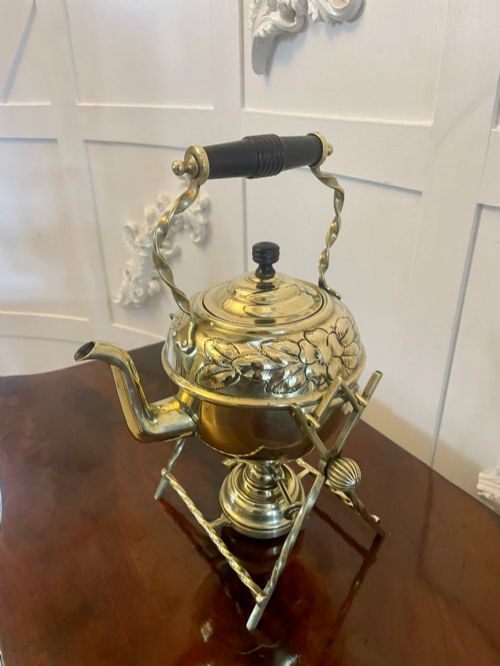
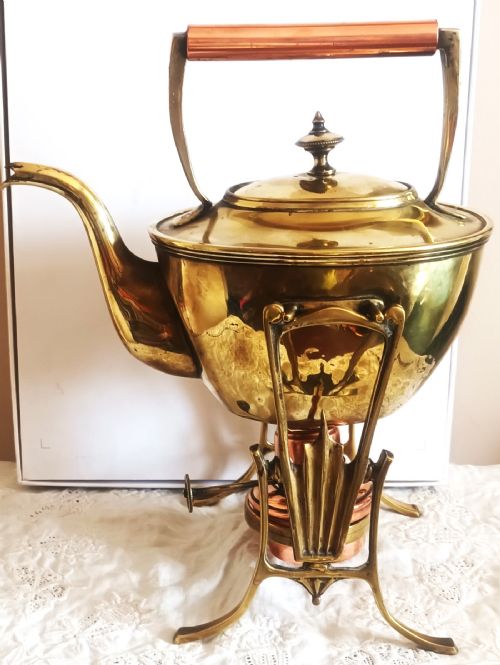
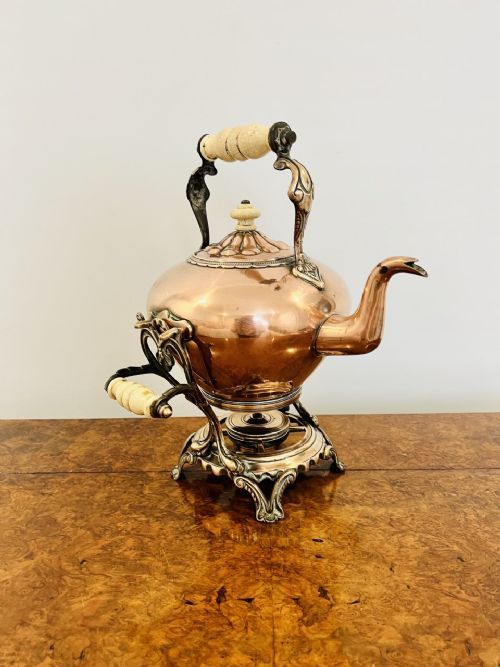
These metal spirit kettle designs are portable hot water heaters raised on stands for the Victorian and Edwardian tea table.
Metal Spirit Kettle
A metal spirit kettle is a tea kettle equipped with its own burner stand designed to keep water hot at the table during the Victorian and Edwardian periods. You will most frequently meet brass and copper examples dating from the nineteenth century up to nineteen twenty.
Most pieces sit upon dedicated stands incorporating spirit burners beneath the vessel. These range from standard Victorian brass or copper designs to Aesthetic Movement and Arts and Crafts iterations.
How they were made
Makers utilised brass and copper as the primary metals for the bodies of these vessels. Workshops combined these materials with handles incorporating wood, ebonised wood, cane, and bone.
Stands and hanging mounts often involved wrought iron alongside the main brass and copper elements. Construction relied on traditional metalworking techniques appropriate to the Victorian and Edwardian eras.
Metal Spirit Kettle Retail Price Guide 2026
Typical asking prices for metal spirit kettle among the pieces listed under this phrase on Sellingantiques today, from the lower quarter to the upper quarter. They describe what is for sale here now, not the wider market.
Listings feature brass and copper predominantly, alongside wood, wrought iron, cane, and bone across the Victorian and Edwardian periods.
What varies in quality
The sophistication of the metalwork separates standard pieces from the finest examples. Elaborate combinations of brass and copper with supportive stands demonstrate superior workshop standards.
The integration of secondary materials such as cane, bone, or ebonised wood in the handles marks the distinction between ordinary vessels and those of higher design ambition.
William Soutter And Sons
The Metal Spirit Kettle Glossary
- Spirit kettle
- A tea kettle mounted on a metal stand with an under-mounted burner fueled by methylated spirit. This setup kept water boiling away from the kitchen hearth.
- Spirit burner
- The small fuel container housed beneath the kettle stand. It held the liquid spirit used to maintain the water temperature at the table.
- Aesthetic Movement
- A late nineteenth century design style prioritising visual qualities over narrative content. Pieces from this period often display refined artistic forms.
- Arts and Crafts
- A design movement valuing visible handcraftsmanship and simple construction. Items from this tradition reject heavy industrial ornamentation in favour of honest materials.
Metal Spirit Kettle: Frequently Asked Questions
What is a metal spirit kettle?
A metal spirit kettle is a portable water heater designed for table use during the Victorian and Edwardian periods. It combines a metal vessel with a matching stand and a small fuel burner.
These pieces allowed hosts to maintain boiling water for tea without returning to the kitchen. They typically appear in brass and copper with various handle materials.
How do you date a metal spirit kettle?
Dating relies on stylistic markers associated with periods like the Victorian era, the Aesthetic Movement, or Arts and Crafts design. Material combinations also offer chronological clues.
Earlier examples from the mid nineteenth century differ in form and metal finish from later Edwardian or nineteen twenty pieces. Examining the handle materials helps establish the era of manufacture.
What materials were used?
Makers constructed the bodies primarily from brass and copper. These metals provided durability and took a high polish suitable for the nineteenth century tea table.
Handles frequently incorporate secondary materials such as wood, ebonised wood, cane, or bone to provide insulation against heat. Stands often utilise wrought iron alongside brass or copper.
How were they used?
They were placed on dining or drawing room tables to supply hot water on demand. The spirit burner underneath kept the contents heated throughout the gathering.
Guests or hosts operated the burner and tilted the kettle on its stand to pour water into teapots. This removed the need for repeated trips to the kitchen range.