

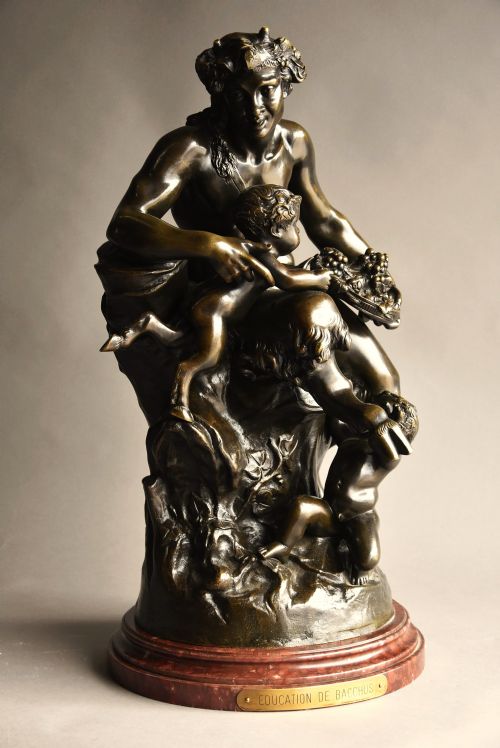
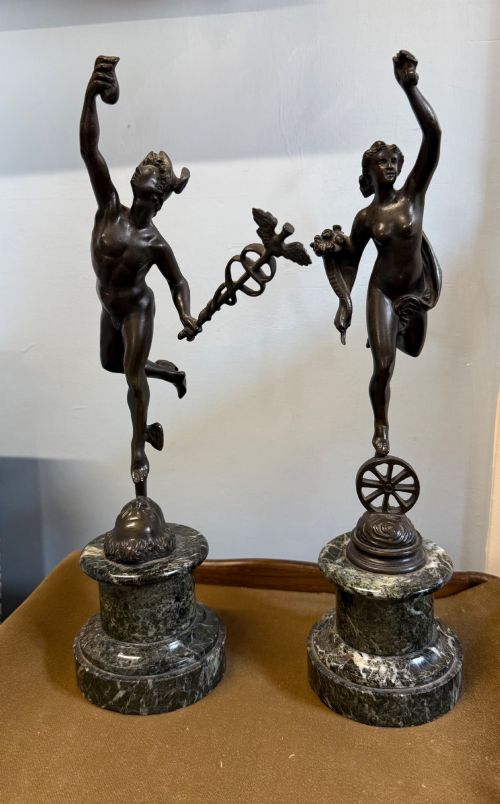
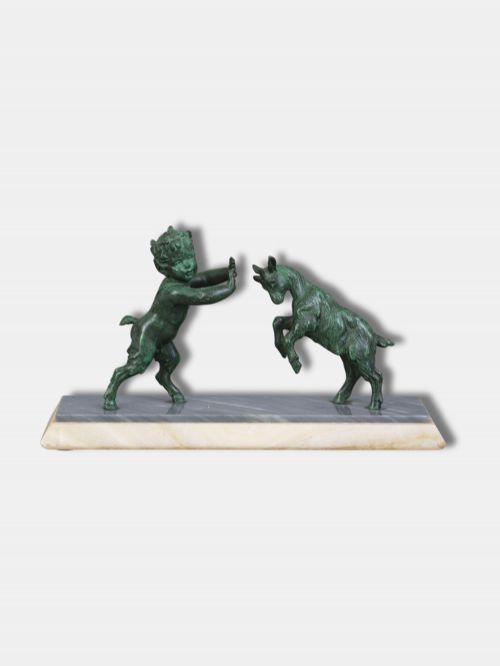
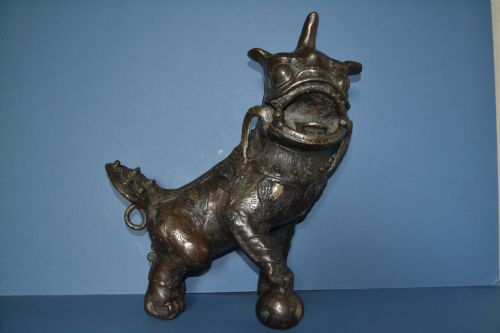


Metal Mythological Statue
These metal mythological statue pieces bring classical deities and creatures directly into your study or drawing room.
Metal Mythological Statue
A metal mythological statue captures figures from classical and traditional lore, ranging from ancient deities to woodland fauns. When you search for a metal mythological statue, you encounter sculptural works that bring legendary narratives into three-dimensional form.
The selections available here lean heavily towards nineteenth-century French workmanship, Victorian classical revival pieces, and Grand Tour souvenirs. You regularly find figures such as satyrs, Diana the huntress, and Narcissus cast in enduring metals.
Many of these figures rest upon fitted marble bases, which elevate the composition and add considerable weight to the piece. Others present as pairs of classical figures or single statuettes designed for tabletop display.
Methods and materials of construction
Spelter and zinc alloy serve as alternative casting materials for figures produced during the Victorian era. These softer metals frequently receive patinated finishes to simulate the appearance of aged bronze.
Metal Mythological Statue Retail Price Guide 2026
Typical asking prices for metal mythological statue among the pieces listed under this phrase on Sellingantiques today, from the lower quarter to the upper quarter. They describe what is for sale here now, not the wider market.
Current listings demonstrate a strong representation of nineteenth-century French foundry work alongside Victorian classical revival pieces.
Distinguishing quality in sculptural casting
Quality reveals itself primarily in the crispness of the chase work and the fidelity of the cast. Finer pieces retain sharp definition in hair, musculature, and drapery without losing the organic flow of the subject.
The choice of base material and the depth of the metal patination also dictate the overall standard of the work. Superior examples demonstrate thoughtful integration between the sculptural figure and its marble plinth.
Claude Michel Clodian·Emile Carlier·Louis Ernest Barrias
The Metal Mythological Statue Glossary
- Patinated bronze
- Bronze that has been chemically treated to alter its surface colour, usually producing rich brown or dark tones. This process protects the metal while enhancing the visual depth of the sculpture.
- Grand Tour
- A cultural journey undertaken by nineteenth-century travellers who collected small bronzes and classical replicas as mementos. These pieces reflect an intense fascination with classical antiquity.
- Spelter
- A zinc alloy commonly utilised as a less expensive alternative to bronze during the nineteenth century. It accepts metallic paints and patinas readily to mimic more costly materials.
- Classical revival
- An artistic movement that revived ancient Greek and Roman aesthetic principles in architecture and sculpture. Works in this style emphasise proportion, mythological themes, and balanced compositions.
Metal Mythological Statue: Frequently Asked Questions
What periods do these statues date from?
The majority of these pieces originate from the nineteenth century, encompassing Victorian interpretations and earlier Grand Tour souvenirs. Makers active during the eighteen-fifties through the early twentieth century produced the bulk of these works.
Specific dates within listings often point to the middle and late nineteenth century, reflecting the era's strong taste for classical revival sculpture.
How do I care for a bronze statue?
Dust the surface regularly with a soft, dry cloth to prevent particulate accumulation. Avoid using chemical polishes, which can strip away the original patinated finish.
Keep the sculpture away from direct sunlight and areas of high humidity to preserve both the metal and any accompanying marble base.
What is the difference between bronze and spelter?
Bronze is a copper alloy prized for its strength, weight, and ability to hold fine detail through casting. Spelter is a softer zinc alloy that offers a lighter alternative often found in nineteenth-century decorative figures.
Under close inspection, bronze feels heavier and colder to the touch than spelter, and it demonstrates superior durability over time.
Where were these mythological figures displayed?
Nineteenth-century collectors typically placed these statuettes upon mantelpieces, library tables, and dedicated pedestals in drawing rooms. Pairs of figures often balanced the arrangement of a mantel garniture.
Smaller pieces served as cabinet specimens or study decorations for scholars of classical literature and history.