




Metal Mantel Vases
Metal mantel vases encompass decorative bronze, brass, and chrome urns designed to sit upon a fireplace.
Metal Mantel Vases
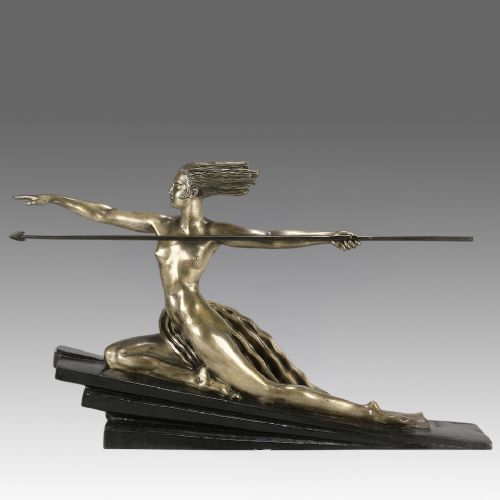
Metal mantel vases encompass a variety of decorative urns, ewers, and cassolettes shaped for display on fireplace ledges. The examples gathered under metal mantel vases span the nineteenth century through the art deco era, featuring forms rooted in classical antiquity.
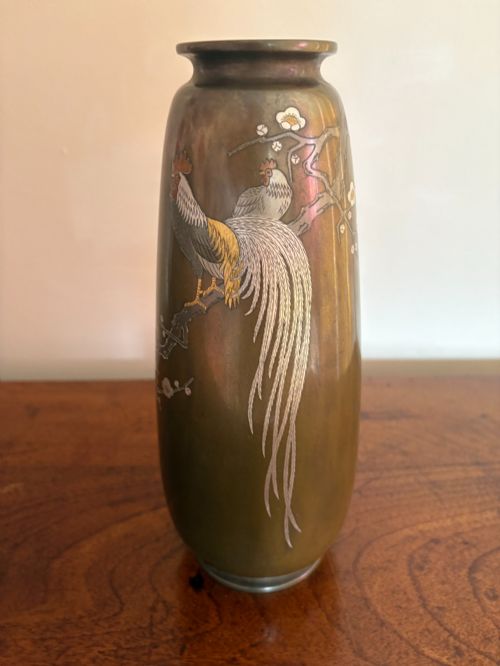
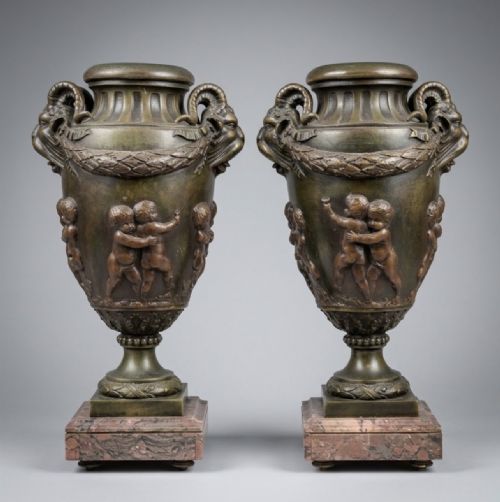
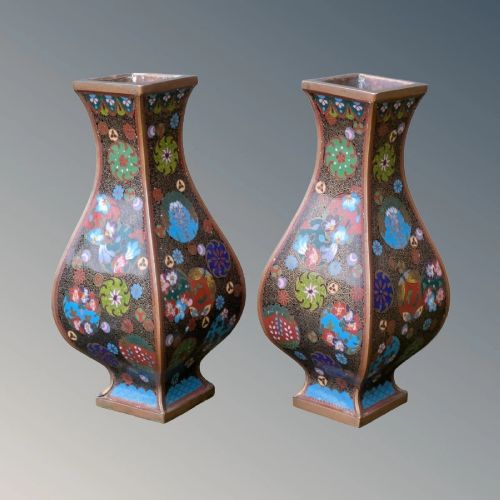
Buyers frequently encounter matched pairs cast in bronze, spelter, or brass, often mounted upon stepped marble plinths. French empire, regency, and neoclassical styles dominate the selection, alongside Japanese bronze and cloisonné pieces from the meiji period.
Many objects serve primarily as decorative ornaments rather than functional vessels for water. Clock garniture sets and lidded campana urns also appear frequently within this grouping.
Materials and Manufacture
Foundries utilised traditional casting methods such as the lost-wax technique for intricate bronze and ormolu figures. Spelter served as a more affordable alternative to bronze, allowing makers to produce large decorative urns with detailed reliefs and patinations.
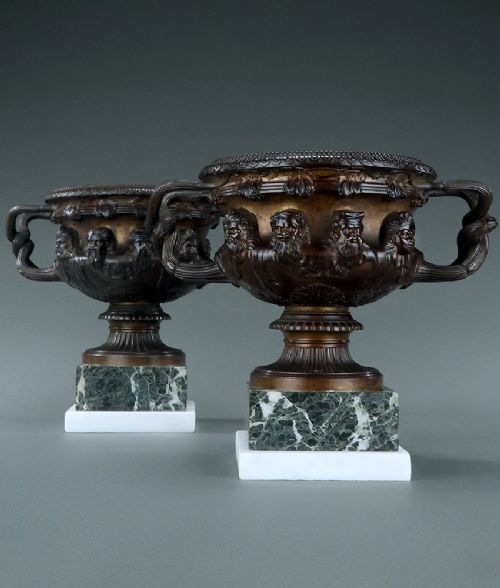
Surface decoration involved chasing, hand engraving, and applying gilt or silver plating to base metals like copper and brass. Marble bases were turned and polished to support heavy metal bodies, sometimes incorporating classical handles and masks.
Metal Mantel Vases Retail Price Guide 2026
Typical asking prices for metal mantel vases among the pieces listed under this phrase on Sellingantiques today, from the lower quarter to the upper quarter. They describe what is for sale here now, not the wider market.
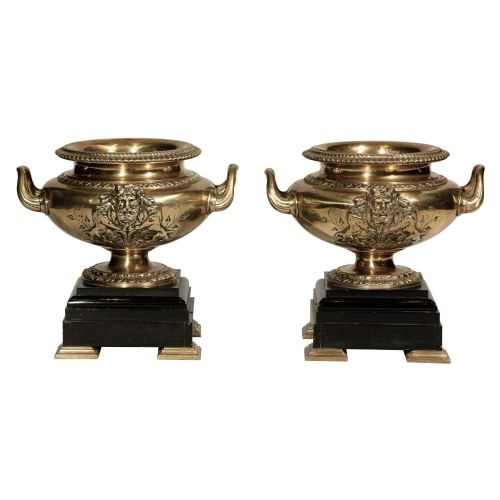
Several nineteenth-century bronze urns wear cheerful bacchic masks and putti.
Gradations in Quality
The precision of the casting distinguishes finer pieces from ordinary production. Sharpness in chased floral decoration, crispness of figural details such as putti and bacchic masks, and clean finishing on bronze and ormolu indicate superior workshop standards.
The integrity of the structural materials influences overall merit. Solid bronze castings with heavy marble plinths command greater attention than lighter spelter alternatives finished with simulated bronze patination.
KANASAWA·BELDRAY LTD·Charles Korschann
The Metal Mantel Vases Glossary
- Campana urn
- An inverted bell-shaped vessel with a flared rim and footed base, frequently cast in bronze for display.
- Ormolu
- Gilt bronze produced by applying a finely ground gold-mercury amalgam to a bronze base, common in french decorative objects.
- Cassolette
- A decorative vase featuring a reversible lid that can function as a burner or seal a container.
- Spelter
- A zinc alloy utilised as a cost-effective substitute for bronze in nineteenth-century decorative castings.
- Grand Tour
- Nineteenth-century travel souvenirs reproducing classical antiquities in bronze, marble, and porphyry for European collectors.
Metal Mantel Vases: Frequently Asked Questions
What is a mantel vase?
A mantel vase is a decorative vessel specifically proportioned to sit on the narrow shelf of a fireplace mantel.
These pieces typically function as ornamental urns or garnitures rather than flower holders.
How do you style metal vases?
Mantel vases look best placed in balanced pairs at either end of a fireplace shelf or framing a central clock.
Their metallic patinas and classical forms complement traditional and art deco interiors alike.
What periods do these pieces span?
The selection covers nineteenth-century neoclassical and regency revivals alongside early twentieth-century art deco designs.
Victorian productions sit alongside Japanese meiji bronzes and French empire styles.
Are spelter and bronze different?
Bronze is a durable copper alloy that takes fine chisel work and rich patination, whereas spelter is a softer zinc-based metal.
Spelter objects were commonly bronzed to imitate solid metal castings.