






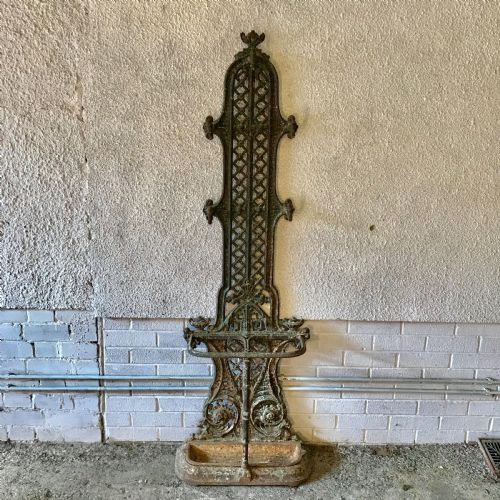
Metal Hallway Furniture
Metal hallway furniture combines sturdy iron, brass and wire mesh to organise entryways with period character.
Metal Hallway Furniture
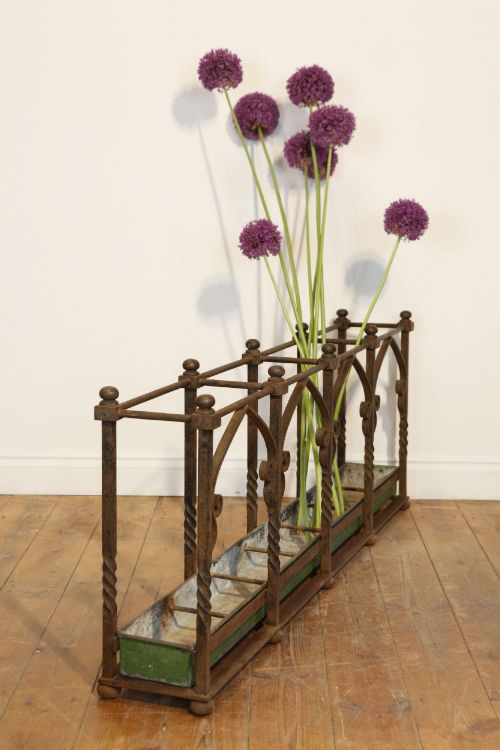
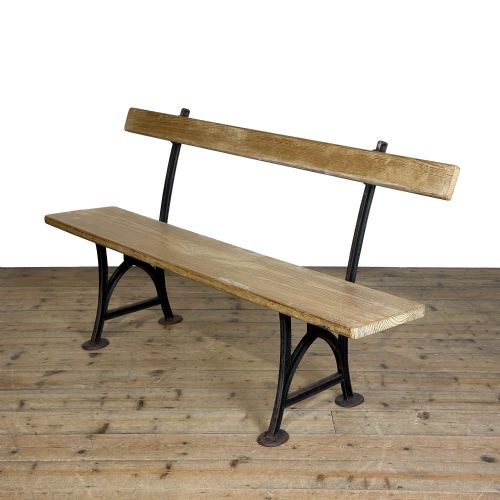
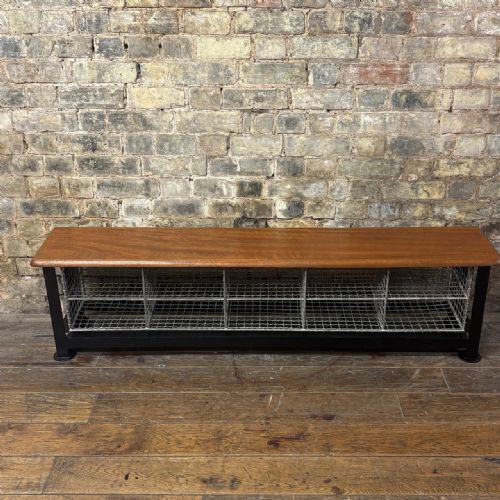
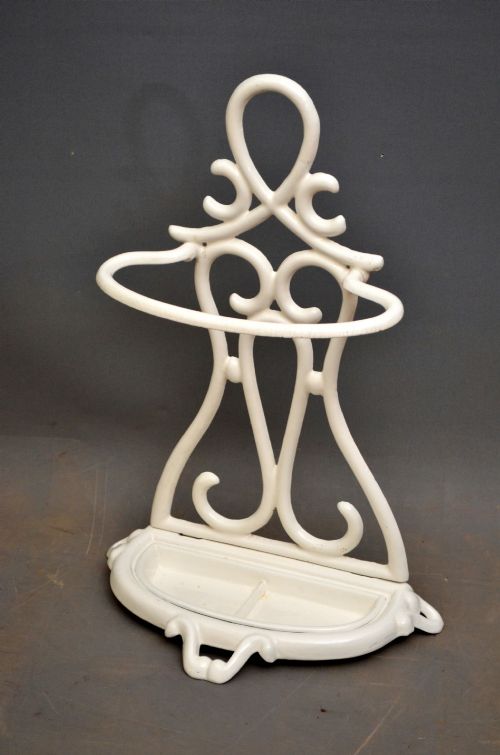
Metal hallway furniture brings practical utility to the entrance of a home through umbrella stands, stick stands, hall stands and benches. These pieces help manage everyday items like walking sticks, umbrellas and shoes in busy corridors.
The pieces appearing on this page span the nineteenth century, the Edwardian era, nineteen-hundred and nineteen-thirty. Styles range from Victorian Gothic Revival and Aesthetic Movement to French Art Nouveau and mid-century industrial.
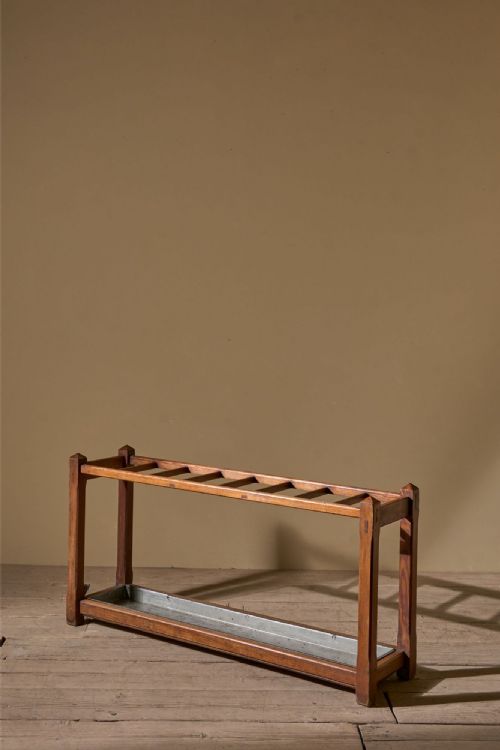
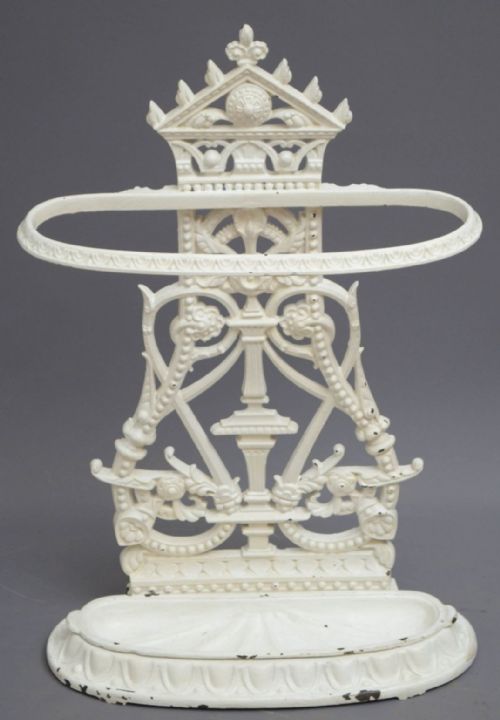
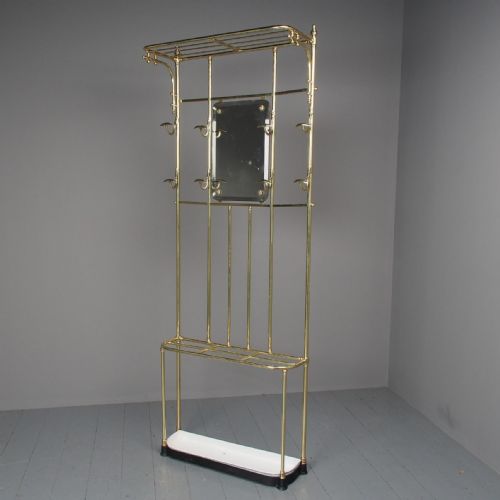
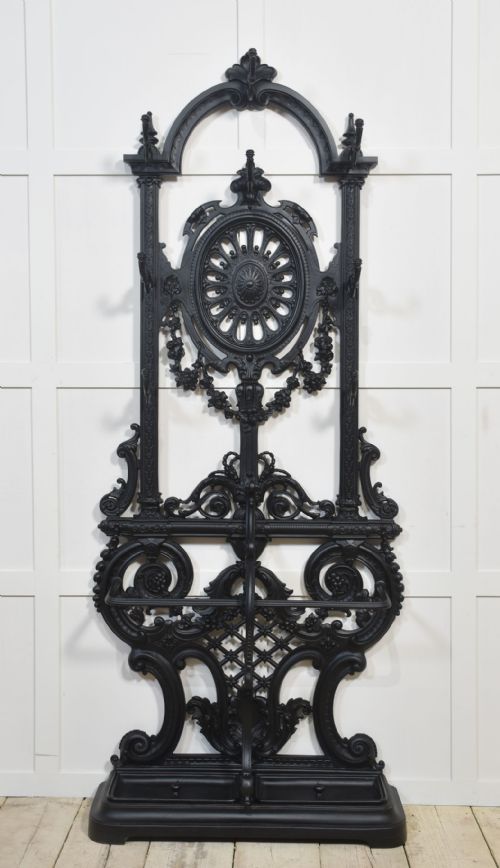
Umbrella stands and stick stands form the most common type encountered here, often cast in iron or formed from brass. Larger hallway benches and combination hall stands also appear to anchor the space.
Materials and Making
Foundries shaped heavy cast iron and brass into intricate frames for umbrella stands and hall stands, sometimes utilising wire mesh and zinc for drip trays and compartments. These rigid metals provided the necessary weight to support heavy walking sticks and wet umbrellas without tipping.
Makers combined metal components with timber elements like pine and hardwood, particularly on shoe benches and composite hall stands. Finishes included white enamel coatings and faux bamboo mouldings to replicate natural textures.
Metal Hallway Furniture Retail Price Guide 2026
Typical asking prices for metal hallway furniture among the pieces listed under this phrase on Sellingantiques today, from the lower quarter to the upper quarter. They describe what is for sale here now, not the wider market.
Listings feature periods from the nineteenth century up to nineteen-thirty, using cast iron, brass, wire mesh, zinc, pine and hardwood.
Assessing Quality
Quality rests on the crispness of the casting and the structural integrity of the frame. Foundry work with sharp detail and clean relief lines marks the better examples.
Material combination also distinguishes the pieces, where heavy cast iron and solid brass outlast lighter alternatives. The presence of original drip trays and sound secondary timbers like pine or hardwood indicates a well-preserved piece.
Coalbrookdale·Falkirk Foundry
The Metal Hallway Furniture Glossary
- Cast Iron
- A hard, relatively brittle alloy of iron and carbon that can be cast in a mould. Foundries used it extensively for umbrella stands and hall furniture because of its heavy weight and durability.
- Drip Tray
- A shallow metal basin placed at the base of stick and umbrella stands to catch moisture. These pans protect hallway floors from water running off wet items.
- Faux Bamboo
- A decorative finish where wood or metal is carved and painted to resemble bamboo stalks. This style gained popularity during the Victorian period due to a fascination with Asian design.
- Hall Stand
- A composite piece of hallway furniture combining a mirror, coat hooks, glove boxes and a stick stand. They served as central organisational hubs in period homes.
Metal Hallway Furniture: Frequently Asked Questions
What is metal hallway furniture used for?
These pieces provide dedicated storage for umbrellas, walking sticks, coats and footwear in entranceways. They keep hallways tidy while adding distinct historical character to the space.
Items range from tall umbrella stands to wide shoe benches, catering to different corridor layouts and storage needs.
How do I clean a cast iron stand?
Dust the surface regularly with a soft dry cloth to remove dirt and debris. Avoid harsh chemical cleaners that might strip historical finishes or protective coatings.
If the metal requires deeper cleaning, use a light coat of wax or specialised metal care products suited to period pieces.
Are these pieces heavy?
Many items utilise solid cast iron and thick brass, giving them substantial weight to prevent tipping when holding heavy walking poles. This mass makes them stable in high-traffic hallways.
Smaller items or those incorporating pine and hardwood are lighter and easier to reposition within your home.
How do I date a piece?
Examine the stylistic cues, such as Gothic Revival motifs or Art Nouveau curves, which align with specific eras like the nineteenth century or nineteen-hundred. Construction methods and material choices also help narrow down the period of manufacture.
Foundry marks or maker stamps can sometimes provide a precise point of origin.