


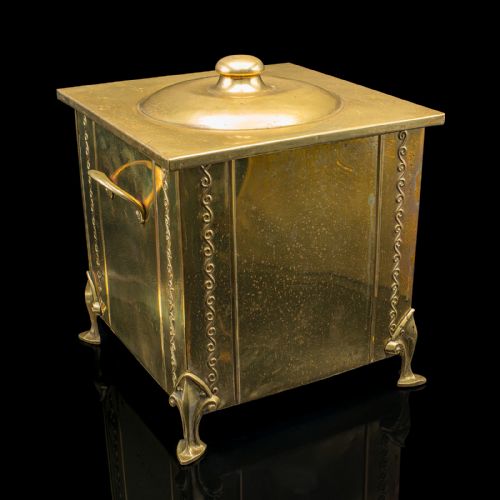


Metal Fuel Bucket
These metal fuel bucket examples bring hearthside utility into daily use with enduring nineteenth-century character and robust traditional construction.
Metal Fuel Bucket
A metal fuel bucket serves as a fireside receptacle for logs, coal, or grain, combining practical domestic storage with decorative presence. These pieces emerge from the nineteenth century, including Victorian, Art Nouveau, and Arts and Crafts periods.
Buyers most frequently encounter copper and brass buckets showing riveted construction, alongside occasional lidded variants. French and English origins appear across the current inventory.
How they were made
Copper and brass form the primary sheet metals utilised for these vessels, frequently shaped with hand-hammered surfaces and joined by visible rivets. Artisans forged handles and fixings from iron and wrought iron to provide structural strength for heavy loads of fuel.
Wood occasionally appears in handles or structural reinforcement, complementing the metal bodies. Construction methods rely on traditional metalworking techniques such as riveting and seaming rather than modern industrial welding.
Some nineteenth-century grain measures found a second life by the hearth, trading oats for coal with quiet dignity.
What varies in quality
Quality rests upon the weight of the metal and the integrity of the riveting, where heavier gauge copper and brass distinguish superior examples. Substantial thickness prevents denting and ensures the vessel withstands the physical demands of daily fireside use.
Design detail separates standard utilitarian containers from pieces displaying deliberate artistic intent, such as Art Nouveau motifs or Arts and Crafts hand-working. The execution of handles, lids, and rim strengthening reveals the maker's level of skill.
Petrus Ramus
The Metal Fuel Bucket Glossary
- Coal scuttle
- A container designed specifically for holding and carrying coal to a fireplace, often featuring a shovel scoop or a pivoted handle. These vessels typically include a sloping mouth or a hinged lid for easy access.
- Art Nouveau
- A decorative style popular in the late nineteenth century characterised by flowing, organic lines and plant-inspired motifs. Metal fuel buckets in this style display fluid ornamentation rather than rigid geometric patterns.
- Arts and Crafts
- A design movement valuing traditional craftsmanship and visible construction methods over machine production. Pieces from this tradition show hand-hammered textures and honest joinery.
- Riveted
- Joined together using metal pins hammered flat to secure overlapping sheets. This method provides both mechanical strength and a distinct industrial aesthetic.
Metal Fuel Bucket: Frequently Asked Questions
What are metal fuel buckets made of?
These vessels are constructed primarily from copper and brass, often paired with iron or wrought iron for handles and fixings. Wood occasionally appears in structural elements.
Material thickness varies significantly between utilitarian items and more decorative pieces.
How do I date a metal fuel bucket?
Dating relies on stylistic indicators such as Art Nouveau or Arts and Crafts motifs, alongside manufacturing evidence like hand-riveting. Nineteenth-century examples typically exhibit heavy gauge metal and traditional hand-working techniques.
Comparative analysis of forms like grain measures and lidded log bins helps narrow the period of origin.
Can I use these for logs?
These containers suit holding and storing logs or coal beside an active hearth. Their robust metal construction accommodates the weight of solid fuel.
Lined interiors or careful placement protect the original metal surfaces from excessive moisture or impact damage.
What is the difference between a coal box and a scuttle?
A coal box generally presents a formal lidded box shape for discrete fuel storage in a room. A scuttle is typically open-mouthed with a hinged handle designed for carrying fuel from a cellar or outside store.
Both serve hearthside functions but differ in their method of access and display.