



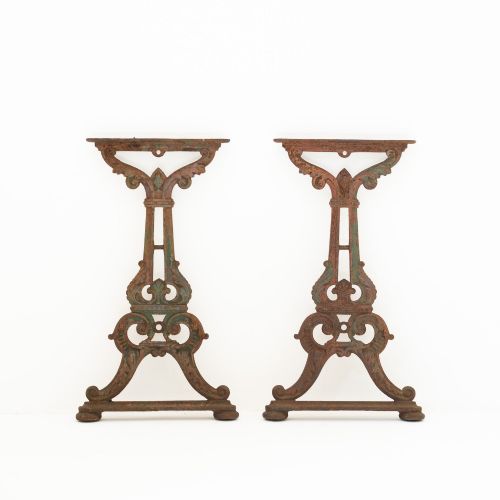


Metal Frame Table
A metal frame table offers sturdy industrial or sleek modernist lines, bringing a utilitarian skeleton into domestic spaces with genuine architectural presence.
Metal Frame Table
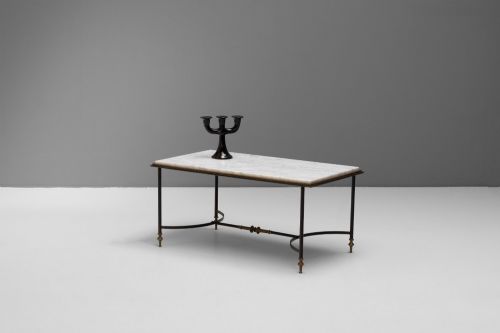
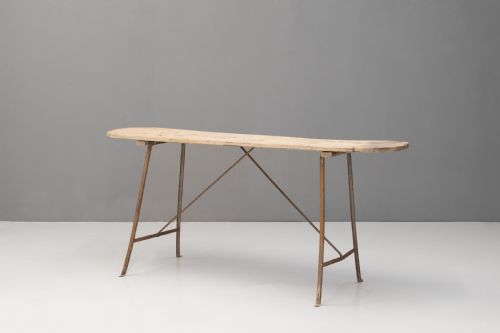
A metal frame table combines a robust metallic structure with surfaces of glass, marble, wood, or zinc to create durable surfaces for living and dining spaces. You will encounter forms ranging from low coffee tables and console tables to side tables and garden pieces.
The selection on this page spans several decades, with significant representation from the Victorian period through to 1930s modernist designs. Art Deco, Arts and Crafts, and French 19th-century styles appear frequently alongside rustic farmhouse and neoclassical influences.
Makers and designers working across these eras utilised iron, brass, chrome, and bronze to construct the foundational supports. These structures frequently incorporate decorative elements such as cast iron bases, wrought iron scrolls, and gilt bronze highlights.
Construction and materials
Makers built these frames using traditional metalworking techniques such as casting iron, forging wrought iron, and shaping brass or chrome tubing. Structural integrity relied on precise joints, riveting, and welding to support heavy top surfaces like marble or thick glass.
Surface finishes vary according to the period, including polished chrome for 1930s modernist pieces, patinated bronze, and painted or lacquered iron. Wood, zinc, and marble inserts were secured directly into the metallic skeletal mounts to complete the surface.
Metal Frame Table Retail Price Guide 2026
Typical asking prices for metal frame table among the pieces listed under this phrase on Sellingantiques today, from the lower quarter to the upper quarter. They describe what is for sale here now, not the wider market.
Listings include materials such as wrought iron, brass, chrome, and marble across styles from the Victorian era to the 1950s.
Assessing quality and craftsmanship
Quality rests in the heaviness and rigidity of the frame, the purity of the metal casting, and the harmonious integration of the top surface. Superior examples demonstrate crisp casting details in brass or iron and seamless joints that withstand structural stress without wobble.
The choice of top material also defines the tier of the piece, with solid marble or thick bevelled glass elevating a utilitarian frame into a statement of refined interior design. Original patination and untouched finishes command greater appreciation than later repainting or mismatched restorations.
Louis Auguste Moreau·Peter Ghyczy·Blangy
The Metal Frame Table Glossary
- Wrought iron
- Iron that is heated and worked with tools rather than cast in a mould. This material yields fibrous, strong frames often finished with scrollwork.
- Cast iron
- Molten iron poured into a sand or metal mould to shape intricate bases and structural supports. It provides substantial weight and rigidity.
- Champlevé
- An enamelling technique where troughs are carved into a metal surface and filled with vitreous enamel before firing. It appears on decorative metal mounts and frames.
- Chrome
- Chromium plating applied over base metals to create a bright, reflective, corrosion-resistant finish. This treatment defines the sleek aesthetic of 1930s design.
- Console table
- A table designed to stand against a wall, frequently featuring a narrow top and ornate legs or wall brackets. These often accompany matching mirrors.
Metal Frame Table: Frequently Asked Questions
What is a metal frame table?
A metal frame table is a piece of furniture built around a skeletal structure of iron, brass, chrome, or bronze, paired with surfaces of wood, glass, or marble. These tables range from utilitarian Victorian cast iron bases to sleek 1930s chrome designs.
They offer exceptional durability and a distinct architectural profile that suits both contemporary and traditional interiors.
How do I clean a metal frame table?
Cleaning depends entirely on the specific metal and surface finish of your table. Wrought and cast iron generally require gentle dusting and occasional light waxing to prevent oxidation.
Chromed or brass surfaces benefit from soft cloths and non-abrasive cleaners formulated specifically for metal to preserve their original shine without scratching.
Are these tables suitable for outdoor use?
Certain variations, particularly those constructed from zinc, wrought iron, or galvanized metals, were designed specifically for garden and exterior environments. You should check the specific material composition before leaving any table exposed to permanent weather.
Indoor pieces featuring polished chrome, delicate brass, or wooden inserts are best kept within climate-controlled rooms to prevent moisture damage.
How do I date a metal frame table?
Dating relies on observing the manufacturing techniques, materials, and stylistic cues present in the frame and top. Victorian and 19th-century examples often display heavy cast iron or ornate brass work, while 1930s pieces favour streamlined chrome and minimalist geometry.
Maker signatures, patent stamps, and associated design movements further narrow down the exact period of production.