



Metal Flower Container
These metal flower container examples bring tactile weight and honest craft to botanical displays, ranging from hammered copper to cast bronze.
Metal Flower Container
A metal flower container serves to house interior greenery or cut stems, taking forms such as jardinieres, planters, buckets, and decorative boxes. These items stem from periods spanning the seventeenth century through to the early twentieth century, incorporating rustic farmhouse utilities alongside formal decorative arts.
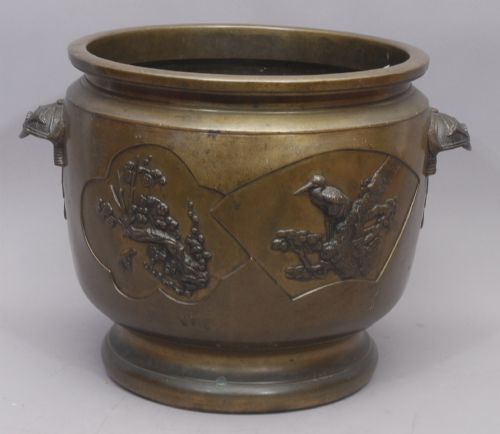
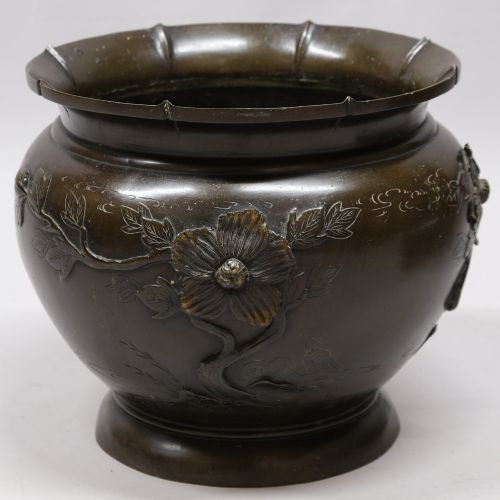
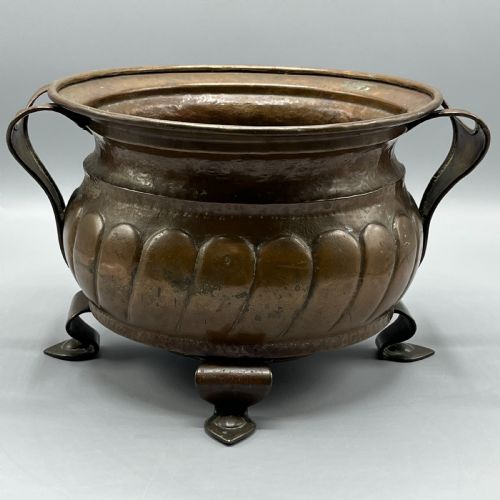
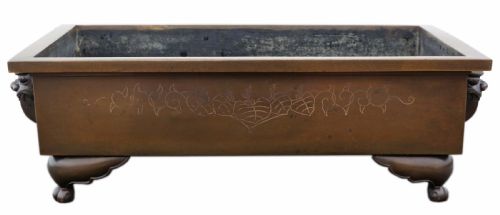
The selections encountered here most frequently include Arts and Crafts copper vessels and Art Nouveau brass planters, often fitted with handles or lion masks. Alongside these, buyers encounter Japanese bronze jardinieres and utilitarian enamel pails.
Originating across Britain, Europe, and Japan, these pieces reflect both domestic interior fashions and horticultural trends of their respective decades. Each vessel demonstrates the utilitarian requirements of holding soil and water combined with the aesthetic standards of its period style.
How they were made
Metals such as copper, brass, bronze, lead, and zinc form the primary bodies of these pieces, shaped through hammering, casting, and joining. Artisans utilised sheet copper and brass for Arts and Crafts and Art Nouveau items, often leaving hand-hammered marks upon the surface.
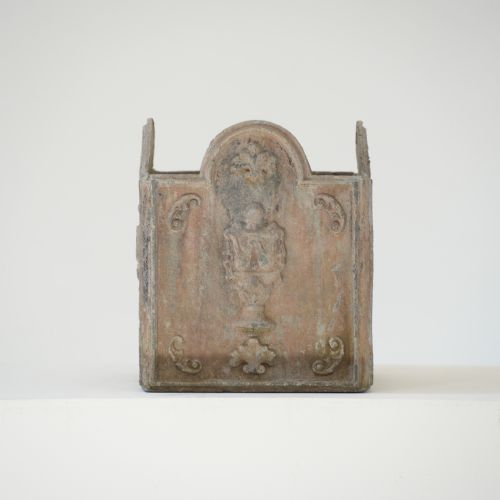
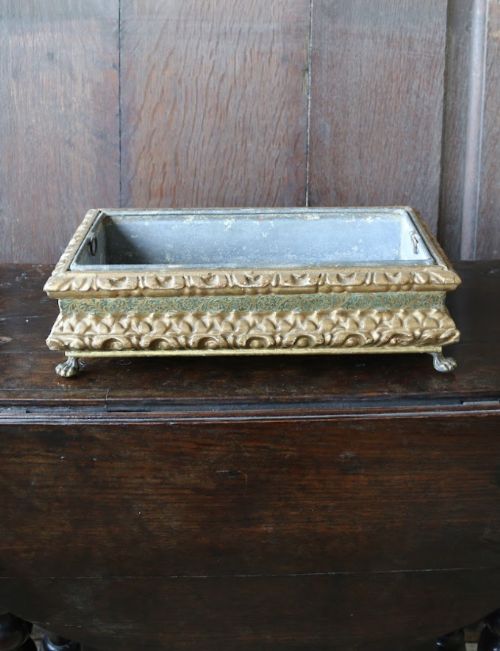
Cast techniques appear in heavier bronze jardinieres and lead planters, while iron and steel form the core of enamelled pails. Wood appears in carved gilt examples, and gold leaf enhances select decorative boxes from earlier centuries.
Metal Flower Container Retail Price Guide 2026
Typical asking prices for metal flower container among the pieces listed under this phrase on Sellingantiques today, from the lower quarter to the upper quarter. They describe what is for sale here now, not the wider market.
Materials represented across the selection include copper, brass, bronze, zinc, lead, gold leaf, and enamel.
What varies in quality
The standard of a metal flower container rests upon the integrity of its construction and the directness of its hand-finishing. Heavy-gauge metal bodies maintain their structural rigidity better over time than thin sheets, resisting dents and distortion from damp soil.
Artisanal detail distinguishes finer examples, visible in crisp casting definition on bronze or brass handles, well-executed hand-beating on copper surfaces, and the harmonious integration of decorative motifs like lion masks.
J Sankey and Sons
The Metal Flower Container Glossary
- Jardiniere
- An ornamental pot or stand for holding plants or flowers. These vessels are typically manufactured from ceramic or metal.
- Ikebana
- The Japanese art of flower arrangement. Vessels designed for this practice emphasise line, form, and minimalism.
- Arts and Crafts
- A design movement championing traditional craftsmanship and honest materials. It emerged in Britain during the late nineteenth century.
- Art Nouveau
- An international style of art and architecture characterised by fluid, organic lines. It flourished between the late nineteenth century and the First World War.
Metal Flower Container: Frequently Asked Questions
What is a jardiniere?
A jardiniere is an ornamental container designed to hold potted plants or cut flowers indoors. They typically sit upon tables or plant stands rather than being planted directly.
Historically, these vessels allowed homeowners to display greenery within living spaces while protecting surfaces from moisture.
How do I care for copper planters?
Copper planters benefit from gentle cleaning with warm soapy water to remove dirt without stripping the natural patina. Avoid abrasive scouring pads that scratch the metallic surface.
Using a plastic liner inside the metal container prevents prolonged contact with damp soil and moisture, which protects the metal from excessive corrosion.
Where were Japanese bronze jardinieres used?
Japanese bronze jardinieres and suiban served both domestic interiors and specialised flower arrangement displays. Their weight and durability suited them for holding water and heavy stems.
Exported examples often found places in European and British drawing rooms during the late nineteenth and early twentieth centuries.