




Metal Fireside Container
A metal fireside container gathers fuel neatly by the hearth, combining practical utility with period craftsmanship.
Metal Fireside Container
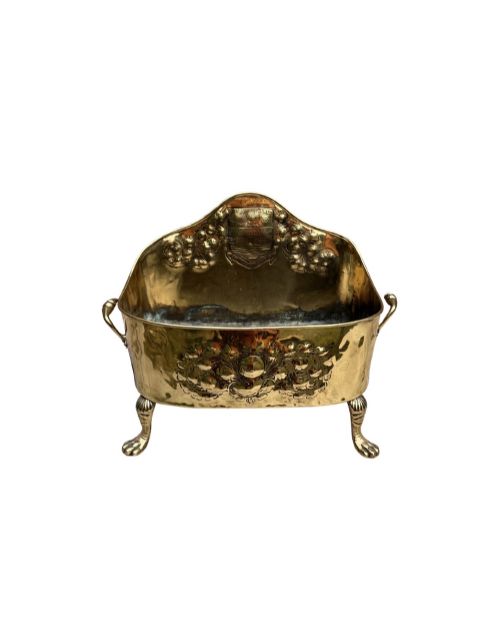
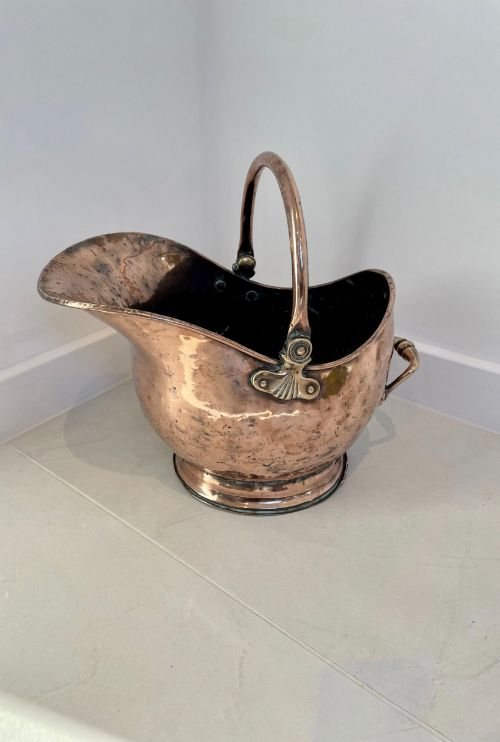
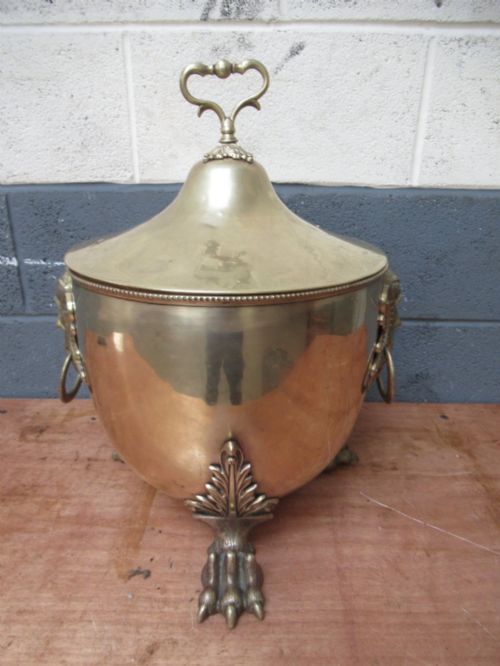
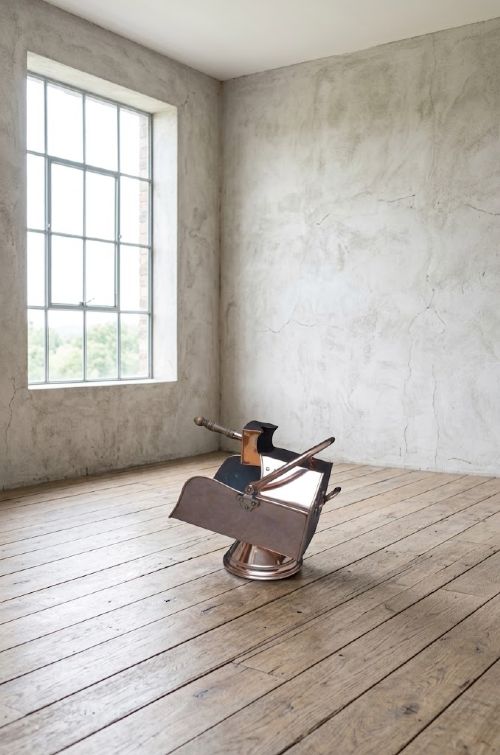
A metal fireside container serves to hold coal, logs, or kindling near a fireplace while adding character to a room. Buyers searching for a metal fireside container encounter various forms, including coal scuttles, buckets, bins, and hods designed for daily hearth maintenance.
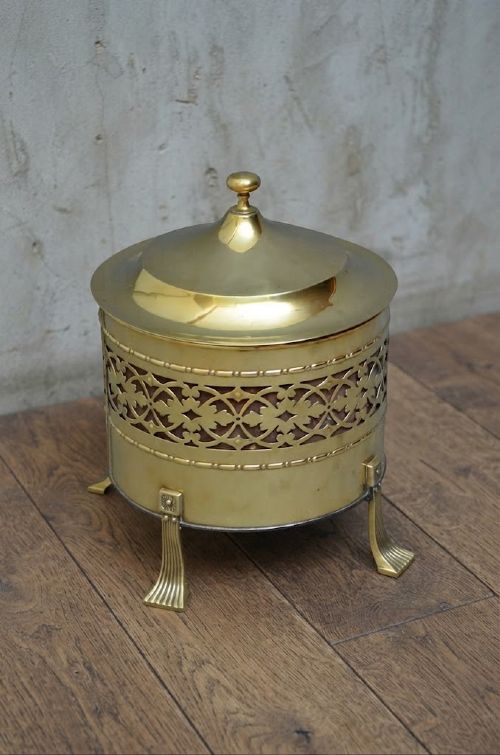
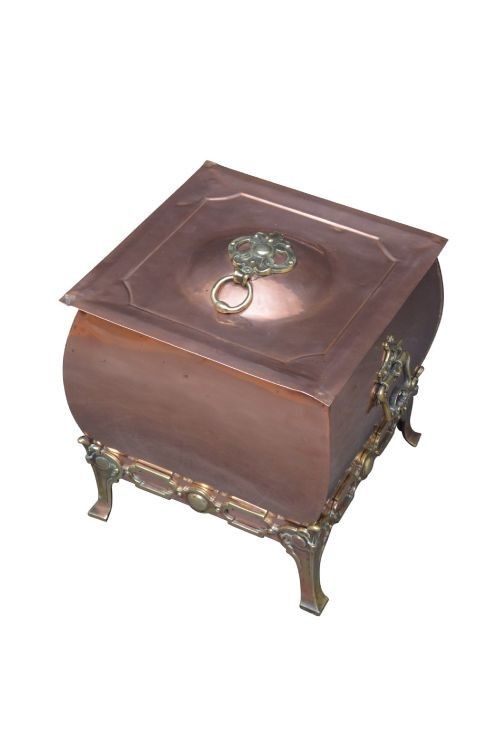
The pieces on this page span the nineteenth century through to the nineteen-thirties, taking shapes such as the classic helmet design or cylindrical log bins. Materials range from solid brass and copper to wrought iron, sometimes paired with oak or toleware.
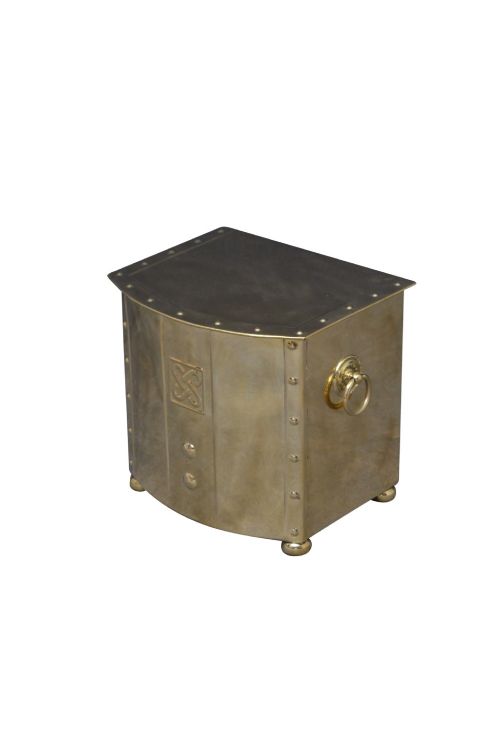
Makers and workshops of the Victorian, Edwardian, and Arts and Crafts periods produced these items with distinct stylistic flourishes like repoussé work, fretwork, and riveted seams. Many double as planters or decorative storage when not actively holding fuel.
Materials and construction
Craftsmen shaped sheet copper and brass by hand or through early industrial pressing, joining seams with visible rivets or soldering. Handles often incorporate wrought iron, turned wood, or swing-bail fixings to bear the heavy weight of coal.
Some examples utilise coopered oak staves bound with metal hoops, bridging the gap between woodworking and metalworking traditions. Surface treatments include beaten textures characteristic of the Arts and Crafts movement and polished finishes popular in Victorian parlours.
Metal Fireside Container Retail Price Guide 2026
Typical asking prices for metal fireside container among the pieces listed under this phrase on Sellingantiques today, from the lower quarter to the upper quarter. They describe what is for sale here now, not the wider market.
Some copper coal scuttles survived generations of hearth duty only to find peaceful retirement holding ferns in sunny bay windows.
Judging quality
Quality rests on gauge thickness and structural integrity, where heavy-gauge metals resist denting and warping from loaded fuel. Superior pieces display crisp detailing on embossed motifs, secure riveting, and original handles rather than later replacements.
The presence of matching shovels, liners, or maker stamps elevates a vessel's standing among collectors. Design ambition also plays a role, moving from plain utilitarian bins to sculptural Art Nouveau or Arts and Crafts creations.
Henry Loveridge·Petrus Ramus
The Metal Fireside Container Glossary
- Coal scuttle
- A container for holding coal, typically featuring a wide mouth and a hinged handle for easy pouring into the grate. Many take a helmet shape with a flat base.
- Repoussé
- A metalworking technique where the artisan hammers the design from the reverse side to form a raised pattern on the front. This method appears frequently on Arts and Crafts vessels.
- Coopered
- Constructed from wooden staves fitted together side by side and bound by metal hoops, similar to barrel making. This technique creates sturdy cylindrical fuel buckets.
- Toleware
- Lacquered or enamelled metalware, often decorated with painted scenes or gilt trim. It adds colour and a refined finish to fireside accessories.
- Helmet shape
- A profile featuring a sloping rim and a stepped back, resembling a traditional headpiece. This form allows fuel to be tipped out smoothly.
Metal Fireside Container: Frequently Asked Questions
What is a metal fireside container used for?
These vessels store coal, wood, or kindling neatly beside the hearth for easy access during fireside tending.
They keep fuel contained and tidy while serving as decorative objects in living spaces.
How do I clean an antique copper bucket?
Dust the surface gently with a soft cloth to remove everyday particles without disturbing the aged patina.
Avoid harsh chemical abrasives unless the metal has lost its original character and requires careful polishing.
Can I use these containers as indoor planters?
Many people repurpose coal buckets and bins to hold potted houseplants or dried floral arrangements.
Using a waterproof liner inside protects the historic metal from moisture and soil damage.
How do I tell Victorian pieces from Edwardian ones?
Victorian examples often favour heavy ornamentation, dark patination, and robust riveted construction for coal storage.
Edwardian designs tend to be lighter in feel, sometimes incorporating fretwork or brighter brass finishes suited to changing domestic tastes.