
Metal Fireplace Bucket
A metal fireplace bucket holds fuel beside a hearth, bringing utility and polished warmth to a room.
Metal Fireplace Bucket
When you search for a metal fireplace bucket, you look at vessels designed to store coal, logs, or kindling near the hearth. The examples on this page span the Victorian, Edwardian, and Georgian periods, alongside Arts and Crafts and Art Nouveau designs.
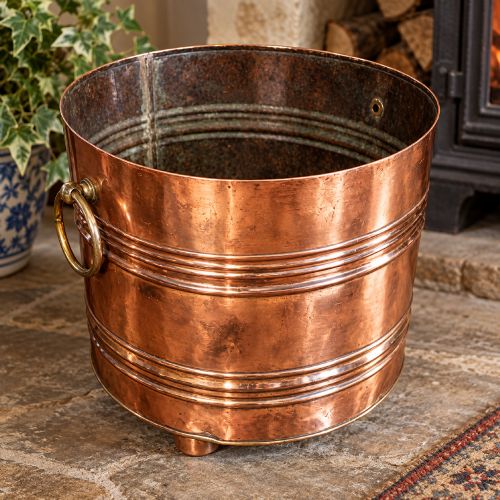
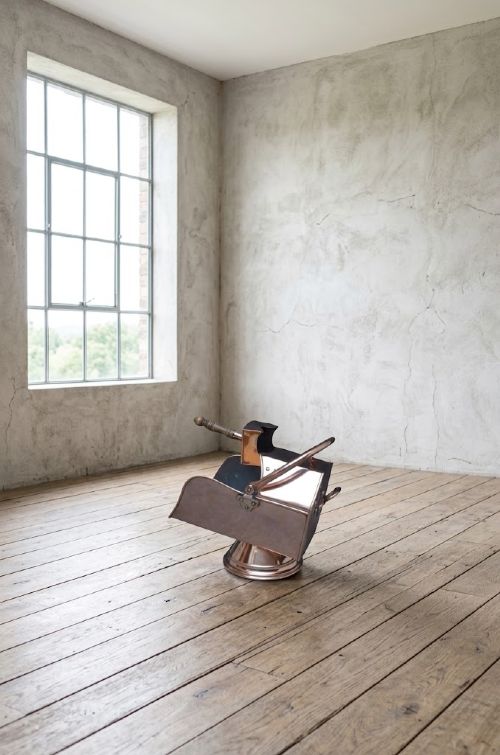
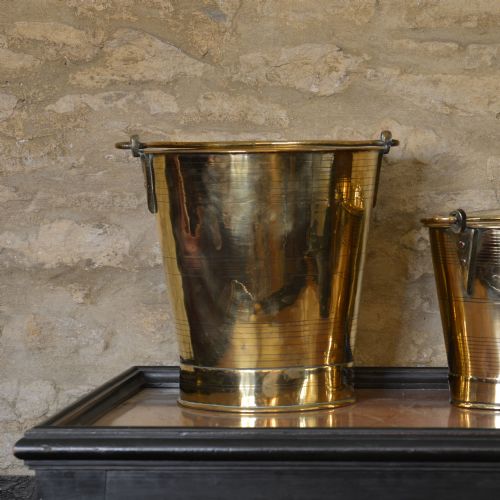
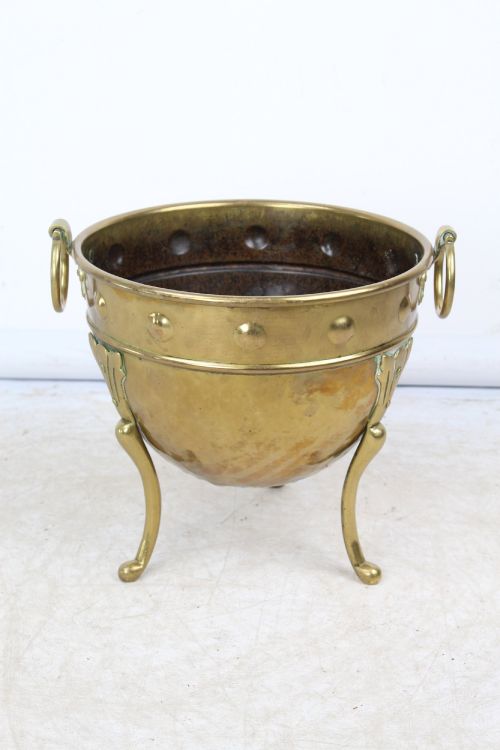
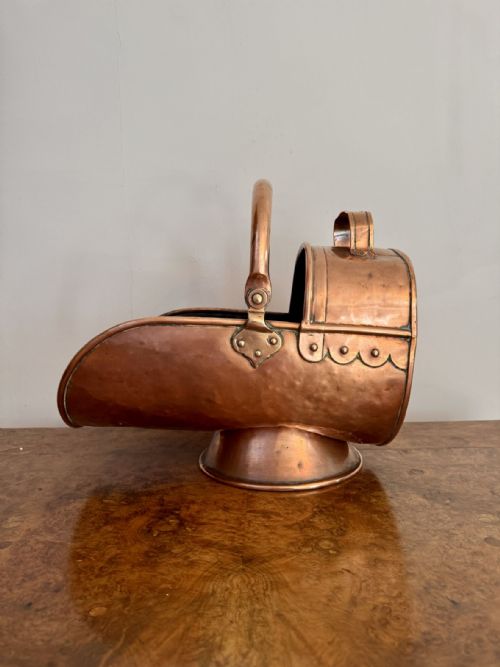
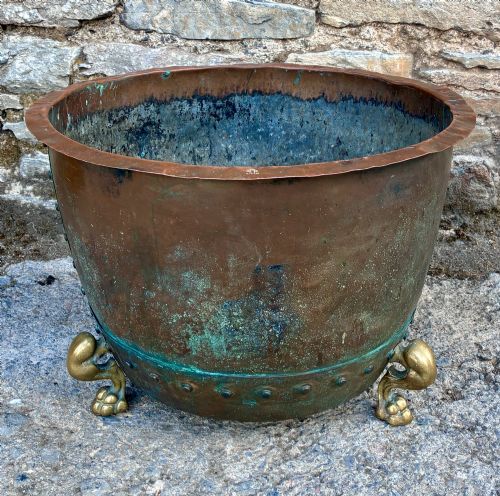
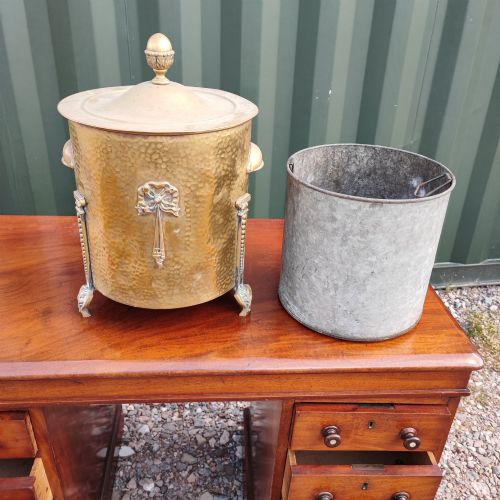
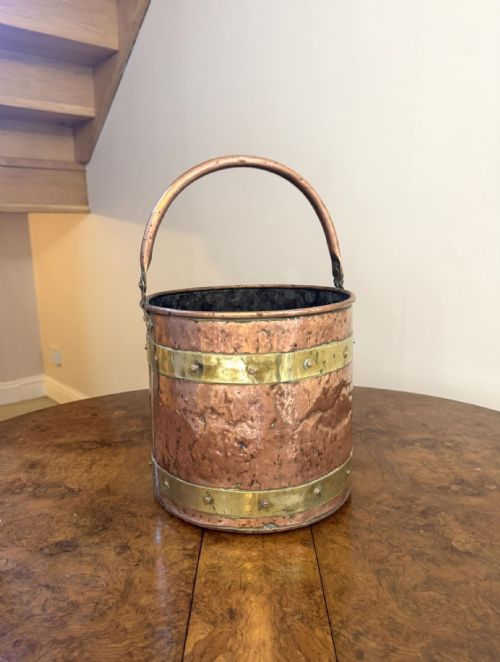
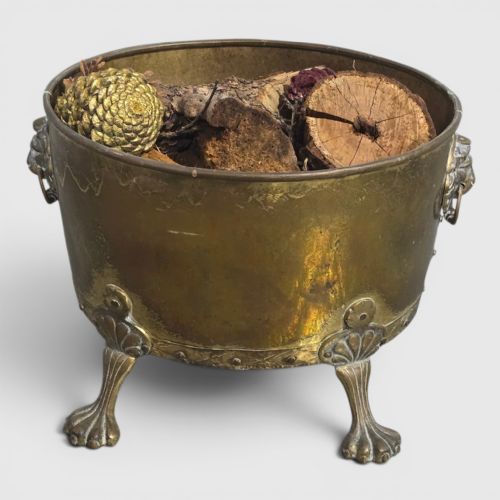
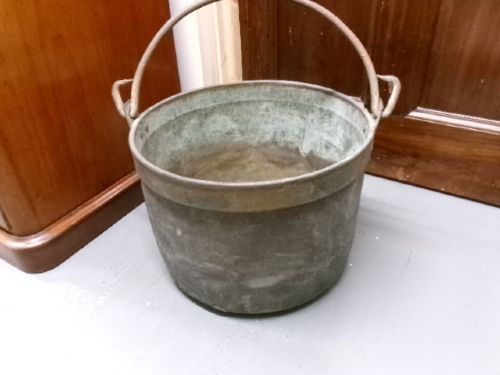
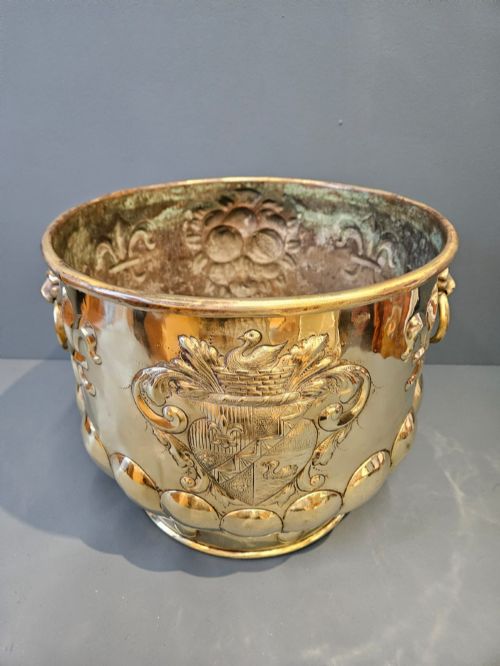
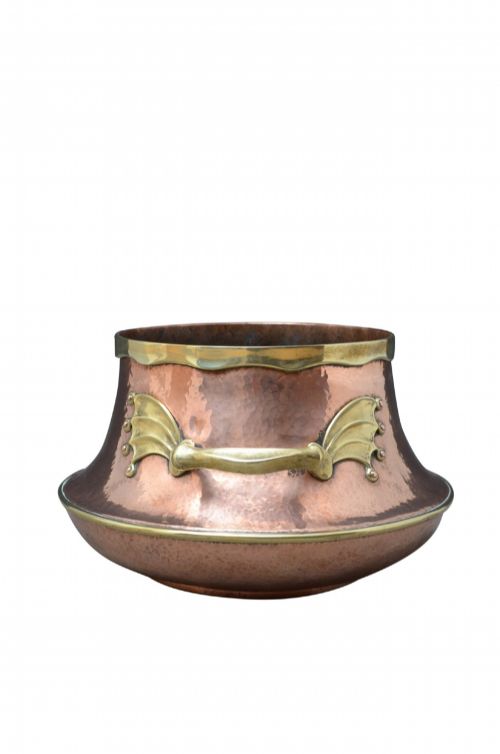
The most common versions met here are made of brass or copper, taking the form of cylindrical log bins, helmet scuttles, or swung-handled cauldrons. Makers often added wrought iron handles, brass banding, or embossed detailing to finish the pieces.
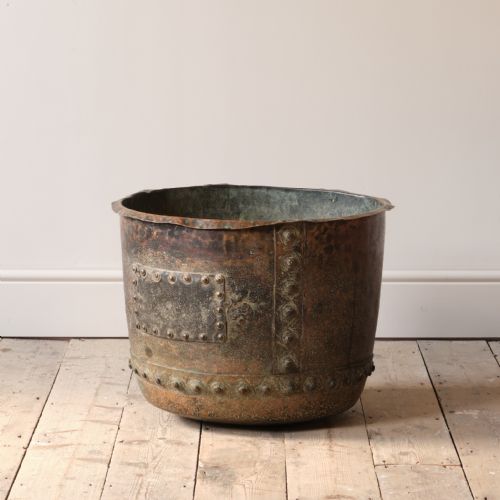
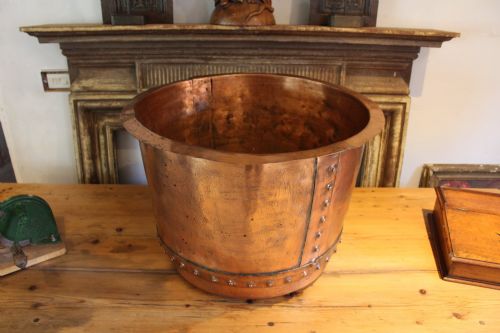
Many of these items double as planters or jardinieres, reflecting how utilitarian vessels find new life in modern interiors. You will also encounter specialised forms such as campaign buckets and riveted boilers originating from the nineteenth century.
Materials and construction
The construction relies heavily on sheet metals such as copper and brass, frequently shaped by hand and joined with visible rivets. Wrought iron provides sturdy handles and swing mechanisms, while wooden elements occasionally appear in handles or liners.
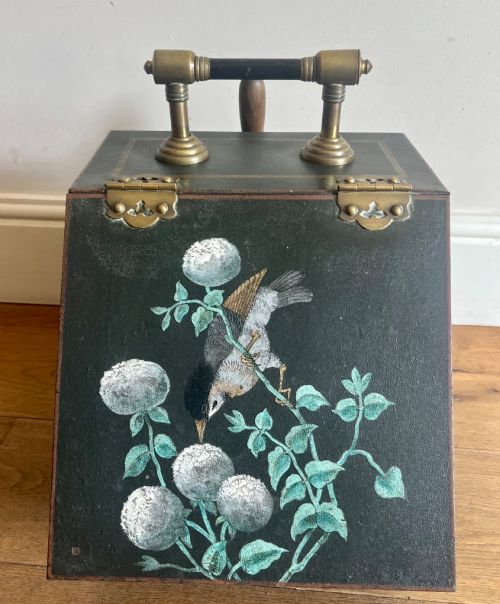
Surface decoration ranges from hammered textures and embossed crests to contrasting brass bands fitted around copper bodies. Tole ware and galvanised metal also feature in specific items, demonstrating a variety of durable manufacturing techniques from past centuries.
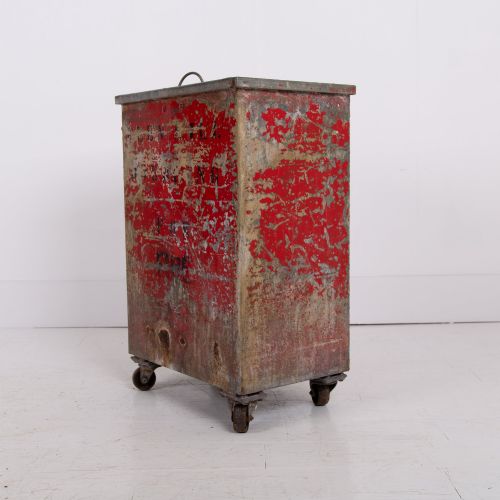
A sturdy fire bin on wheels once laboured in a nineteenth-century mill before retiring to domestic hearth duty.
Judging quality in metal hearth vessels
Quality rests upon the weight of the metal and the integrity of the construction, particularly at the seams and riveted joints. Thicker gauge brass and copper endure heavier use and hold their structural form better over generations.
Finishing touches differentiate standard items from superior pieces, such as crisp hand-embossed motifs, well-fitted original liners, and robust wrought iron work. The presence of makers' marks or distinct regional characteristics also elevates an individual piece.
Henry Loveridge·Richard Arkwright Masson Mills·Petrus Ramus
The Metal Fireplace Bucket Glossary
- Coal scuttle
- A container designed for carrying coal to the fire, often featuring a shovel and a tilted opening or hinged lid.
- Jardiniere
- An ornamental pot or receptacle, usually made of metal or ceramic, used for holding plants or flowers.
- Campaign bucket
- A portable container originally built for travel and military use, typically fitted with strong drop handles.
- Tole ware
- Metalware painted and japanned with lacquer, creating a decorative surface finish popular in domestic items.
- Cauldron
- A large metal pot with a swing handle, traditionally used over an open fire but adapted for hearth storage.
Metal Fireplace Bucket: Frequently Asked Questions
What is a metal fireplace bucket used for?
These vessels serve primarily to hold coal, logs, or kindling neatly beside an open hearth. They keep fuel accessible while containing debris and dust.
Many owners also repurpose them as planters, umbrella stands, or general decorative storage containers within country house interiors.
How do I clean antique brass and copper?
Dust the surface regularly with a soft cloth to prevent the buildup of grime. Avoid harsh chemical cleaners that strip the aged patina.
If polishing is necessary, use a mild metal cleaner suitable for antique brass or copper, applying it gently along the grain of the metal.
Are these buckets waterproof?
Many copper and brass bins feature soldered or riveted seams that hold water well. This explains why so many function successfully as indoor plant pots.
It remains wise to inspect the base and seams for old wear before filling any unlined antique vessel with water or damp soil.
How do I identify a Victorian metal bucket?
Victorian pieces often display characteristic manufacturing traits such as hand-hammered surfaces, heavy riveted copper bodies, and brass swing handles. Stylistic clues include embossed floral motifs, Arts and Crafts styling, or Art Nouveau curves.
Heavier gauges of metal and specific maker stamps further help confirm nineteenth-century origins.