



Metal Figural Clock
These metal figural clocks combine timekeeping with sculptural bronze, gilt metal, and porcelain figures for an impressive interior centrepiece.
Metal Figural Clock
A metal figural clock unites a functional timepiece with a distinct sculptural subject, often depicting classical figures, literary characters, or allegorical scenes mounted directly above or beside the dial. Most examples encountered here originate from the nineteenth century and the early twentieth century, spanning periods such as the Victorian era, the Regency period, and the 1920s.
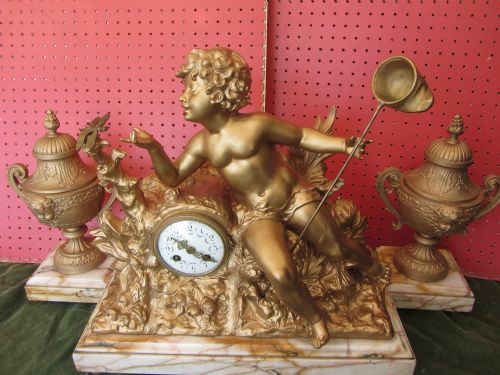
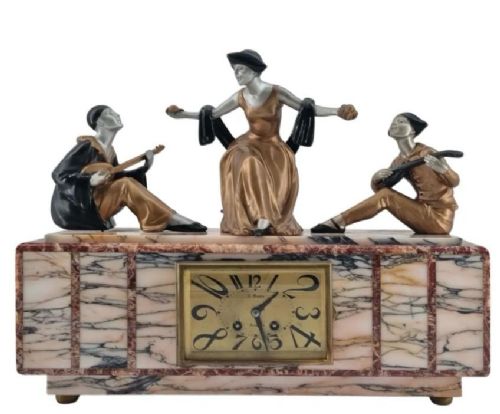
The sculptural forms range from mythological subjects like Diana the Hunter to theatrical figures such as Pierrot and Columbine, alongside Orientalist and neoclassical compositions. These pieces typically function as mantel clocks designed to anchor the decor of a room with substantial presence and ornamental detail.
Materials and construction
Makers utilised a combination of metals including gilt metal, ormolu, brass, and spelter to cast the primary structures and figural elements, frequently incorporating cold-painted bronzed finishes. These metallic components were often paired with contrasting plinths and bases formed from marble.
Dial faces and decorative highlights frequently integrate painted porcelain and enamel details protected by glass covers. Complex mechanisms such as single chain fusee movements drove the timekeeping, while cabinetmakers and sculptors collaborated to unite the metalwork and the dial into a cohesive whole.
Metal Figural Clock Retail Price Guide 2026
Typical asking prices for metal figural clock among the pieces listed under this phrase on Sellingantiques today, from the lower quarter to the upper quarter. They describe what is for sale here now, not the wider market.
Clock figures range from fierce mythological hunters to melancholic theatrical clowns sharing the same mantelpiece.
Defining quality
Quality rests upon the crispness of the metal casting and the depth of the gilding or patination across the figural elements. Finer pieces display finely chiselled surface details on the bronze or ormolu rather than softer, smoothed-over contours.
The integration between the sculpture and the clock housing also dictates worth, where bespoke compositions appear balanced and deliberate. Furthermore, the inclusion of signed movements by established makers elevates an example above standard production work.
Bently and Beck London·Francois Moreau·Japy Freres
The Metal Figural Clock Glossary
- Ormolu
- Gilded bronze produced through a mercury amalgamation technique, creating a durable golden surface layer on nineteenth-century French metalwork.
- Spelter
- A zinc alloy commonly utilised as a less costly alternative to bronze for casting decorative figures and clock cases, often painted to simulate bronze.
- Fusee
- A conical pulley used in clock movements to maintain an even tension on the gear train as the mainspring unwinds.
- Enamel
- A glassy substance fused to metal surfaces under high heat, providing a smooth white background for painted clock dial numerals.
Metal Figural Clock: Frequently Asked Questions
What periods do metal figural clocks come from?
These clocks primarily date from the nineteenth century, including the Regency, Victorian, and later periods up to the Art Deco 1920s. French makers produced a significant portion of these surviving designs.
Stylistic influences range from French Rococo Revival and Neoclassical to Orientalist themes and Louis XVI revival aesthetics.
How were these clocks used originally?
They served as prominent domestic timekeepers and decorative ornaments placed on mantelpieces in formal reception rooms and parlours. Their dual role as sculpture and clock made them central focal points of interior decoration.
Wealthy households utilised them to project status and taste through mythological, literary, or allegorical subjects.
How do I live with a metal figural clock?
Place the clock on a stable, level surface such as a mantel or heavy sideboard to ensure the mechanical movement runs reliably. Keep the piece away from direct sunlight and damp environments to protect the delicate gilt surfaces and enamel dials.
Routine care involves dusting the intricate figural casting with a soft brush and having the movement professionally serviced periodically.
How are different styles told apart?
Neoclassical and Louis XVI style pieces feature restrained architectural lines, urns, and figures derived from classical antiquity. Rococo revival examples display asymmetrical scrolls, ornate foliage, and flowing organic curves.
Art Deco items from the 1920s introduce geometric abstraction and theatrical subjects like Pierrot and Columbine, moving away from historical revivalism.