

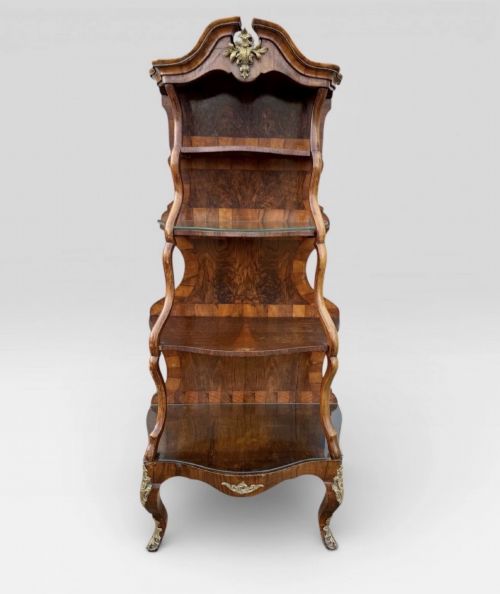


Metal Etagere
These metal etagere pieces bring vertical display space and open shelving to a room.
Metal Etagere
When searching for a metal etagere, buyers encounter tiered shelving units designed for holding plants, decorative items, or storage. The selection spans Victorian and Edwardian periods, featuring multi-tiered designs in various metalwork styles.
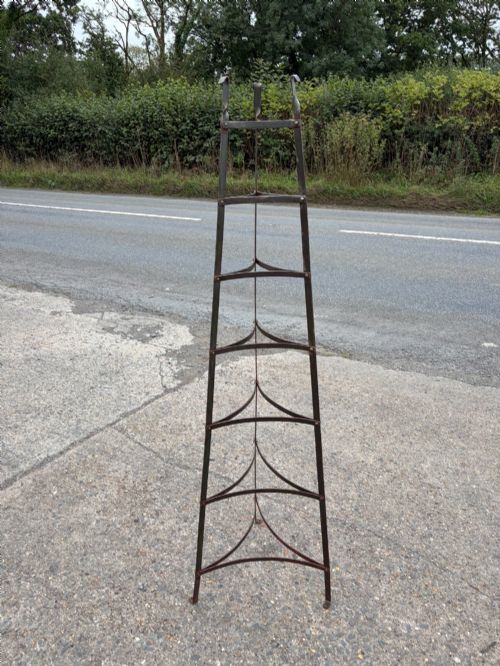
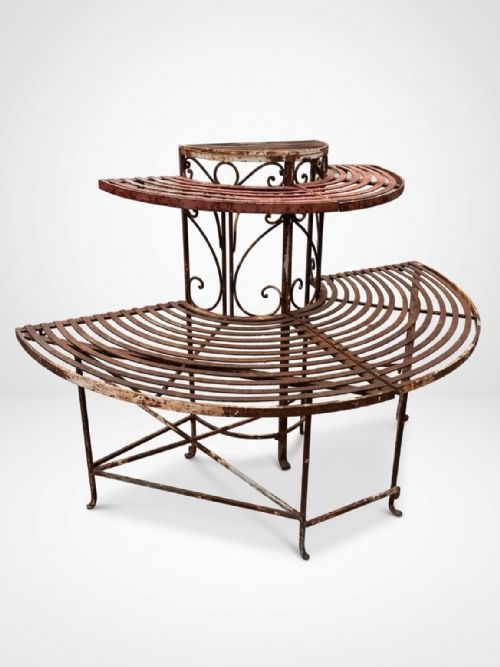
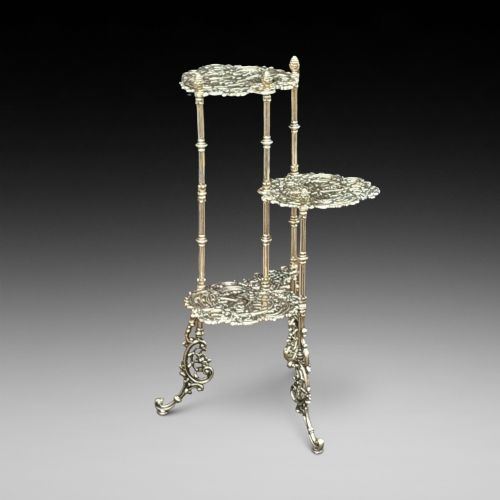
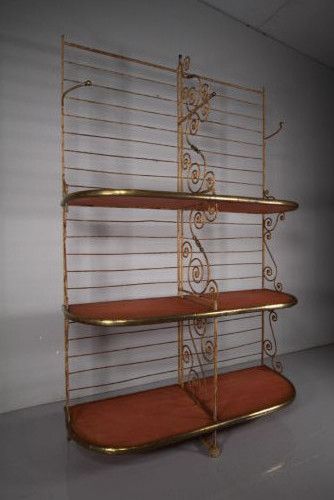
The versions most commonly met on this page include plant stands, bakers racks, and multi-tier whatnots. These pieces serve practical display functions while introducing open architectural lines to an interior.
Origins represented in the inventory include French and English workshops, spanning from the mid-nineteenth century through the early twentieth century. Forms range from simple corner stands to elaborate multi-shelf display units.
Materials and construction
Construction relies heavily on structural metals such as wrought iron, cast iron, steel, brass, and gilt metal, often combined with glass, walnut, or painted surfaces. Artisans shaped these materials using scroll-work, riveting, and casting techniques to achieve sturdy tiered frames.
Surface treatments recorded in the inventory include original white paint, weathered finishes, and gilt detailing. Certain pieces incorporate inlaid marquetry and wooden elements alongside the metal framework.
Metal Etagere Retail Price Guide 2026
Typical asking prices for metal etagere among the pieces listed under this phrase on Sellingantiques today, from the lower quarter to the upper quarter. They describe what is for sale here now, not the wider market.
Listings feature pieces from the Victorian, Edwardian, and nineteenth-century periods, utilising wrought iron, brass, cast iron, and walnut.
Assessing quality
Quality in these pieces is determined by the crispness of the metalwork, such as the intricacy of scroll-work and the precision of riveted joints. Finer examples display balanced proportions across multiple tiers and well-integrated secondary materials like walnut or glass.
The presence of maker stamps and sophisticated finishing, such as detailed gilt work or quality paint retention, separates standard utility items from more refined decorative examples.
The Metal Etagere Glossary
- Etagere
- A piece of furniture consisting of a set of open shelves for displaying small objects. These tiered structures provide vertical storage space.
- Whatnot
- A nineteenth-century multi-shelf stand used for displaying ornaments or books. It functions similarly to an etagere.
- Bakers rack
- An open metal shelving unit originally utilised for cooling baked goods. Antique examples now serve as kitchen or general display shelving.
- Marquetry
- Decorative inlay work using pieces of wood fitted into a veneer to form patterns. This technique appears on select tiered units alongside metal frames.
Metal Etagere: Frequently Asked Questions
What is a metal etagere used for?
These tiered units were originally built to hold plants, pottery, or kitchen wares in domestic spaces. Today, they function as versatile display furniture for books and decorative objects.
Their open construction allows light to pass through while offering multiple levels of vertical storage.
How do I identify a Victorian metal etagere?
Victorian examples often feature ornate brass work, scroll-iron framing, or heavy cast iron construction. They typically display the darker patinas and manufacturing methods of the nineteenth century.
Design motifs from this era lean towards decorative floral elements and complex wirework planters.
Where were antique bakers racks made?
Surviving nineteenth-century bakers racks frequently originate from French and English workshops. These pieces utilised heavy wrought iron and riveted steel to withstand commercial kitchen use.
Many bear stamps or marks indicating their workshop origin.
How do I style an etagere at home?
An etagere suits corners, hallways, or living spaces where vertical display is needed without blocking light. Balance heavy ceramic pots on lower tiers with lighter decorative objects higher up.
The open shelving design works well for showcasing collections of varied heights.