


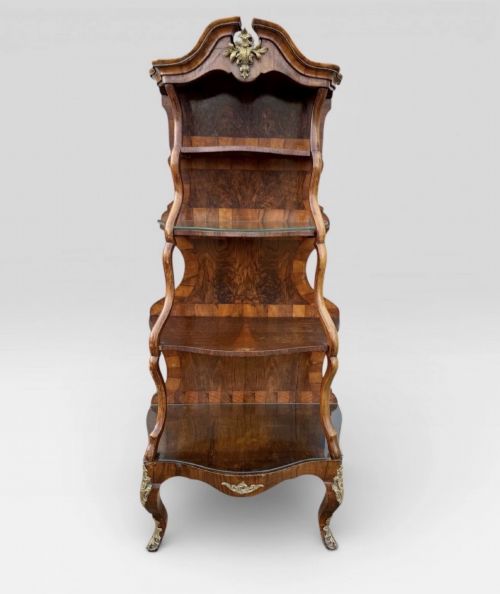


Metal Display Stand
A metal display stand elevates plants, bowls, and objects with practical strength and linear form, spanning Victorian plant tiers to industrial bakers racks.
Metal Display Stand
A metal display stand serves to support and elevate decorative objects, plants, and domestic wares across various historical interiors. When exploring a metal display stand, a buyer most frequently encounters Victorian plant stands, cast iron tiers, and French bakers racks.
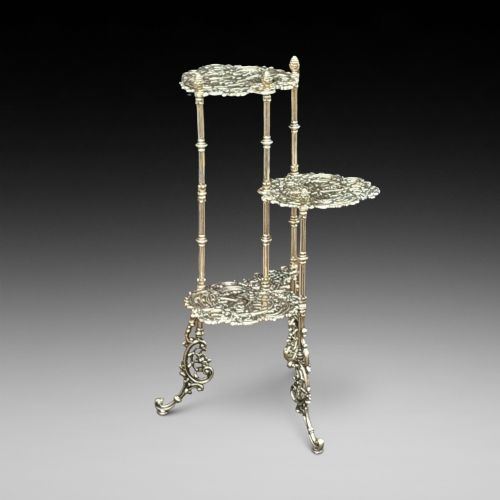
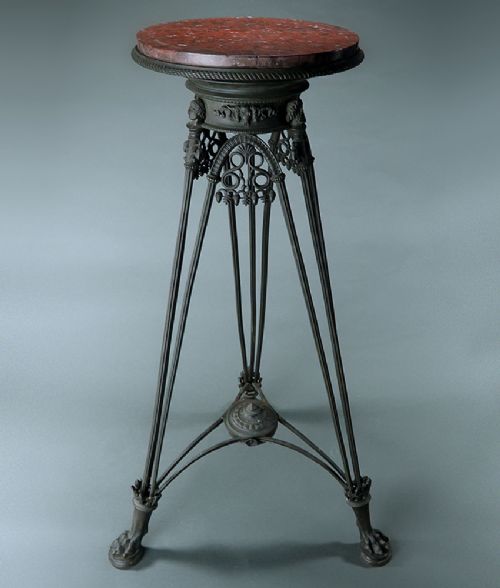
The selection encompasses diverse utilitarian and decorative forms ranging from marble-topped guéridon tables and multi-tiered plant stands to heavy industrial shelving units. These pieces originate from domestic, commercial, and garden settings across the nineteenth and early twentieth centuries.
The category bridges functional storage and ornamental display, utilising structural metalwork to create verticality in living spaces. Pieces vary from simple wirework tiered planters to ornate brass scroll bases supporting stone and wood surfaces.
Materials and Technique
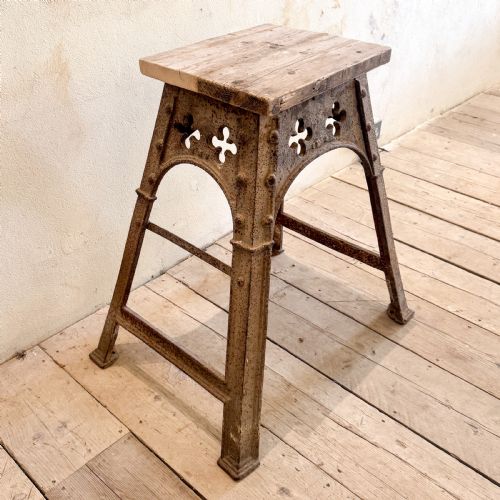
Makers utilised cast iron, wrought iron, and brass as primary structural elements, shaping them through casting, forging, and scroll-work techniques. Iron components frequently feature painted surfaces, riveted joints, or patinated finishes developed through age and utility.
Combinations of metal frames with inset materials such as marble, glass, onyx, and wood provide stable tops for plant stands and display tables. Gilt metal and chiseled brass details appear on decorative pedestals and etageres from the Edwardian and later periods.
Metal Display Stand Retail Price Guide 2026
Typical asking prices for metal display stand among the pieces listed under this phrase on Sellingantiques today, from the lower quarter to the upper quarter. They describe what is for sale here now, not the wider market.
Listings feature structural combinations of wrought iron, brass, and cast iron paired with marble, glass, and wood.
Craftsmanship and Proportion
Quality rests in the precision of the metalworking, from the fluidity of hand-forged scroll-work on iron racks to the crispness of cast brass ornaments. Superior pieces maintain structural rigidity while displaying refined proportions and balanced weight distribution.
The integration of secondary materials defines the upper tier of execution, such as accurately fitted marble tops, unblemished glass inserts, and well-preserved original painted or patinated surfaces. Maker stamps or evidence of careful assembly further distinguish utilitarian items elevated to decorative furnishings.
The Metal Display Stand Glossary
- Guéridon
- A small French table, often round, supported by a central column or figures and frequently topped with marble. These pieces served decorative and functional roles in nineteenth-century drawing rooms.
- Etagere
- A set of open shelves for displaying small objects, usually consisting of multiple tiers supported by slender columns. Gilt metal and wood marquetry commonly feature in Edwardian examples.
- Jardinere Stand
- A specialised piece designed to hold plant pots or flower containers, constructed with water-resistant metal trays or tiers. Victorian examples frequently utilise cast or wrought iron.
- Bakers Rack
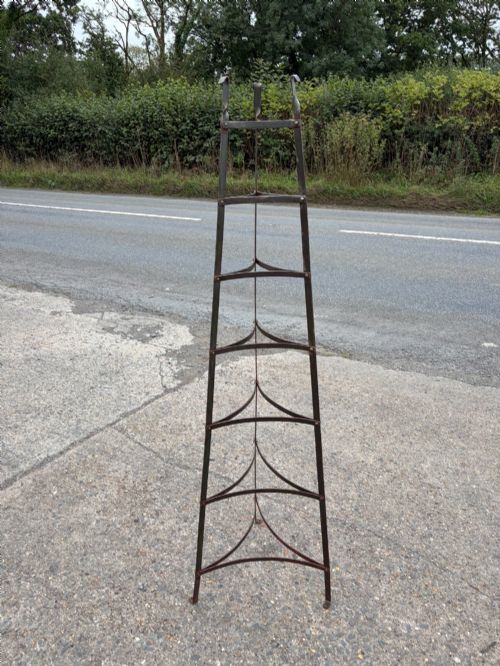
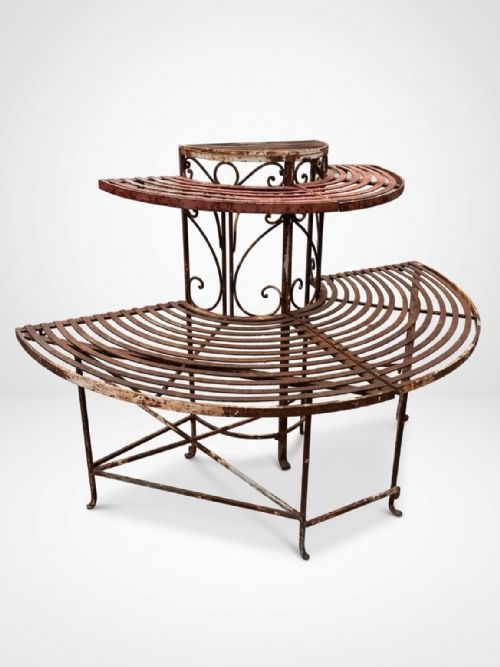
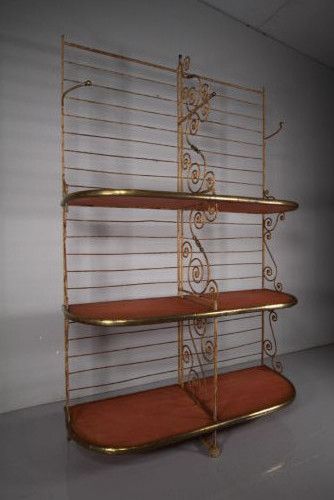
- A tall metal shelving unit historically used in European boulangeries for cooling bread, now adapted for interior display. They are characterised by heavy iron frames and slatted metal or wire shelves.
- Whatnot
- A piece of furniture with multiple shelves for displaying ornaments, emerging strongly in the nineteenth century. Variations incorporate serpentine wooden tiers alongside gilt metal mounts.
Metal Display Stand: Frequently Asked Questions
How were bakers racks originally used?
Bakers racks functioned primarily in commercial kitchens and French boulangeries for cooling freshly baked bread and pastries. Their open iron frameworks allowed air circulation around the hot trays.
Over time, these utilitarian structures transitioned into domestic interiors as sturdy shelving units for kitchenware, plants, and decorative collections.
Where should I place a plant stand?
Plant stands work effectively near windows where natural light supports greenery while highlighting the intricate ironwork or brass scroll bases. Multi-tiered versions create vertical height in corners or empty hallways.
Ensure the surface material, such as marble or painted iron, suits the moisture and weight requirements of your pots.
How do I identify a Victorian iron stand?
Victorian iron stands typically display heavy cast construction, decorative scroll-work, or utilitarian wirework framing. Common forms include multi-tiered plant holders and shop display units with dark painted finishes.
Examine the joints for traditional fabrication methods like riveting and hand-forging rather than modern welding.
Can these stands support heavy items?
Many cast iron and wrought iron stands were built for heavy garden or commercial use and offer exceptional structural load capacity. Solid metal frames and stone tops easily accommodate large plants and heavy ceramic bowls.
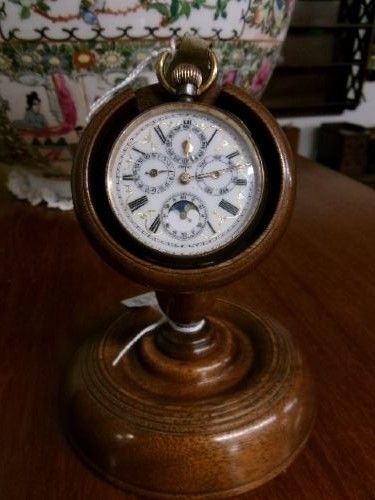
Lighter brass or wirework pieces suit smaller decorative objects, pocket watches, or delicate display items.