

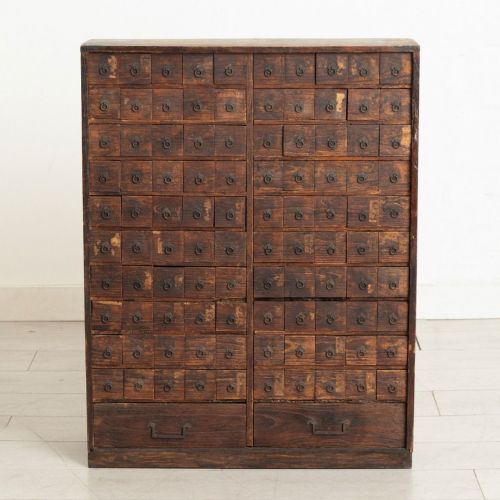


Merchant Tansu Cabinet
These merchant tansu cabinets are utilitarian Japanese storage pieces built for trade, offering robust compartments and striking iron hardware.
Merchant Tansu Cabinet
When you search for merchant tansu cabinet, you are looking at practical Japanese storage furniture shaped by trade and regional craftsmanship. These pieces span the nineteenth century and the early twentieth century, taking forms such as chests of drawers, apothecary cabinets, storage cabinets, and specific regional variations.
The version you are most likely to meet on this page is a nineteenth-century Japanese tansu chest or a comparable early twentieth-century example from the Meiji or Taisho periods. They range from keyaki and zelkova wood constructions to elm, cedar, and red lacquered surfaces, often set upon wheels or equipped with heavy forged iron fittings.
How they were made
Carpenters built these cabinets using traditional Japanese joinery alongside native timbers like cedar, elm, zelkova, and chestnut. Woods were chosen for durability and grain, then assembled into sturdy modular storage units.
Forged iron hardware, including heavy corner braces, straps, and lock plates, was applied to reinforce the structure against heavy use and travel. Surfaces were finished simply or treated with red lacquer to protect the timber.
Merchant Tansu Cabinet Retail Price Guide 2026
Typical asking prices for merchant tansu cabinet among the pieces listed under this phrase on Sellingantiques today, from the lower quarter to the upper quarter. They describe what is for sale here now, not the wider market.
Some merchant tansu include secret compartments hidden behind removable drawer dividers to keep household ledgers safe from prying eyes.
What varies in quality
The refinement of the timber selection largely determines the standing of a piece, with figured zelkova and keyaki wood commanding particular respect. Craftsmanship shows in the tightness of the joinery and the harmonious integration of the drawers and compartments.
The quality of the forged iron hardware, from decorative lock plates to robust straps, separates standard utility items from finer examples. Preservation of original surface finishes, whether clear wood or red lacquer, also defines the better pieces.
The Merchant Tansu Cabinet Glossary
- Tansu
- Traditional Japanese mobile cabinetry and chests built for storage and transport. These pieces were designed to hold clothing, documents, or trade goods.
- Keyaki
- Japanese zelkova wood prized for its dense grain and durability. Makers utilised it for visible panels and high-status fronts.
- Mizuya
- A traditional Japanese kitchen tansu used for storing food and utensils. These form part of the broader domestic storage tradition.
- Meiji Period
- The era in Japanese history spanning from eighteen sixty-eight to nineteen twelve. Pieces from this time reflect a blend of traditional craftsmanship and opening trade.
Merchant Tansu Cabinet: Frequently Asked Questions
What is a merchant tansu?
A merchant tansu is a traditional Japanese storage chest used by traders and shopkeepers for business records, goods, and coin. These pieces feature multiple drawers and compartments secured by heavy iron hardware.
They evolved to be practical and secure, often incorporating drop-fronts or locking mechanisms to protect valuable contents during daily operations.
How do I date a tansu cabinet?
Dating relies on timber choices, construction methods, and stylistic markers associated with specific eras like the nineteenth century or the Meiji and Taisho periods. Ironwork design and joinery techniques also offer clues to the age of the piece.
Changes in Japanese manufacturing traditions through the Meiji period help differentiate earlier traditional examples from later twentieth-century output.
What woods were used for tansu?
Carpenters utilised native Japanese timbers such as zelkova, keyaki, cedar, elm, chestnut, and kiri wood. Hardwoods like zelkova were selected for visible drawer fronts and structural strength.
Softer woods like cedar or kiri were often used for internal parts and drawers because they helped regulate humidity and protect contents.
Where were tansu cabinets used?
These cabinets were used throughout Japanese merchant houses, shops, and homes for organising daily necessities and valuables. Their modular design allowed them to be moved easily within traditional interiors.
Ship tansu were specially adapted for maritime trade, featuring extra reinforcement to withstand transport on merchant vessels.