

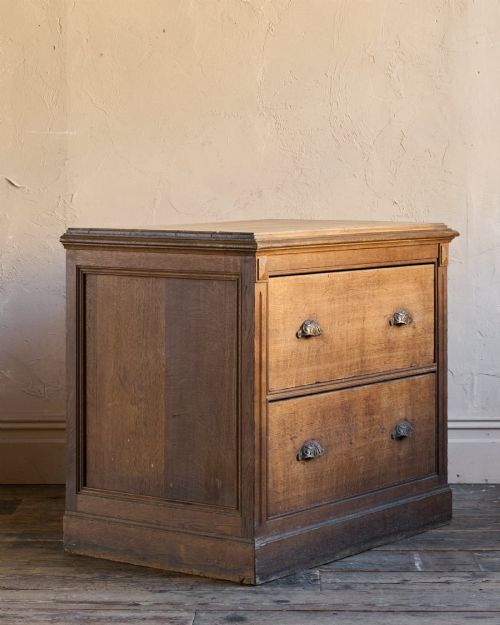
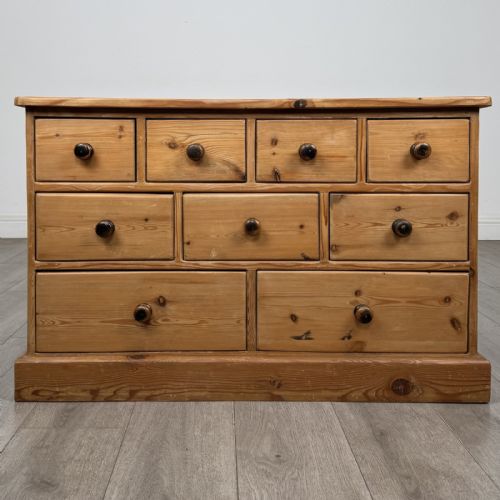

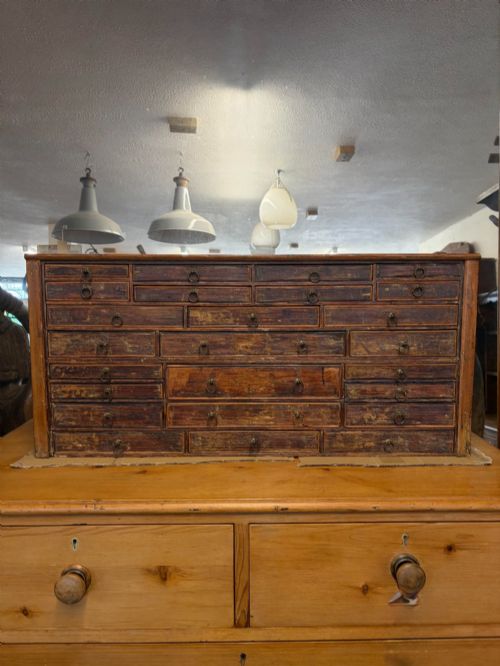
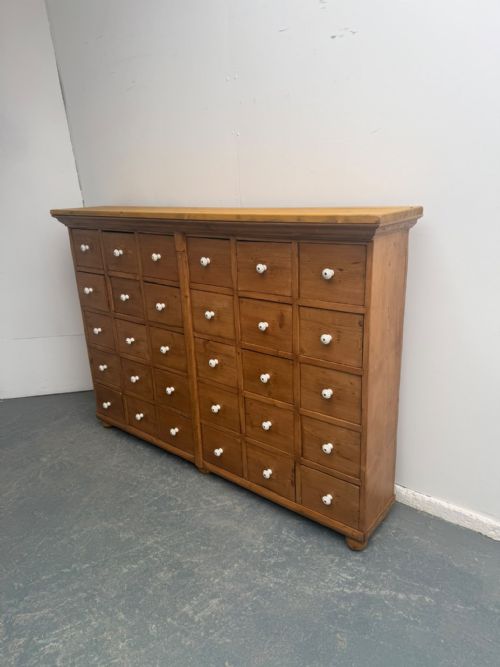


Merchant Drawer Cabinet
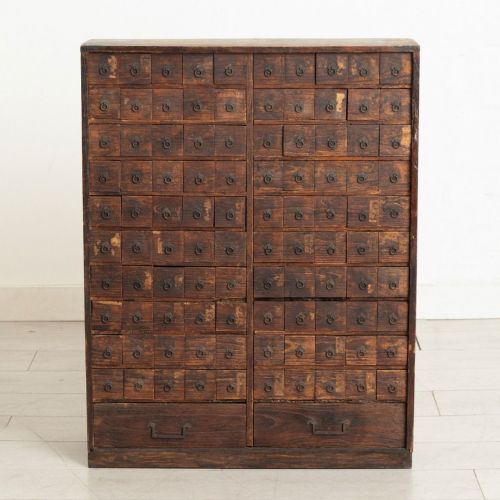
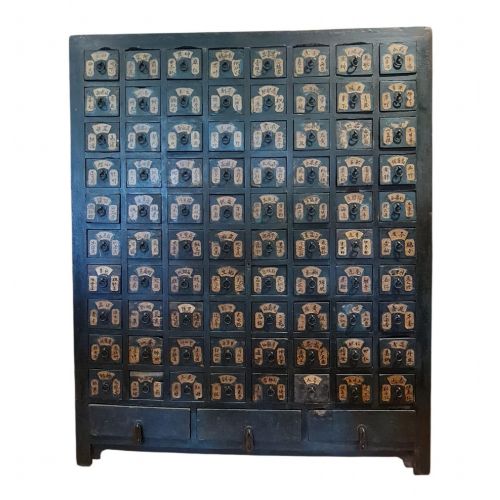
These merchant drawer cabinet pieces are functional banks of multiple small drawers originating from shops and workshops, offering exceptional storage character for any room.
Merchant Drawer Cabinet
When searching for a merchant drawer cabinet, you are looking at multi-drawer banks and storage units designed for commercial, apothecary, or workshop use. These pieces include tall haberdashers' drawers, drapers' counters, and traditional apothecary chests.
The versions most likely to appear on this page span from the 18th century through to the mid-20th century, encompassing Victorian pine shop fittings and Japanese tansu chests. Forms range from massive banks of twenty-five or more small compartments to compact watchmakers' cabinets.
Origins vary widely across the inventory, taking in English, French, and Hungarian pine examples alongside Chinese elm medicine cabinets and Japanese elm or cedar tansu chests. Each style reflects the specific practical filing or display needs of its original trade.
Materials and construction
Timbers selected for these multi-drawer units prioritised durability under heavy daily use, resulting in frequent employment of pine, mahogany, elm, and cedar. Painted wood surfaces appear alongside natural grain finishes, often paired with brass or iron hardware on the numerous drawer fronts.
Joinery techniques suited the heavy loads demanded by shop counters and apothecary storage, creating robust banks of drawers designed to hold small wares, textiles, or dry goods. Many incorporate specialised handles and card holders suited to commercial cataloguing.
Merchant Drawer Cabinet Retail Price Guide 2026
Typical asking prices for merchant drawer cabinet among the pieces listed under this phrase on Sellingantiques today, from the lower quarter to the upper quarter. They describe what is for sale here now, not the wider market.
Listings feature units constructed from pine, mahogany, elm, cedar, and painted wood.
Judging quality in multi-drawer units
Distinction across the range lies in the integrity of the timber, the uniformity of the numerous drawer pulls, and the survival of original painted or waxed surfaces. Units retaining their authentic shop hardware and maker markings command greater interest.
Proportion and scale also define the piece, as substantial banks with dozens of drawers require careful alignment of internal runners to ensure smooth operation across every compartment.
The Merchant Drawer Cabinet Glossary
- Bank of Drawers
- A multi-tiered furniture unit containing many small drawers stacked vertically or horizontally. These were standard commercial fittings for organising stock.
- Haberdashery Drawers
- Shop display and storage banks originally utilised in drapery and clothing stores. They feature numerous glass-fronted or shallow wooden drawers for small textiles.
- Apothecary Cabinet
- A specialised multi-drawer chest designed for storing dried herbs, medicines, and botanical ingredients. They typically contain dozens of tiny partitioned compartments.
- Shop Fitting
- Custom-built commercial cabinetry designed specifically for retail interiors. Examples include drapers' counters and large modular drawer systems.
Merchant Drawer Cabinet: Frequently Asked Questions
What is a merchant drawer cabinet?
A merchant drawer cabinet is a multi-compartment storage unit originally built for commercial use in shops, pharmacies, or workshops.
These pieces range from tall Victorian pine shop fittings to traditional Japanese tansu chests and apothecary cabinets.
How were merchant drawer cabinets used?
They were used by merchants, drapers, and apothecaries to sort and store small inventory items, fabrics, or medicines.
The numerous small drawers allowed businesses to keep large quantities of stock organised and accessible behind a counter.
How do I live with a merchant drawer cabinet?
These cabinets suit modern interiors as statement storage units in kitchens, studies, or living rooms.
Their many small compartments make them practical for organising stationery, collections, or everyday household items.
How can I tell different periods apart?
Periods are identified through construction materials, hardware styles, and regional woodworking techniques.
Earlier 18th-century pieces often feature mahogany and traditional joinery, while Victorian and 20th-century examples frequently utilise pine or metal office configurations.