








Mens Gold Signet
These mens gold signet pieces carry personal marks and solid weight, ranging from Victorian intaglios to mid-century onyx settings.
Mens Gold Signet
When you search for mens gold signet, you encounter a selection of historic finger rings spanning the Victorian, Edwardian, and mid-century periods. These items combine solid metalwork with flat seal faces, gemstone insets, or carved intaglios designed to leave a mark or simply display status.
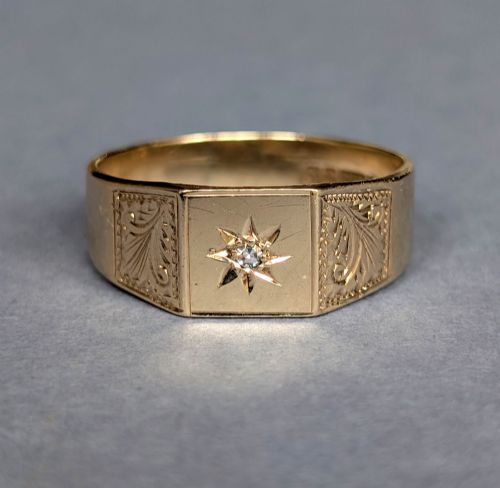
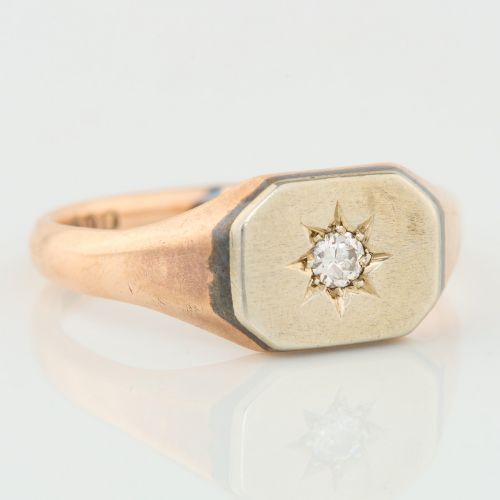
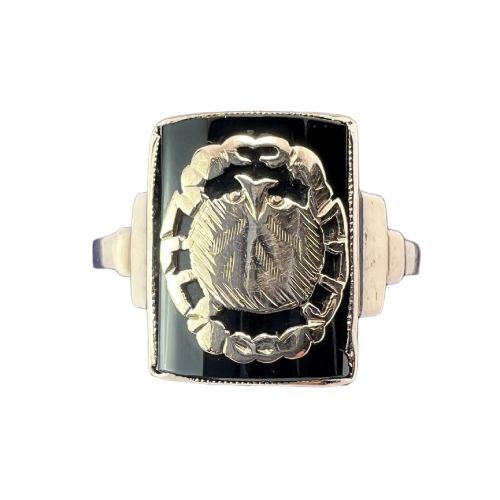
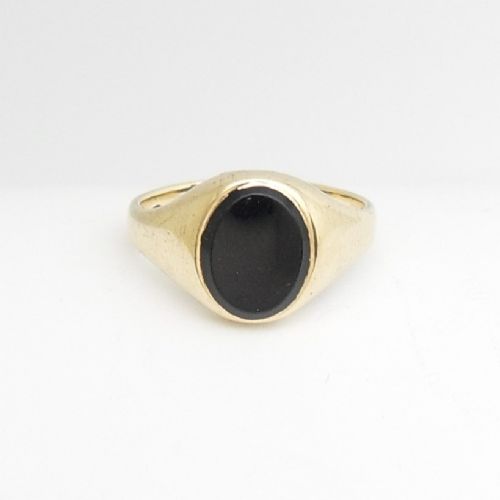
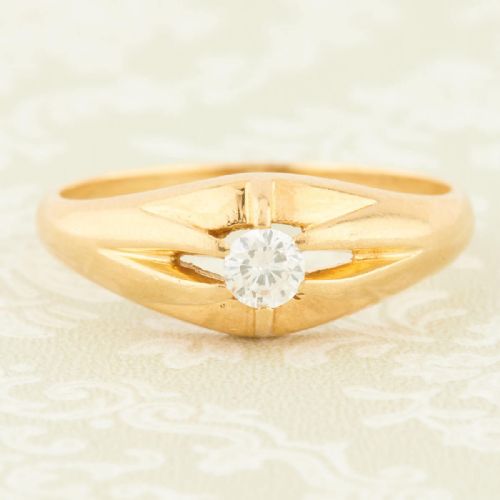
The version you are most likely to meet on this page is a 9ct or 18ct yellow gold ring set with black onyx, diamond, or carved hardstone. Forms range from traditional oval seals to square faces and gypsy settings produced across the nineteenth and twentieth centuries.
How they were made
Goldsmiths constructed these rings using cast or fabricated yellow, rose, and 18ct gold, often incorporating substantial metal weight into the shanks and shoulders. Stones such as diamond, amethyst, sapphire, and carnelian were flush-set, bezel-set, or carved directly as intaglios.
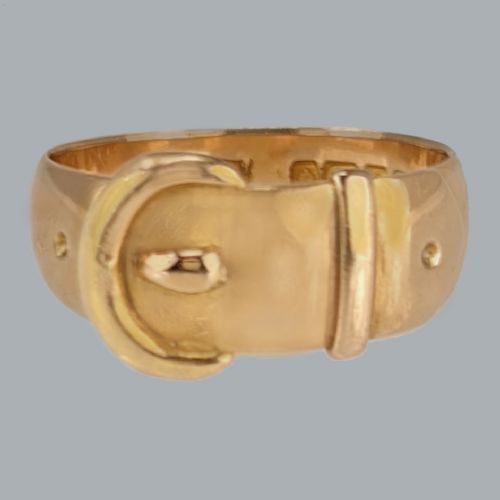
Makers utilised traditional techniques including hand engraving, stone cutting, and hallmarking to establish metal purity and origin. Many examples integrate structural motifs like buckles or engraved monograms directly into the heavy gold bands.
Listings span the Victorian, Edwardian, and mid-century eras, utilising 9ct and 18ct gold alongside diamond, onyx, and carnelian.
What varies in quality
Quality rests upon the weight and purity of the gold, alongside the clarity and depth of any carved intaglio or diamond setting. Substantial metal mass and crisp engraving distinguish superior examples from lighter productions.
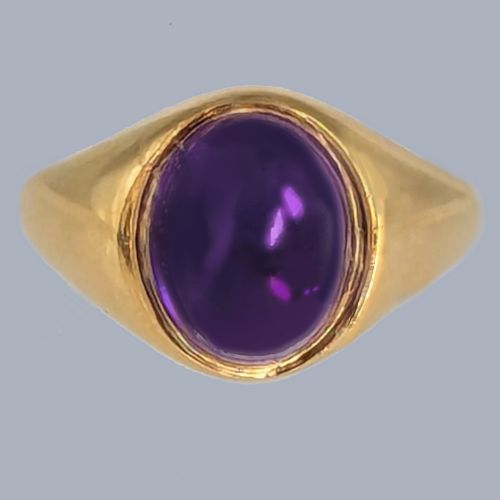
The integrity of the stone inlay, whether banded onyx, carnelian, or cabochon amethyst, dictates the refinement of the piece. Crisp hallmarks and legible maker stamps provide additional assurance of origin and date.
The Mens Gold Signet Glossary
- Intaglio
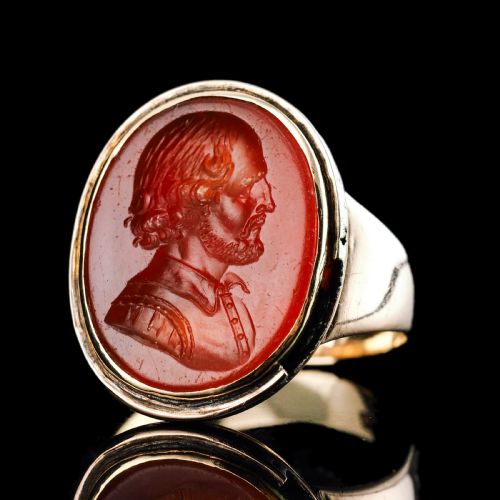
- A gemstone or metal surface carved with a sunken design so that it leaves a raised impression when pressed into sealing wax. This technique appears frequently on nineteenth-century gentleman rings.
- Signet ring
- A ring bearing a seal or monogram traditionally used for stamping documents or personal correspondence. The face is usually flat or set with a hardstone.
- Gypsy ring
- A ring style where the stones are set flush into the thick, tapered band of the metal. They gained popularity during the Victorian and Edwardian eras.
- Cabochon
- A gemstone shaped and polished with a smooth, rounded surface rather than faceted edges. This cut highlights the natural colour of materials like amethyst and onyx.
- Hallmark
- An official stamp struck into precious metals to indicate purity, maker, and assay office. British items often display these marks inside the shank.
Mens Gold Signet: Frequently Asked Questions
How do I clean a gold signet ring?
Warm soapy water and a soft brush remove everyday debris from the metal and stone settings. Avoid harsh chemicals that might damage softer stones like onyx or amethyst.
Dry the piece thoroughly with a lint-free cloth to maintain the polish of the gold and preserve any engraved details.
Can a signet ring be resized?
Most solid gold rings allow for professional resizing by a skilled jeweller. The process involves adding or removing a small section of metal from the back of the shank.
Take care with stones set flush or rings bearing full hallmarks, as extensive alterations can affect the stamps.
What is the difference between an intaglio and a seal?
An intaglio is the actual carved design sunken into the stone or metal face. A seal refers to the function of that design when pressed into hot wax.
Many antique signet rings feature carved carnelian or bloodstone intaglios intended specifically for this purpose.
How do I identify the date of a gold ring?
British pieces typically rely on assay office marks, date letters, and purity stamps located inside the band. Comparing these symbols against standard historical charts reveals the exact year of manufacture.
Stylistic cues such as Edwardian proportions or 1940s retro geometry also help narrow down the period when hallmarks are worn.