


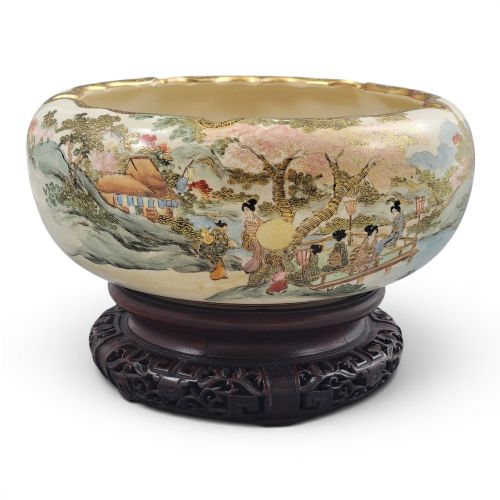


Meiji Satsuma Ceramic Bowl
These meiji satsuma ceramic bowl examples bring intricate hand-painted enamel and gold leaf detail from nineteenth-century Japanese kilns directly to a room.
Meiji Satsuma Ceramic Bowl
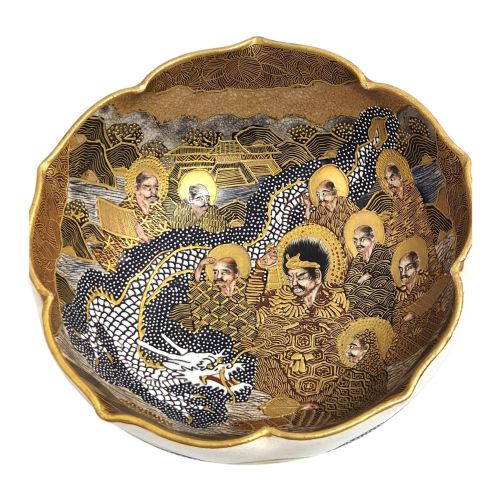
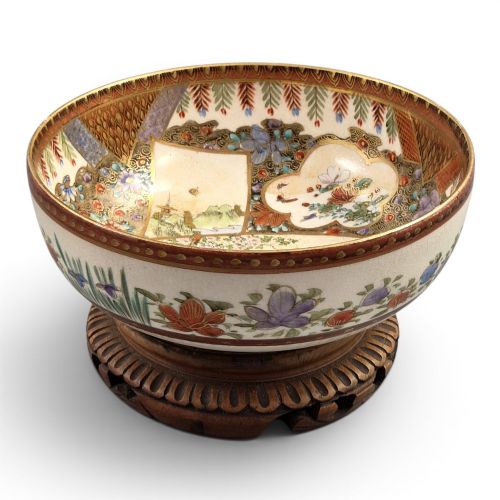
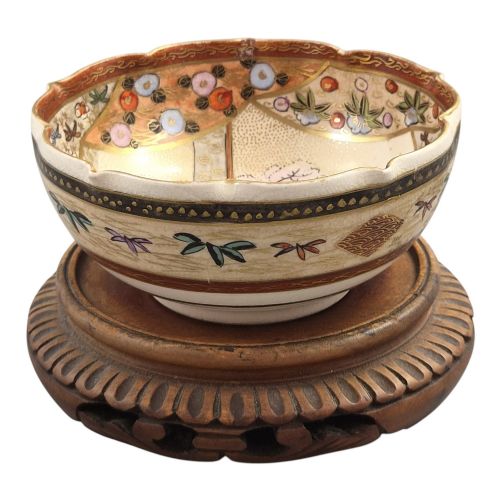
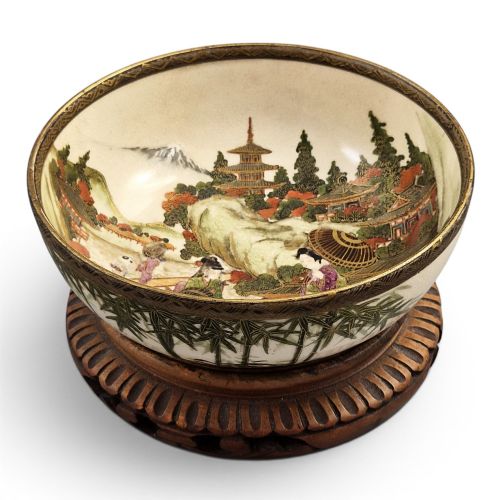
A meiji satsuma ceramic bowl is a decorated earthenware vessel originating primarily from nineteenth-century Japanese kilns, often associated with Kyoto and Yokohama production. These decorative bowls and bowls and saucers display dense pictorial scenes or millefleur patterns across their surfaces.
Collectors frequently encounter pieces from the Meiji period, alongside items catalogued under Victorian or Edwardian periods due to import timelines. The forms range from small Hanami bowls to monumental display pieces and sugar bowls.
The aesthetic bridges traditional Japanese motifs, such as samurai battles and floral arrangements, with intricate gilding and enamel work intended for international and domestic markets alike.
How they were made
Makers utilised earthenware as the primary ceramic body, which provided a porous foundation suited for absorbing subsequent layers of decoration. This body was then finished with fine enamel paints and gold leaf or gilt highlights.
Kilns in Kyoto and other centres applied complex pictorial compositions by hand, often incorporating the Shimazu crest and artist signatures directly into the glaze and gold work.
Meiji Satsuma Ceramic Bowl Retail Price Guide 2026
Typical asking prices for meiji satsuma ceramic bowl among the pieces listed under this phrase on Sellingantiques today, from the lower quarter to the upper quarter. They describe what is for sale here now, not the wider market.
What varies in quality
The fineness of the brushwork and the complexity of the narrative scenes distinguish standard production from masterworks by known studio artists. Dense thousand flowers patterns and detailed samurai battle depictions demand exceptional control.
The application of gold leaf and the preservation of the delicate enamel surfaces over time influence the visual impact of each piece. Studio attribution, such as signed works from Kyoto makers, indicates distinct levels of craftsmanship.
Gyokkō·Kozan·Shizan·Ryuzan·Kinkozan·Nikko·Hododa·Shozan
The Meiji Satsuma Ceramic Bowl Glossary
- Earthenware
- A porous ceramic material fired at lower temperatures, forming the structural body of these vessels before glazing and enamelling.
- Shimazu crest
- The mon or badge of the Shimazu clan, frequently found on Satsuma ware to denote patronage or regional origin.
- Millefleur
- A decorative pattern meaning thousand flowers, covering the ceramic surface in a dense field of small floral motifs.
- Hanami
- A term associated with viewing cherry blossoms, often referenced in the specific titles and themes of these decorative bowls.
Meiji Satsuma Ceramic Bowl: Frequently Asked Questions
What is Satsuma ware?
Satsuma ware is a type of Japanese earthenware traditionally characterised by an ivory-coloured, crackled glaze and detailed overglaze enamel and gold decoration.
Originating in Satsuma Province, production later expanded to major urban centres like Kyoto and Yokohama during the nineteenth century.
How do I identify a Meiji period bowl?
Meiji period pieces date from eighteen sixty-eight to nineteen twelve, aligning with the reign of Emperor Meiji in Japan.
These items frequently bear artist signatures, studio marks, or the Shimazu family crest alongside complex pictorial or floral motifs.
Were these bowls meant for daily use?
Most decorated Satsuma bowls and sugar bowls served primarily as decorative display items rather than utilitarian tableware.
Their delicate enamel surfaces and extensive gold leaf application make them unsuited for heavy everyday service.
What does a signature indicate on these pieces?
Signatures typically denote the master artist, workshop, or Kyoto studio responsible for painting and finishing the earthenware body.
Renowned names like Kinkozan or Shizan add significant historical context to individual bowls.