

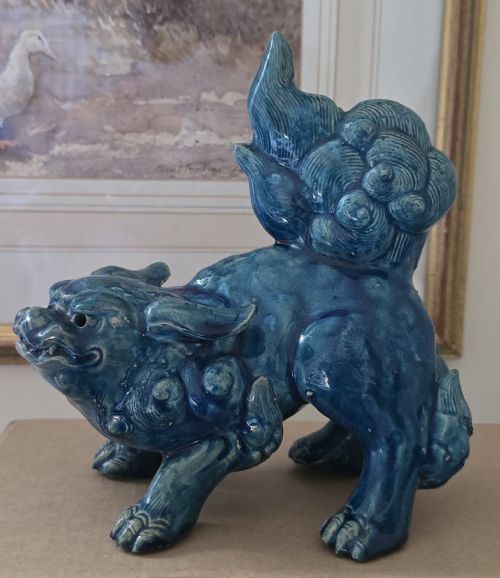


Meiji Period Ceramic Figures
Meiji period ceramic figures capture the distinct sculptural traditions of late nineteenth and early twentieth century Japan through detailed hand-modelled forms and rich glazes.
Meiji Period Ceramic Figures
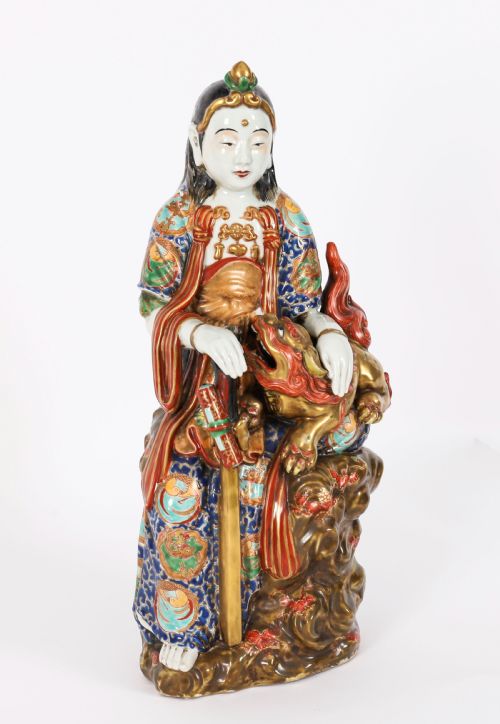
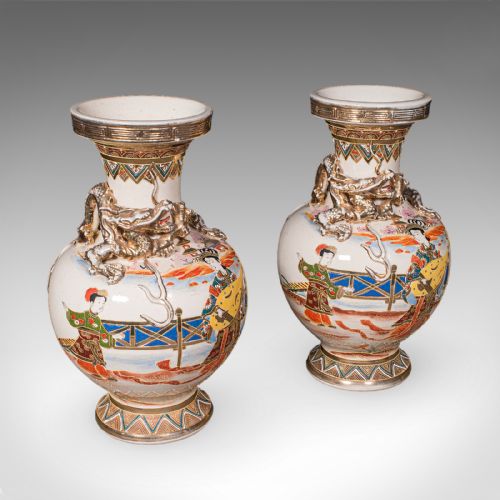
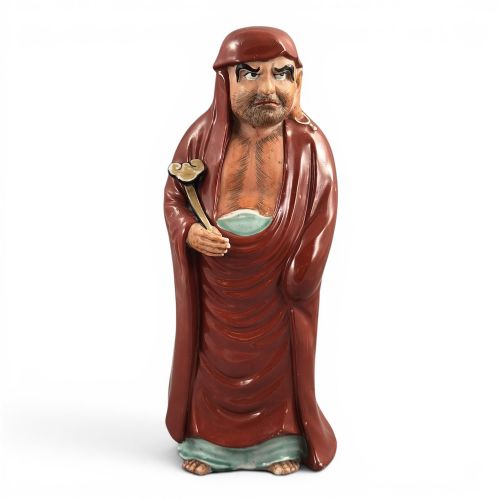
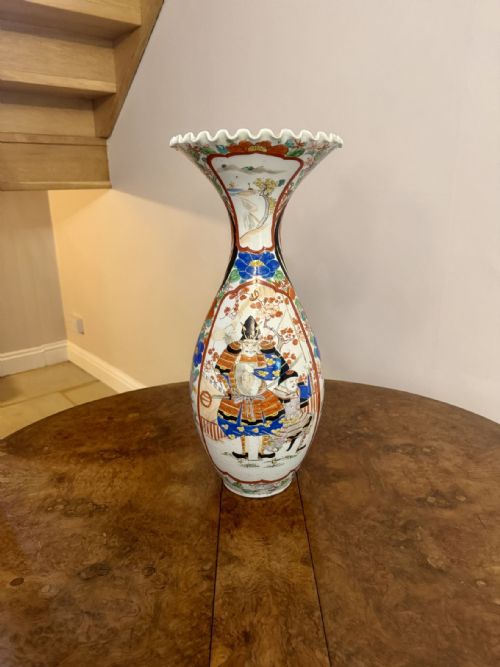
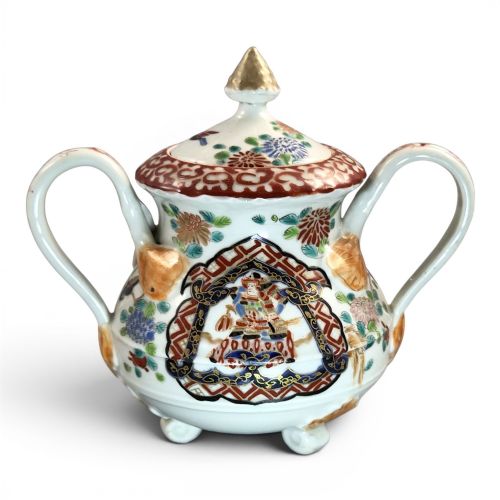
Meiji period ceramic figures encompass a wide range of sculptural forms created during a dynamic era of Japanese artistry, including depictions of deities, sages, mythological figures, and animals. Buyers searching for meiji period ceramic figures encounter works ranging from delicate porcelain deities to robust earthenware and stoneware vessels adorned with applied sculptural elements.
The objects frequently take the form of okimono display sculptures, decorative vases, and utilitarian vessels featuring relief figures. Common subjects include Buddhist figures such as Kannon and Guanyin, legendary sages, and playful children known as karako, alongside mythical beasts like the shishi lion.
Pieces from this category bridge traditional Japanese iconography with the technical developments of the late nineteenth and early twentieth centuries. Surviving examples reflect production centres spanning Satsuma, Kutani, and the distinct workshops associated with Sumida Gawa wares.
Materials and Techniques
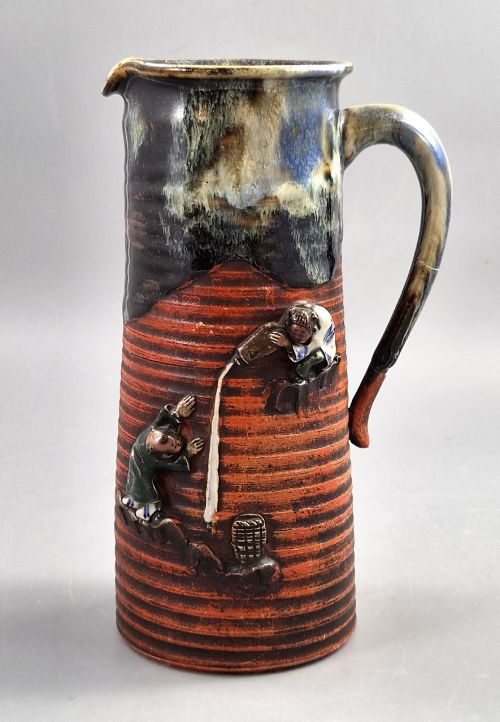
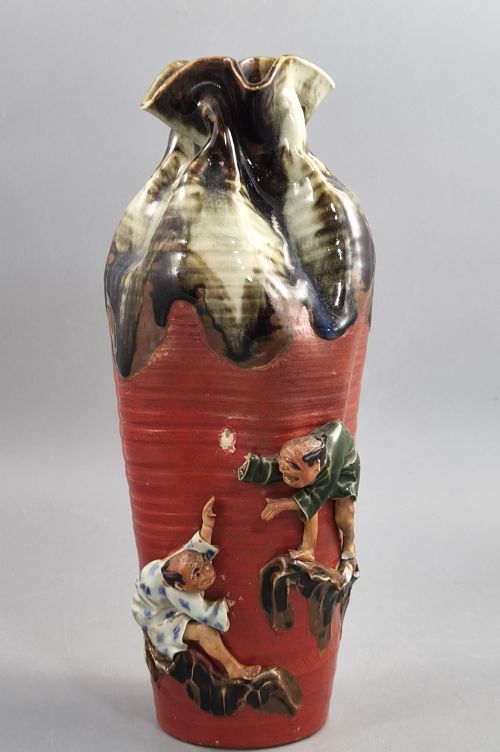
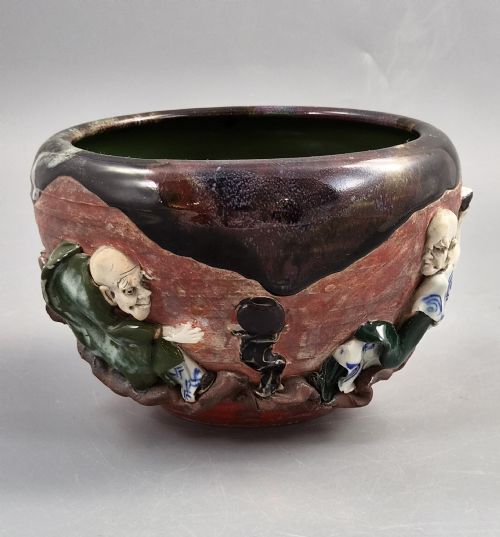
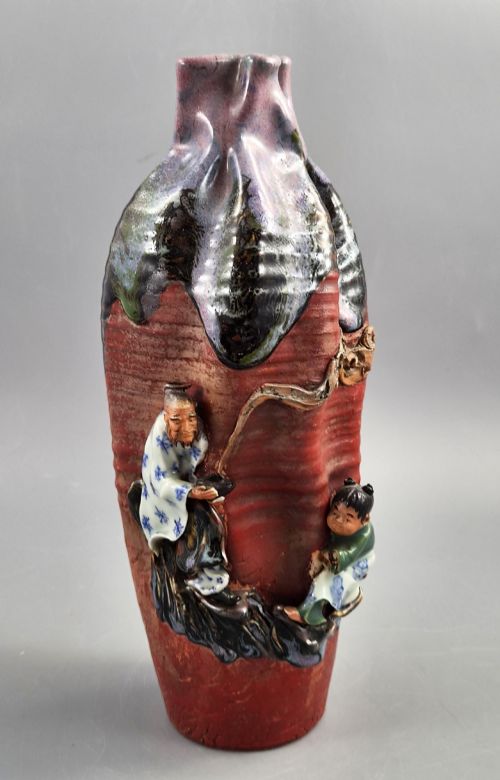
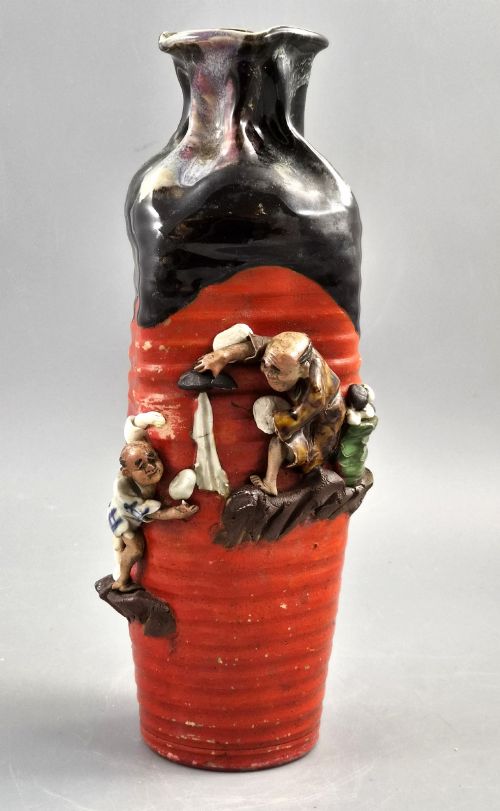
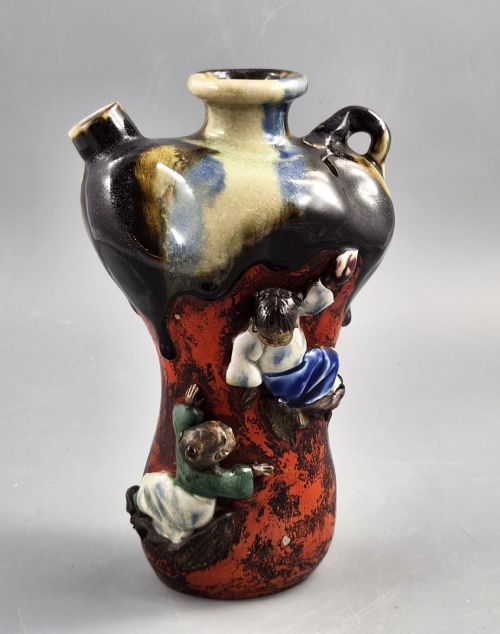
Sculptural works often combined thrown or moulded vessel bodies with separately modelled figures applied in high relief. Workshops such as Sumida Gawa utilised distinctive textured glazes and pinched rims to frame climbing figures and sage scenes.
Listings feature earthenware, porcelain, and stoneware bodies decorated with enamel, gold leaf, and various coloured glazes.
Assessing Quality and Execution
Quality in these ceramic figures rests on the precision of the modelling and the crispness of applied relief details. Finer examples display meticulous attention to facial expressions, hand gestures, and the intricate patterns of garments.
The application of pigments and the control of complex glazes, particularly flambe effects and moriage relief work, distinguish superior works from standard commercial production. Signatures from recognised makers and specific potteries provide further indication of workshop standards.
Inoue Ryosai·Ban-ni·Kizan·Meizan·Kinkozan·Fukagawa Mark·Shozan·Tokyo Taizan·Hichozan Shinpo
The Meiji Period Ceramic Figures Glossary
- Okimono
- A Japanese display ornament intended for traditional interior presentation. These freestanding sculptures typically depict figures, animals, or legendary scenes.
- Satsuma
- A type of Japanese earthenware featuring a crackled ivory-coloured glaze decorated with enamel colours and gilt. Production centres expanded significantly during the Meiji period.
- Kutani
- Japanese porcelain and ceramic ware known for vibrant overglaze enamel decoration. Designs frequently incorporate detailed figural scenes and bold colour palettes.
- Sumida Gawa
- Pottery produced near Tokyo characterised by heavy dripping flambe glazes and applied figures in high relief. The style is closely linked to the Inoue Ryosai workshop.
- Karako
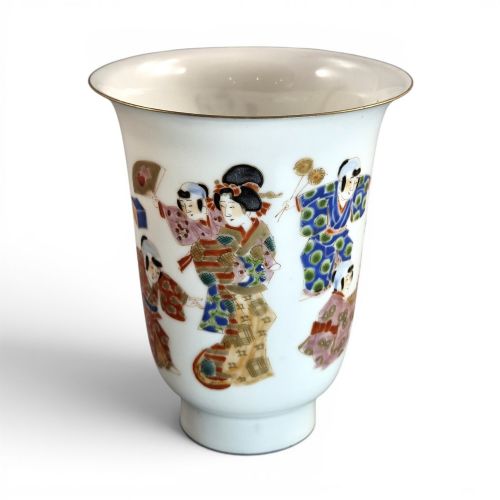
- Depictions of Chinese children shown at play, a traditional motif in East Asian art symbolizing auspicious wishes and vitality.
- Rakan
- Representations of the enlightened disciples of the Buddha. These figures appear frequently in Meiji ceramics, often shown in contemplative or animated groupings.
Meiji Period Ceramic Figures: Frequently Asked Questions
What materials were used for these figures?
Maker workshops utilised earthenware, porcelain, and stoneware as foundational bodies for sculptural and vessel forms. These were finished with glazes, enamels, and gold leaf.
Surface decoration frequently combined fine brushwork with raised enamel techniques known as moriage.
How do I identify a Sumida Gawa piece?
Sumida Gawa pieces are distinguished by heavily textured flambe glazes, earthy bodies, and figures modelled separately and applied in high relief. Many feature pinched rims and gritty surfaces.
Signature plaques or impressed marks from makers like Inoue Ryosai or Koko often appear on these works.
What subjects are most common?
Common subjects include Buddhist deities, Taoist immortals, sages, and legendary figures from Japanese and Chinese folklore. Animals and children, particularly karako, also appear frequently.
Depictions of Kannon, Daruma, and the Seven Gods of Good Fortune reflect the cultural narratives popular during the Meiji era.
How should I care for ceramic figures?
Ceramic figures require gentle dusting with a soft, dry brush to prevent the accumulation of debris in recessed relief areas and glaze crevices. Avoid using liquid cleaners or abrasive cloths, which can damage delicate enamel and gold leaf decorations.
Display pieces away from direct sunlight and areas subject to sudden temperature fluctuations to protect fragile glazes.