




Meiji Carved Table
These Japanese meiji carved table examples and related decorative works bring intricate craftsmanship and rich materials straight into the interior.
Meiji Carved Table
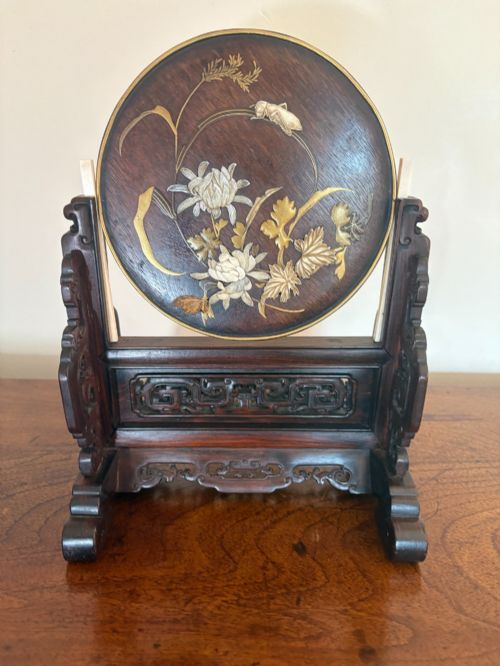
A meiji carved table encompasses various heavily decorated surfaces, stands, and occasional desks originating from Japan during the late nineteenth century and the early twentieth century. Buyers seeking this aesthetic encounter diverse forms ranging from marble-topped hardwood stands to drum-type centre tables with inset cloisonné panels.
The selection also includes associated furnishings and decorative objects such as plant stands, work tables, and screens created in complementary styles like Victorian Anglo-Japanese and Aesthetic Movement. These items reflect both traditional Japanese motifs and the strong influence of nineteenth-century European trade and taste.
How they were made
Craftsmen utilised dense hardwoods alongside bronze, brass, and lacquered surfaces to construct these sturdy yet intricately detailed items. Many pieces incorporate elaborate carving directly into the timber, supported by meticulous joinery methods appropriate for heavy display objects.
Decoration relied heavily on contrasting inlays, utilising bone, mother-of-pearl, and cloisonné enamel to build up complex pictorial or geometric patterns. These decorative elements were carefully set into the wood or bronze frameworks by hand.
Meiji Carved Table Retail Price Guide 2026
Typical asking prices for meiji carved table among the pieces listed under this phrase on Sellingantiques today, from the lower quarter to the upper quarter. They describe what is for sale here now, not the wider market.
The listings span from the Victorian era into the 1920s, combining Japanese manufacture with nineteenth-century European design movements.
What varies in quality
The standard of a piece depends on the depth and crispness of the carving and the precision with which decorative inlays like bone and mother-of-pearl are fitted into the surrounding wood or lacquer. Superior examples display exceptional control in both sculptural detail and the stability of the underlying structure.
Material selection significantly influences the overall character, with dense hardwoods and finely finished bronze castings representing more ambitious production than simpler constructions. The integration of specialised panels, such as inset cloisonné enamel tops, further distinguishes the finer works from standard domestic items.
The Meiji Carved Table Glossary
- Meiji Period
- The era in Japanese history spanning from 1868 to 1912, characterised by rapid modernisation and the opening of trade with the West. This period produced the distinct decorative arts sought by collectors today.
- Cloisonné
- An ancient technique for decorating metalwork objects with colourful materials held in place by thin metal strips welded to the body. In these listings, cloisonné panels occasionally form the striking centrepiece of a table top.
- Shibayama
- A style of Japanese inlay craft utilising delicate pieces of shell, ivory, bone, and coral to create pictorial scenes on a lacquered or wooden ground. It appears frequently on decorative screens and panels.
- Japonisme
- A nineteenth-century European term for the craze for Japanese art and aesthetics that influenced Western design movements including the Aesthetic Period and Victorian Anglo-Japanese styles.
- Hibachi
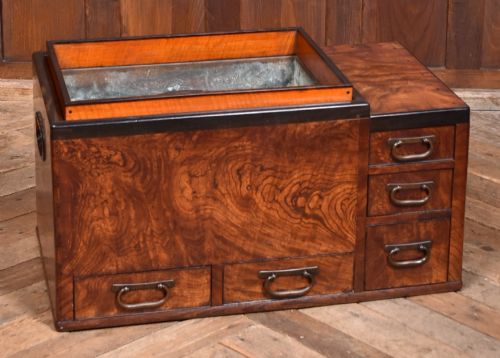
- A traditional Japanese heating device or brazier, often cast in bronze or fashioned from heavy materials, sometimes adapted for decorative use in Western interiors.
Meiji Carved Table: Frequently Asked Questions
How do I care for a lacquered surface?
Dust gently with a soft, dry cloth and avoid harsh chemical cleaners or excessive moisture that can damage the delicate finish.
Keep the piece away from direct sunlight and strong temperature fluctuations to prevent the wood beneath from expanding and cracking.
Are these tables suitable for daily use?
Most of these decorative items function well as display surfaces for lamps, plants, or small objects rather than heavy commercial use.
Care should be taken with moisture and hot items to protect delicate lacquer, bone inlays, and polished hardwood tops.
What defines the Aesthetic Movement style?
The Aesthetic Movement emphasised the visual and sensual qualities of art and interior design over narrative or moral themes.
In furniture, this translated to a clear appreciation for Japanese craftsmanship, simple structural lines paired with rich surface decoration, and ebonised finishes.
Can I identify the exact date of a piece?
Dating relies on stylistic clues, material combinations, and the specific historical window of late nineteenth-century trade and production.
While exact years are rarely stamped, records often place items within broad decades such as the 1880s, 1890s, or the early 1900s.