



Medium Oak Open Shelves
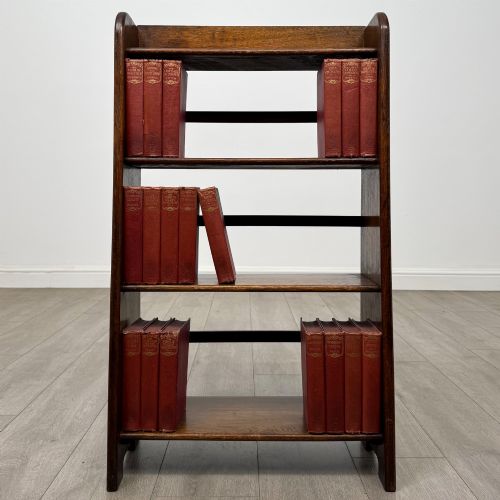
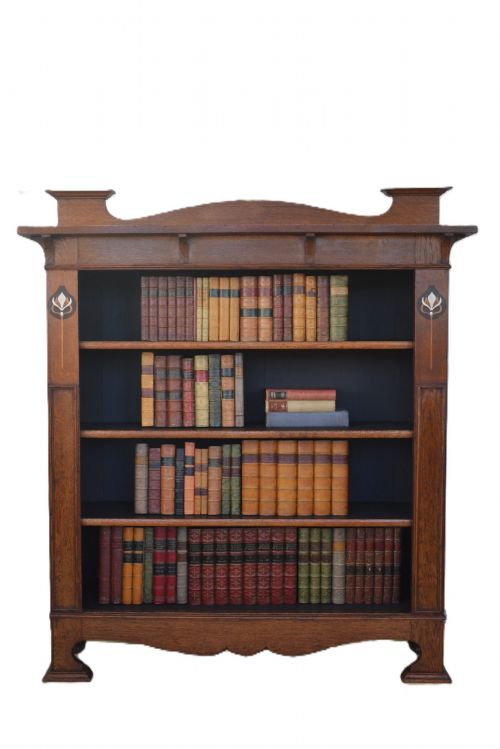
Medium oak open shelves bring straightforward utility and warmth to a room, offering robust timber construction paired with accessible display space.
Medium Oak Open Shelves
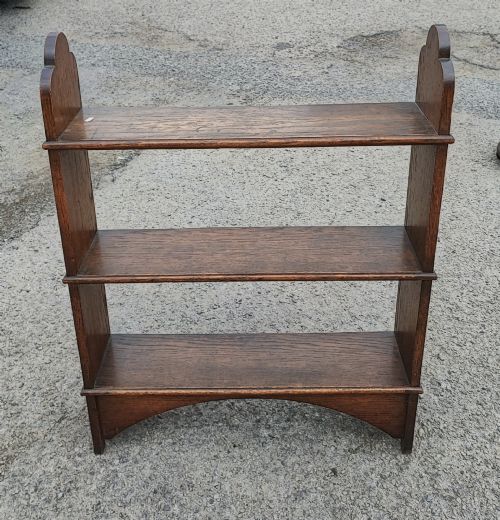
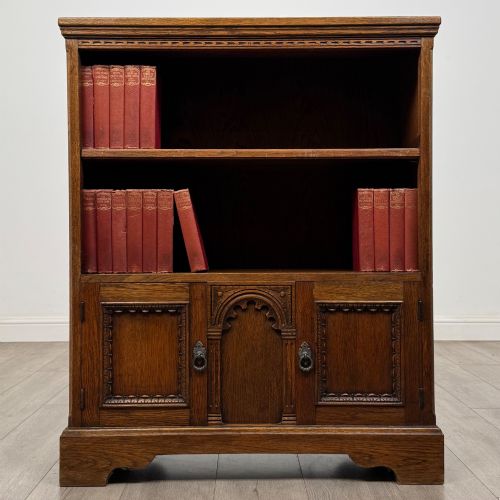
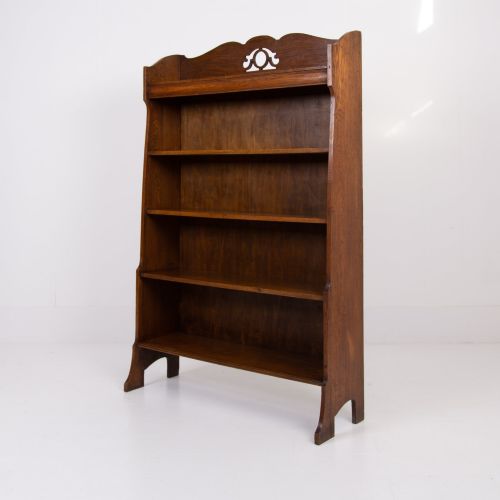
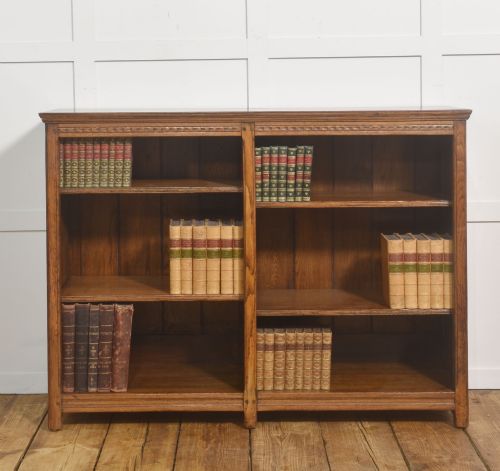
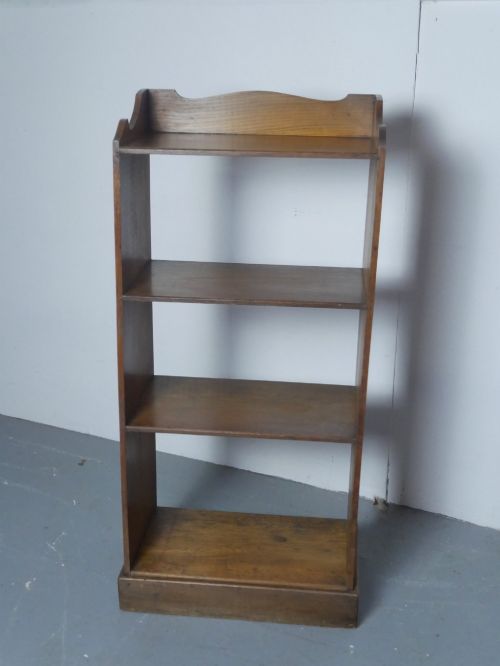
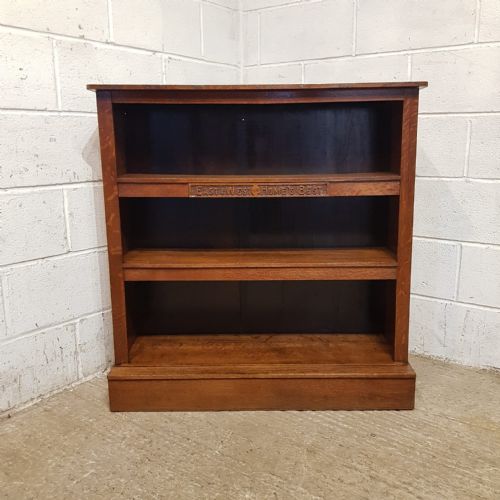
Medium oak open shelves appear primarily as bookcases and shelving units spanning the early twentieth century, including Edwardian examples alongside pieces from the nineteen-tens, nineteen-twenties, and nineteen-thirties. Buyers searching for medium oak open shelves encounter practical storage forms designed to hold books and display objects without enclosing them behind doors.
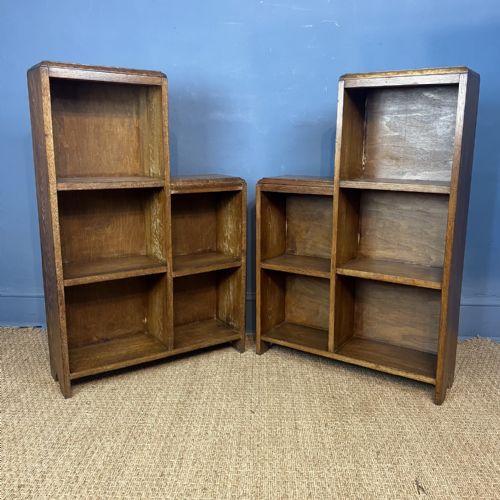
The prevailing aesthetic leans heavily towards the Arts and Crafts movement, alongside Art Deco, Jacobean Revival, and English Country styles. These pieces range from simple upright standing bookcases to adjustable shelving units and paired cabinets, reflecting the domestic needs of the twentieth century.
How they were made
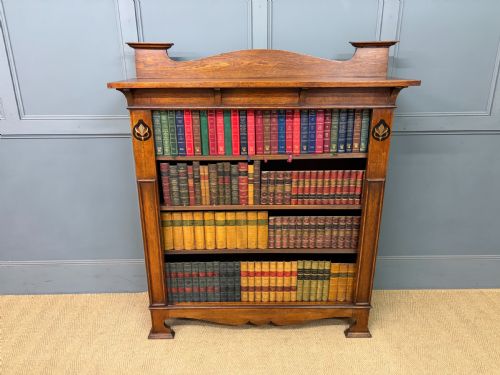
Makers utilised solid oak to construct these shelving units, occasionally incorporating marquetry and inlay for subtle decorative detail. Metal hardware appears alongside the timber on selected examples, particularly in functional elements like adjustable shelf mechanisms.
Workshop construction methods prioritised durability and utility, yielding sturdy open frames capable of supporting heavy volumes. Joinery traditions from the Arts and Crafts and Art Deco periods dictated clean lines and visible structural honesty rather than excessive ornamentation.
What varies in quality
Quality in these pieces rests upon the selection of the timber and the integrity of the joinery. Solid oak construction with thoughtful detailing, such as height-adjustable shelves and restrained inlay work, separates standard utility furniture from finer workshop output.
Attribution to notable designers or makers elevates certain pieces above standard domestic items. The presence of sophisticated styles like stepped Art Deco forms or considered Arts and Crafts proportions distinguishes the most accomplished examples.
Heal s·Betty Joel
The Medium Oak Open Shelves Glossary
- Arts and Crafts
- A design movement prioritising traditional craftsmanship, simple forms, and visible construction methods. It heavily influences early twentieth-century oak furniture.
- Adjustable shelves
- Internal boards that can be moved to different heights using internal slots or metal supports. This feature provides flexibility for storing books of varying sizes.
- Marquetry
- Decorative veneer work arranged in pictorial patterns on the surface of the wood. It adds ornamental contrast to plain oak panels.
- Art Deco
- A twentieth-century style characterised by sleek geometric shapes, stepped forms, and stylised motifs. It appears in later shelving units from the nineteen-thirties.
- Edwardian
- Pertaining to the reign of King Edward VII, spanning the early twentieth century. Furniture from this era often combines traditional proportions with lighter domestic styling.
Medium Oak Open Shelves: Frequently Asked Questions
What periods do these shelves date from?
These pieces date from the early twentieth century, spanning the Edwardian era through to the nineteen-thirties. Most examples cluster around nineteen-ten and nineteen-twenty.
The styles reflect prevailing tastes of those decades, moving from Arts and Crafts simplicity towards Art Deco geometric forms.
Are the shelves adjustable?
Many of the listed bookcases feature height-adjustable shelves to accommodate books of varying sizes. This practical addition allows the internal space to be configured as needed.
Simpler utilitarian versions often feature fixed wooden shelves integrated directly into the side panels.
What materials are used?
Oak forms the primary material for these items, utilised both as solid timber and occasionally with decorative inlay or marquetry details. Metal hardware also appears on specific functional components.
The natural grain of the oak provides the main decorative surface across most variants.
How do I identify an Arts and Crafts piece?
Arts and Crafts shelving typically displays honest construction, robust solid oak timbers, and minimal surface ornamentation. The focus remains on utility and the natural qualities of the material.
Maker attributions or workshops associated with the movement occasionally accompany these particular designs.