





Mechanical Reading Chair
A mechanical reading chair is a sophisticated adjustable seat designed for comfort and study, prized by collectors for its ingenious nineteenth-century engineering.

Mechanical Reading Chair
When you search for a mechanical reading chair, you encounter a specialised form of nineteenth-century seating engineered for adjustable comfort. These armchairs appear in periods such as the Georgian, Regency, William IV, and Victorian eras.
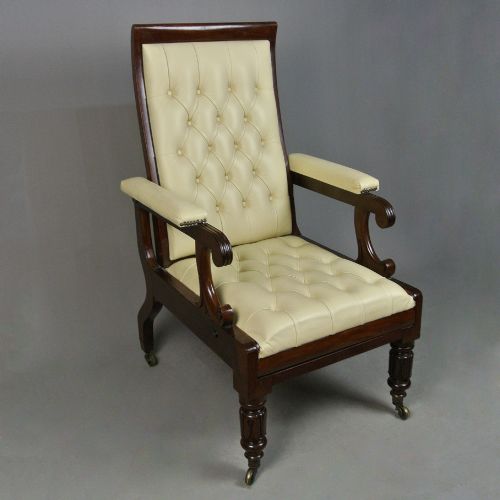
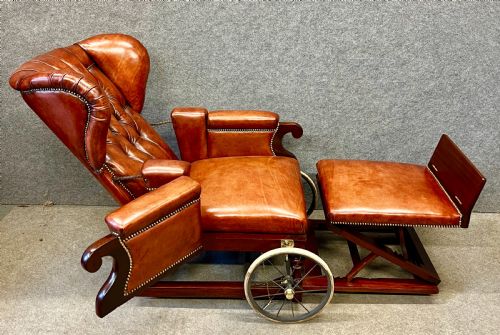
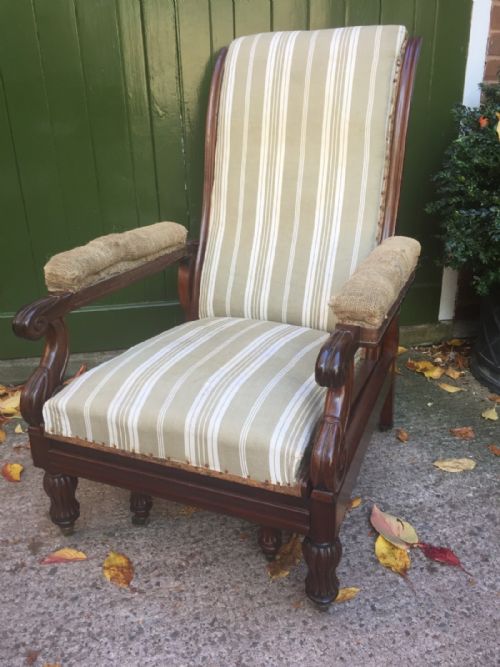
The pieces listed on this page take the form of armchairs, library chairs, and reclining wing backs designed for study or convalescence. Mahogany dominates the woodwork, paired with brass mechanisms and upholstered in leather, velvet, fabric, linen, or ebonised wood.
Makers and designers working in this field include Minter, J Foot & Son, John Ward, and Robert Daws. Styles range from French Empire and French 19th Century to Victorian mechanical pieces and 1910 designs.
How they were made
Cabinet makers constructed the primary frames of these chairs using solid mahogany or ebonised wood, shaping the timber for durability and rich grain. Brass hardware and iron components were integrated into the framework to operate the adjustable reclining mechanisms.
Upholstery forms a vital component of the construction, utilising traditional stuffings beneath surfaces of brown or tan leather, velvet, fabric, and linen. Patent designs required precise mechanical gearing hidden within the wooden arms and underframes to allow smooth movement.
Mechanical Reading Chair Retail Price Guide 2026
Typical asking prices for mechanical reading chair among the pieces listed under this phrase on Sellingantiques today, from the lower quarter to the upper quarter. They describe what is for sale here now, not the wider market.
Some nineteenth-century invalids enjoyed wheels on their reading chairs so they could be wheeled directly from the library to the conservatory.
What varies in quality
The sophistication of the mechanical action distinguishes one piece from another, particularly where patented adjustments by makers such as Foot and Son or Minter are concerned. Smooth operation of the reclining back and integrated footstools reflects the precision of the original brass and iron engineering.
The choice of timber and the preservation of the original mahogany framing also determine the standing of an armchair. Superior examples retain their early leather or velvet upholstery alongside robust structural integrity in the carved armrests and supports.
Minter·J Foot & Son·John Ward·Robert Daws
The Mechanical Reading Chair Glossary
- Metamorphic armchair
- A seating design that transforms into another form, such as a lounge chair with an extending footstool. These pieces use hidden hinges and ratchets to alter the user's position.
- Reclining wing back
- An armchair featuring protective side panels on the backrest designed to shield the occupant from draughts. The reclining mechanism allows the back angle to shift.
- Ebonised wood
- Timber treated with a dark finish to imitate expensive ebony. This technique appears on nineteenth-century frames to create a stark, formal appearance.
- Patent design
- An invention protected by official registration during the nineteenth century. Makers stamped or marked these chairs to denote proprietary adjusting mechanisms.
- Convalescing invalid wheel chair
- A specialised seating form adapted for recovery and mobility. These pieces incorporate mechanical adjustments and wheels for patient transport.
Mechanical Reading Chair: Frequently Asked Questions
What is a mechanical reading chair?
A mechanical reading chair is an adjustable nineteenth-century seat designed for libraries and studies, allowing the user to alter their reclining position.
These pieces use concealed brass and iron hardware to shift the backrest and often include extending footrests for extended periods of sitting.
How do you use a mechanical reading chair?
You operate the chair by releasing internal ratchets or levers hidden within the arms or underframe to adjust the recline angle. Many designs pair with matching footstools or deploy built-in leg supports.
Careful handling of the nineteenth-century brass mechanisms ensures the smooth transformation of the armchair without straining the mahogany frame.
How do I live with a mechanical reading chair?
Position the chair in a study or library where its mechanical adjustments and substantial mahogany frame can be appreciated as a functional seat. Keep the leather or fabric upholstery conditioned and away from direct heat sources.
Regular, gentle use of the internal brass mechanisms helps maintain the working order of the nineteenth-century ratchets and hinges.
How do I tell Victorian chairs apart from earlier periods?
Georgian and Regency examples often display lighter proportions and classical mahogany framing inspired by French Empire styles. Victorian pieces tend to be heavier, incorporating more complex patent mechanisms and robust leather upholstery.
Examining the specific brass hardware and the attribution to makers like Minter or Foot and Son clarifies the exact period of manufacture.