





Masons Ironstone Urn
These masons ironstone urn pieces are robust ceramic vessels designed for display, bringing bold colour and pattern to a room.
Masons Ironstone Urn
When you search for masons ironstone urn, you are looking at sturdy ceramic vessels that span the nineteenth and early twentieth centuries. These pieces appear in forms such as lidded urns, pot pourri jars, garniture sets, and posy vases.
The selection here includes examples from the Georgian, Regency, and Edwardian periods. You will encounter both pairs and individual vases, often featuring oriental-inspired motifs.
The core of the selection draws on nineteenth-century production, running from early Regency pieces up to Edwardian iterations. These vessels served primarily as decorative garnitures and mantel ornaments in traditional interiors.
How they were made
Makers utilised a durable ironstone ceramic body that offered greater strength than traditional porcelain while maintaining a refined surface. This dense material was shaped into various vase and urn forms before firing.
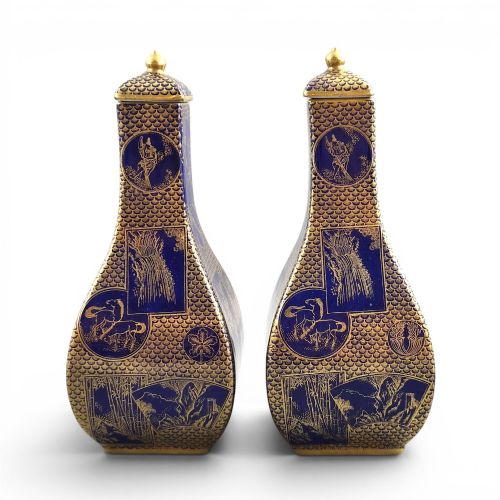
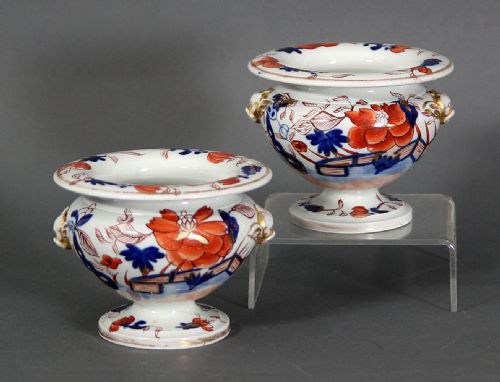
Surface decoration relied on rich enamel painting combined with gilt, gold leaf, and gilding to accentuate intricate patterns. Potters applied glossy glazes to seal the colours, particularly on pieces featuring mazarine blue grounds and Chinoiserie scenes.
Masons Ironstone Urn Retail Price Guide 2026
Typical asking prices for masons ironstone urn among the pieces listed under this phrase on Sellingantiques today, from the lower quarter to the upper quarter. They describe what is for sale here now, not the wider market.
Listings span the nineteenth and early twentieth centuries, featuring ironstone, enamel, and gilt decoration.
What varies in quality
The distinction between standard production and the finest work lies in the crispness of the moulded form and the precision of the hand-painted enamel. Superior examples exhibit complex patterns, such as detailed bird and peony or Bandana motifs, executed with sharp clarity.
The application of gold leaf and gilding also sets higher-tier pieces apart, showing careful burnishing against deep mazarine blue or white grounds. Scale influences desirability, with exceptionally large garniture sets and matched pairs commanding greater attention.
Miles Mason·Mason's Patent Ironstone
The Masons Ironstone Urn Glossary
- Ironstone
- A heavy, durable ceramic body patented in the nineteenth century to imitate porcelain while offering increased strength.
- Chinoiserie
- A decorative style employing European interpretations of Chinese and East Asian artistic traditions, frequently seen on these vases.
- Garniture
- A set of matched vases or urns designed to be displayed together on a mantelpiece or sideboard.
- Pot pourri
- A decorative vessel featuring a pierced cover designed to hold scented dried plant material.
- Mazarine blue
- A deep, rich shade of blue used as a ground colour on ceramic bodies to contrast with gilt and enamel decoration.
Masons Ironstone Urn: Frequently Asked Questions
What is masons ironstone?
Masons ironstone is a heavy, durable ceramic body developed in the nineteenth century as a tough alternative to porcelain.
It allowed makers to produce robust vases and urns that could take rich enamel colours and heavy gilding without losing structural integrity.
How were these urns used?
These vessels functioned primarily as decorative garnitures, mantelpiece ornaments, and tabletop display pieces in traditional homes.
Pot pourri variants also served to scent rooms by holding dried flowers and spices beneath their pierced covers.
How do I date a piece?
Dating relies on stylistic clues, including Regency Chinoiserie motifs, Georgian forms, or later Edwardian production details.
Markings on the base and the specific shade of the enamel also help place a vase within its nineteenth or early twentieth-century context.
Can I use them for flowers?
Posy vases and open vessels are built to hold fresh stems, though many collectors prefer to display them empty.
Care should be taken with older glazes and gilt surfaces when adding water to antique pieces.