





Masons Ceramic Urns
These masons ceramic urns bring bold colour and heavy-bodied utility to any interior, combining durable stoneware forms with vibrant hand-applied glazes.
Masons Ceramic Urns
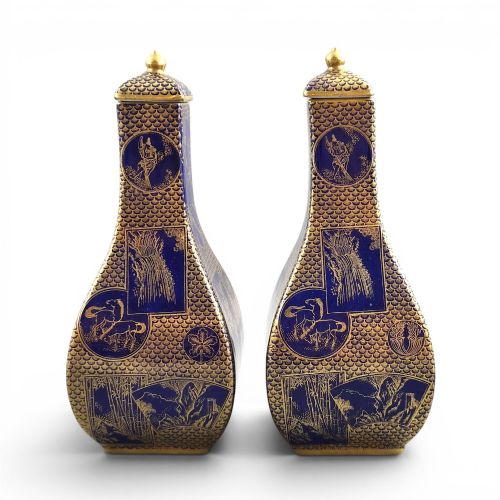
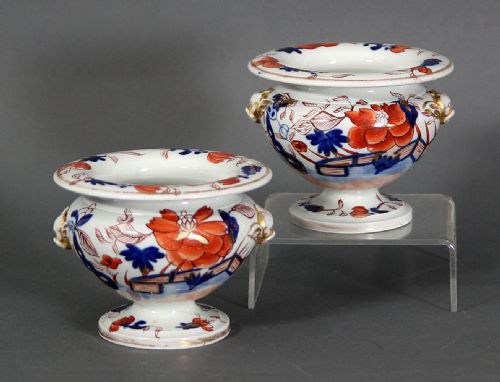
Masons ceramic urns encompass sturdy vessels, lidded jars and potpourri containers produced across the nineteenth and early twentieth centuries. These pieces appear primarily as vases, decorative garnitures and salt cellars that showcase robust construction.
The versions most commonly met on this page span the Georgian, Regency, and Edwardian periods. Buyers encounter both single display vessels and matched pairs decorated in distinctive orientalist motifs.
The form of masons ceramic urns serves both ornamental and functional roles in historical interiors. Potpourri jars and lidded vases survive as characteristic examples of this production.
Materials and Methods
Makers utilised heavy ironstone and stoneware bodies to form these durable vessels, providing a thick ceramic base capable of holding rich surface decoration. This dense composition allowed potters to shape complex vase profiles and lidded jars without structural failure.
Surfaces received vibrant enamel colours and intricate glazes, often incorporating gilt or gold leaf highlights. Artisans applied Chinoiserie patterns featuring exotic birds and peonies directly onto the fired ceramic ground.
Masons Ceramic Urns Retail Price Guide 2026
Typical asking prices for masons ceramic urns among the pieces listed under this phrase on Sellingantiques today, from the lower quarter to the upper quarter. They describe what is for sale here now, not the wider market.
Listings feature ironstone and stoneware bodies decorated in distinct Chinoiserie patterns across the nineteenth and early twentieth centuries.
Assessing Quality and Execution
The refinement of hand-painted enamel work separates standard production from superior pieces. Crisp application of bird and floral motifs alongside precise gilding indicates higher skill.
Complexity of form and completeness of original covers dictate distinction among these vessels. Lidded garnitures and matched pairs with intact potpourri covers represent more ambitious manufacturing standards.
Mason's·Miles Mason
The Masons Ceramic Urns Glossary
- Ironstone
- A patented ceramic body invented in the nineteenth century, known for its heavy, durable composition and resistance to chipping. It provides a sturdy foundation for brightly coloured enamels.
- Chinoiserie
- A decorative style reflecting European interpretations of Chinese and East Asian artistic traditions. This aesthetic dominates the surface patterns featuring birds, flowers and imaginary landscapes.
- Garniture
- A set of three or more matching vases or urns designed to be displayed together on a mantelpiece or sideboard. These matched groups formed a cohesive decorative scheme in period rooms.
- Potpourri
- A mixture of dried petals and spices placed inside a lidded vessel pierced with ventilation holes. The ceramic container releases fragrance while concealing the contents.
- Imari
- A style of ceramic decoration employing a palette of underglaze blue, iron red and gilt. This aesthetic heavily influenced early nineteenth-century production.
Masons Ceramic Urns: Frequently Asked Questions
How do I date an ironstone vase?
Dating relies upon stylistic markers such as Regency or Edwardian design motifs combined with specific pattern names like Bandana. Examining the complexity of the ironstone body and the character of the hand-painted enamels also helps establish the era of manufacture.
Makers often utilised distinct ironstone formulations and printed or painted marks across different decades. Comparing the vessel shape against documented nineteenth-century forms narrows the production window.
Were these urns meant for display?
These vessels served primarily as decorative garnitures and mantel ornaments rather than utilitarian flower containers. Lidded potpourri jars specifically combined ornamental display with the practical release of dried botanical scents.
Matched pairs occupied prominent positions on sideboards and fireplace surrounds in period interiors. Their heavy stoneware construction ensured stability while catching ambient light through gilt and enamel highlights.
What is Chinoiserie decoration?
Chinoiserie represents the European fascination with East Asian motifs, rendered here through exotic birds, peony blossoms and stylised landscapes. Artisans applied these colourful enamel scenes across the surface of ironstone vases and jars.
This aesthetic flourished during the Regency and Victorian periods, adding vivid contrast to white or mazarine blue ceramic grounds. Each hand-painted scene offers a distinct interpretation of orientalist themes.
Why are some urns sold in pairs?
Makers produced many decorative vases and garnitures as symmetrical sets designed to frame a central fireplace or furniture piece. Keeping paired items together preserved the visual balance expected in formal nineteenth-century interior arrangements.
Surviving pairs of posy vases or lidded jars remain desirable because matching pieces often became separated over generations. Their shared ironstone body and synchronized enamel patterns confirm their original pairing.