




Marquise Navette Ring
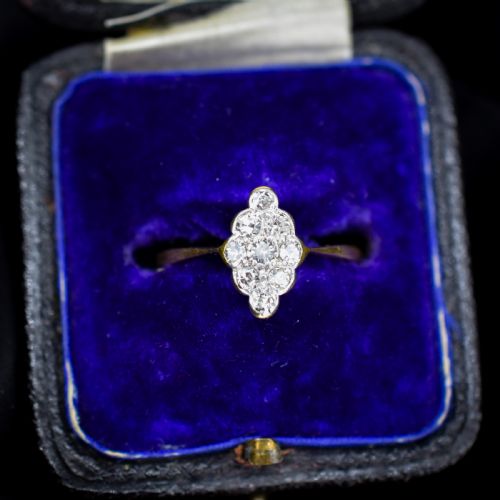
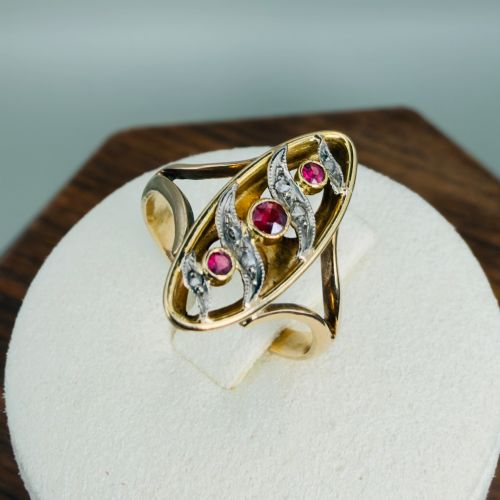
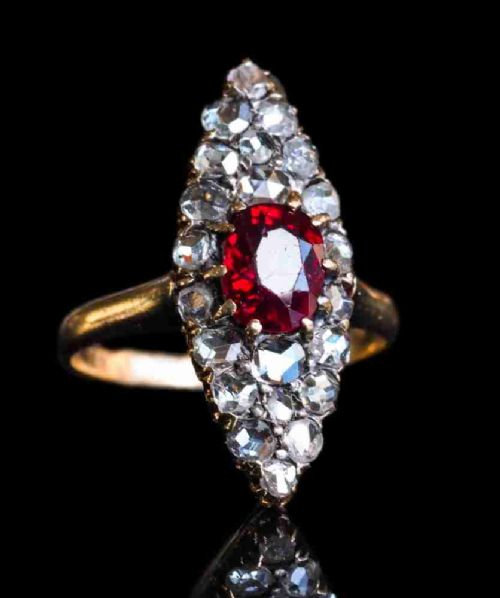
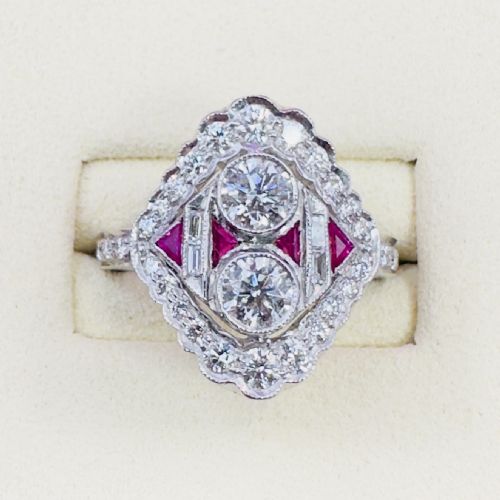
The marquise navette ring stretches along the finger in a slender, pointed silhouette designed to catch the light.
Marquise Navette Ring
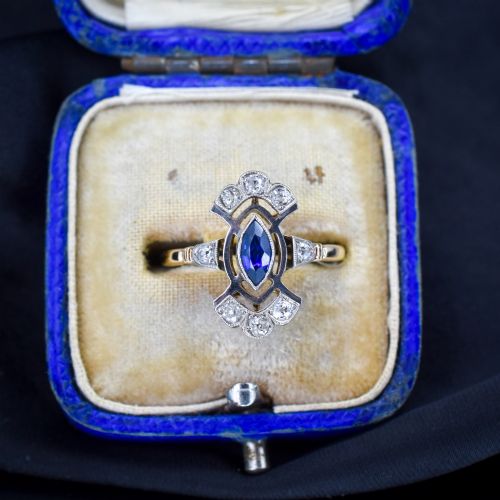
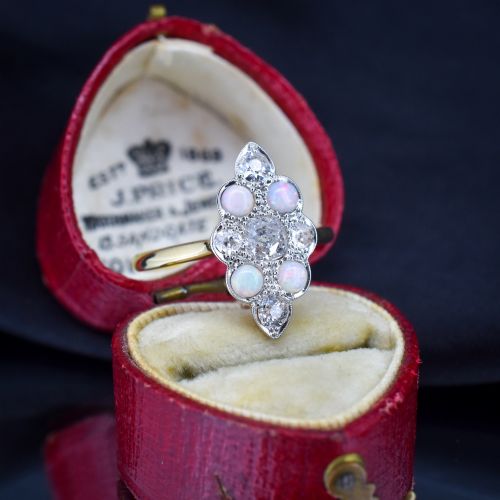
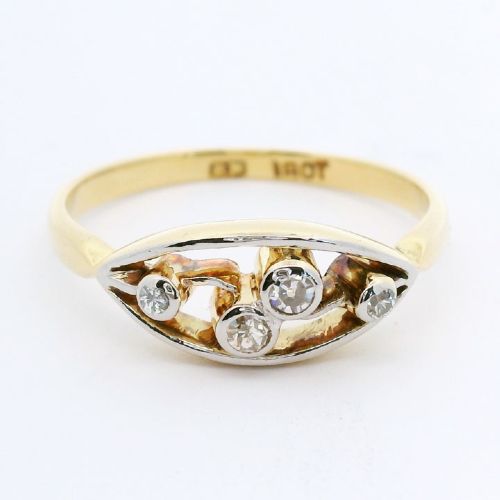
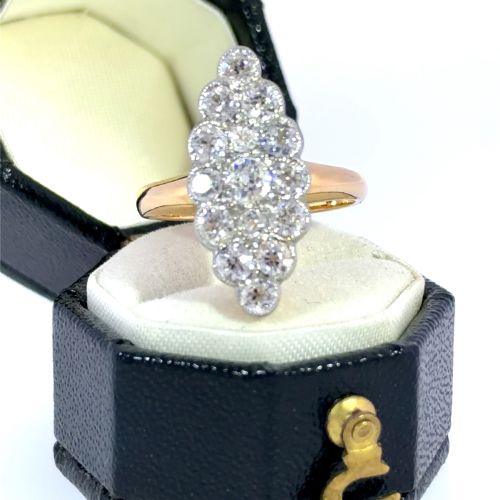
A marquise navette ring presents an elongated boat-shaped profile that flatters the hand with its distinct geometry. The pieces gathered here span from the Victorian and Edwardian eras into the Art Deco period, showing how jewellers adapted the sharp-ended cluster across changing decades. Most examples rely on a dense arrangement of stones following the longitudinal axis of the band.
The profile draws the eye along the finger, making the hand appear slender while housing substantial carat weights within a compact cluster. Victorian and Edwardian iterations often pair diamonds with rubies, sapphires or pearls in yellow gold settings, while later platinum examples lean towards crisp white symmetry. Collectors meet this form primarily as dress rings intended to make an impact through length rather than height.
Materials and construction
Jewellers built these elongated silhouettes using combinations of 18ct yellow gold, 18ct white gold, and platinum to support old cut, mine cut, and rose cut diamonds. Platinum gained favour in the Edwardian and Art Deco periods for its strength, allowing delicate millegrain edges and pierced wirework around central stone clusters without adding heavy bulk.
Gemstones such as rubies, sapphires, emeralds, and turquoise are set alongside diamonds to create contrasting colour palettes within the boat-shaped face. Shanks were frequently cast in gold while the stone-bearing faces utilised platinum or white gold to brighten the sparkle of the diamonds.
Marquise Navette Ring Retail Price Guide 2026
Typical asking prices for marquise navette ring among the pieces listed under this phrase on Sellingantiques today, from the lower quarter to the upper quarter. They describe what is for sale here now, not the wider market.
Listings for this phrase include pieces from the Victorian, Edwardian, and Art Deco eras, utilising platinum, yellow gold, and white gold.
Judging quality and proportion
The fineness of a marquise navette ring rests in the symmetry of its tapered ends and the precision of the stone arrangement. Superior examples maintain a balanced ratio between the central cluster and the shoulders, ensuring the pointed terminals sit flush and secure without catching on fabrics.
Workmanship shows in the delicacy of the metalwork, particularly where pierced galleries and hand-formed platinum settings meet the gold band. The alignment of old cut or rose cut diamonds dictates the visual rhythm of the face, separating standard production from finer artisan pieces.
The Marquise Navette Ring Glossary
- Navette
- A French term meaning little ship, describing the elongated, boat-shaped silhouette pointed at both ends. It defines the characteristic geometry of these cluster rings.
- Marquise
- A pointed, football-shaped cut or setting style often used interchangeably with navette. It maximises perceived stone size by spreading weight along the finger.
- Millegrain
- A decorative technique featuring tiny raised metal beads along the edges of a setting. This Edwardian method softens hard metal lines with texture.
- Old Cut
- A precursor to the modern brilliant cut, featuring a smaller table, higher crown, and open culet. These stones were cut by hand to catch candlelight.
- Cluster
- An arrangement of multiple smaller gemstones grouped together to create the visual impact of a single large stone. In these rings, clusters follow the navette outline.
Marquise Navette Ring: Frequently Asked Questions
How do I wear a antique cluster ring?
These rings are best worn as standalone dress pieces on the hand where their elongated geometry can be fully appreciated. Pairing them with plain wedding bands prevents the pointed ends from rubbing against adjacent rings.
Because of their historical settings, remove them during manual labour or heavy tasks to protect the delicate platinum or gold claws.
What is the difference between marquise and navette?
While both terms describe the same boat-shaped, pointed silhouette, marquise often refers specifically to the cut of a central gemstone or the overall outline. Navette is frequently used to describe the multi-stone cluster setting itself.
In practice, antique dealers use both words interchangeably for this specific ring geometry.
Which periods produced these rings?
The pieces seen here originate predominantly from the Victorian, Edwardian, and Art Deco eras, spanning the late nineteenth century through the early twentieth century. Each period brought distinct material choices, moving from yellow gold towards platinum.
Victorian examples often incorporate rubies or turquoise, while Art Deco pieces favour geometric platinum mountings with sapphires and diamonds.