



Marquise Cut Jewellery
Marquise cut jewellery brings together elongated, pointed gemstone profiles and meticulous cluster settings from Victorian, Edwardian, and mid-century workshops.
Marquise Cut Jewellery
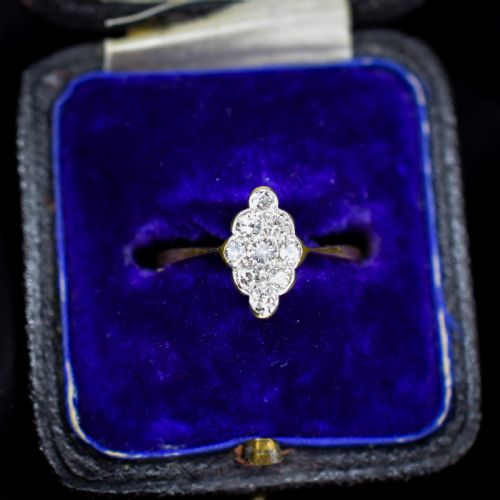
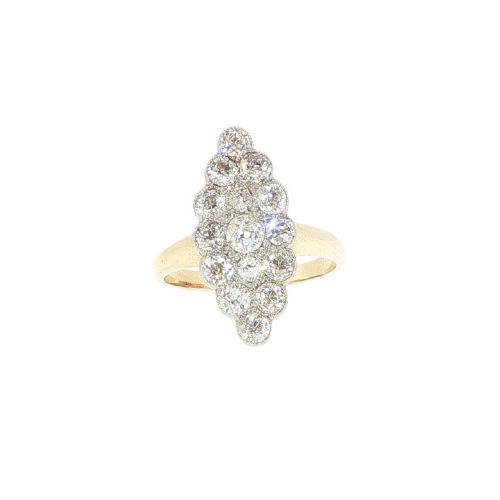
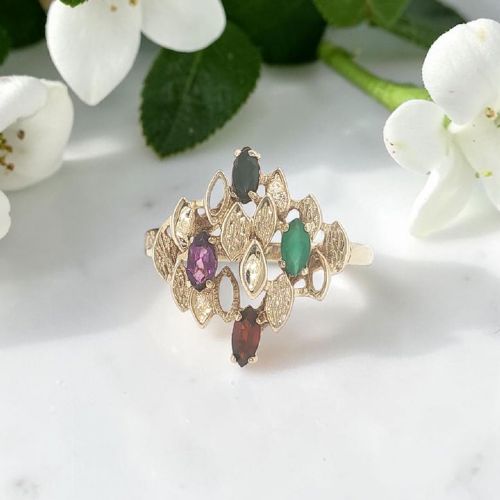
Marquise cut jewellery encompasses distinctive boat-shaped and navette clusters designed to maximise finger coverage and sparkle. Buyers seeking marquise cut jewellery frequently encounter rings, earrings, and bracelets spanning the Victorian, Edwardian, and Art Deco periods alongside mid-century creations.
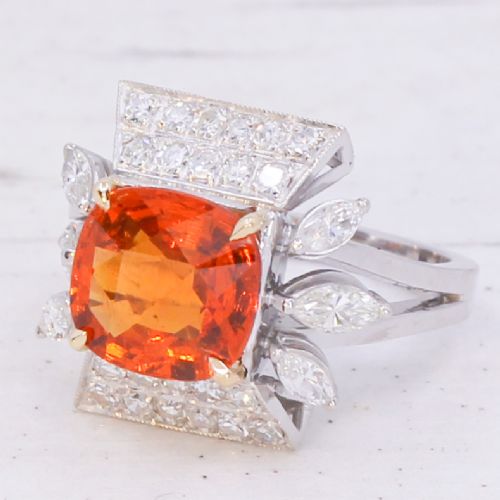
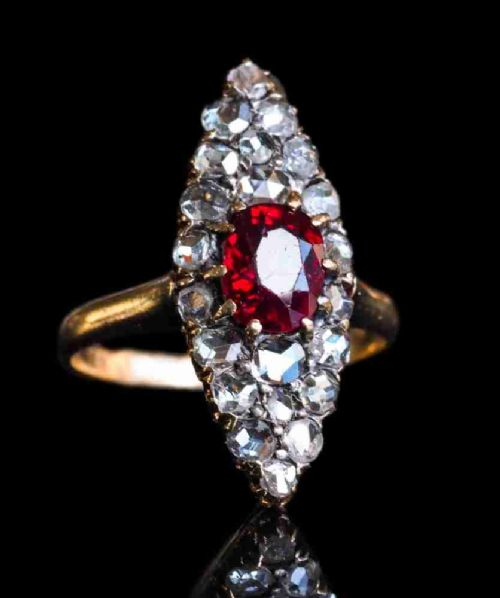
The selections on this page centre heavily on diamond and multi-stone clusters set in platinum or gold. These pieces rely on symmetrical geometry, often framing central coloured stones like emeralds, rubies, and sapphires with concentric borders of smaller diamonds.
Makers ranged from traditional British workshops to French ateliers, utilising both historical forms and modern styling. The resulting inventory offers a direct link to the decorative aesthetics of the late nineteenth and twentieth centuries.
Materials and construction
Craftsmen utilised high-grade platinum and various karatages of yellow and white gold to mount stones securely. Platinum emerged as the preferred metal for intricate Edwardian and Art Deco settings, offering the necessary strength for delicate claw and millegrain work.
Gemstones were hand-cut into elongated marquise or navette profiles and paired with old cut, rose cut, or brilliant cut diamonds. Metalwork combined traditional hand fabrication with early casting techniques, integrating secure prong settings and detailed gallery wirework.
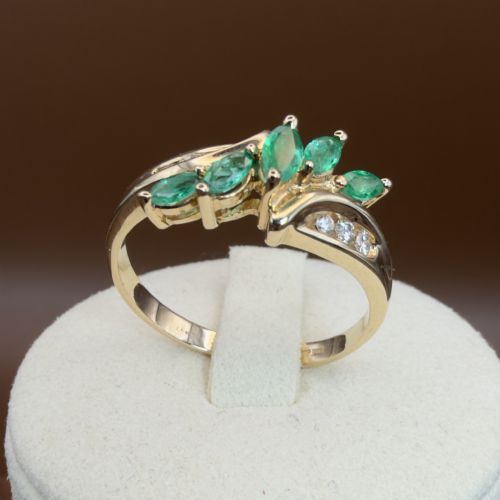
Listings span platinum and gold, incorporating emeralds, sapphires, rubies, and diamonds across Edwardian, Art Deco, and mid-century periods.
Distinctions in quality
Quality rests upon the precision of the stone cutting and the integrity of the original metal setting. Superior examples display perfectly symmetrical pointed gemstone ends that align harmoniously with the surrounding cluster outline without awkward gaps.
The refinement of the supporting metalwork distinguishes finer items, particularly where delicate millegrain borders or pierced galleries remain crisp and unaltered. Original unheated gemstones and well-matched diamond pairings further elevate the distinction of a piece.
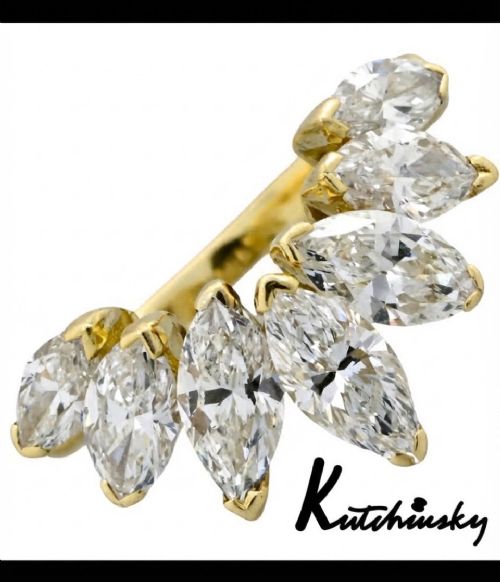
Kutchinsky
The Marquise Cut Jewellery Glossary
- Marquise cut
- A gemstone cut featuring an elongated body with pointed ends, designed to maximise carat weight appearance and finger coverage. It is also historically referenced as a navette cut.
- Navette
- A French term meaning little ship, describing the boat-shaped silhouette typical of antique cluster rings and pendants. This configuration was especially popular during the Victorian and Edwardian eras.
- Millegrain
- A decorative jewellery technique involving a textured border of tiny raised metal beads along the edges of a setting. This detail is a hallmark of Edwardian and Art Deco platinum work.
- Old cut
- A diamond facet style hand-polished before modern brilliant cutting standards were established. These stones generally exhibit smaller tables and higher crowns.
- Cluster ring
- A ring design featuring a central gemstone surrounded by a group of smaller accent stones. This arrangement enhances visual impact and light reflection.
Marquise Cut Jewellery: Frequently Asked Questions
What is a marquise cut?
A marquise cut is an elongated gemstone shape featuring curved sides and two pointed ends. This silhouette originates from eighteenth-century French royal aesthetics.
In antique jewellery, this profile often forms the centrepiece of boat-shaped navette clusters designed to maximise visual presence on the hand.
How do I care for antique marquise jewellery?
Maintain these pieces by storing them individually in soft pouches to prevent gemstone contact and scratching. Regular gentle cleaning with warm soapy water removes accumulated oils.
Avoid harsh ultrasonic cleaners, particularly for softer coloured stones or fragile claw settings found in older pieces.
How can I tell Edwardian from Victorian pieces?
Edwardian items frequently utilise platinum settings combined with intricate millegrain detailing and lighter openwork frames. Diamonds are typically set to maximise white-on-white brilliance.
Victorian examples more commonly employ yellow gold or silver-topped gold alongside slightly warmer, hand-cut old mine or rose diamonds in denser cluster arrangements.
Were these pieces worn daily?
Many cocktail and dress rings served as specialised accessories for evening events and formal social gatherings. Earrings and bracelets similarly accented grand attire during the early and mid-twentieth century.
Durability varied by period, with platinum Art Deco designs offering robust everyday wear compared to delicate nineteenth-century yellow gold settings.