
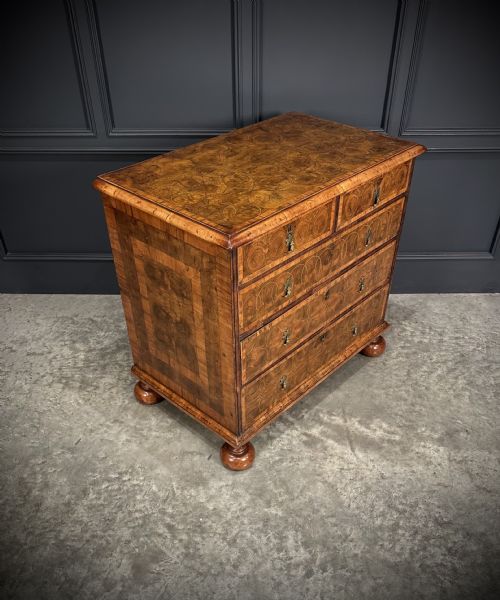


Marquetry Wood Commode
When choosing a marquetry wood commode, you are looking at centuries of intricate timber craftsmanship designed to store your belongings in exceptional style.
Marquetry Wood Commode
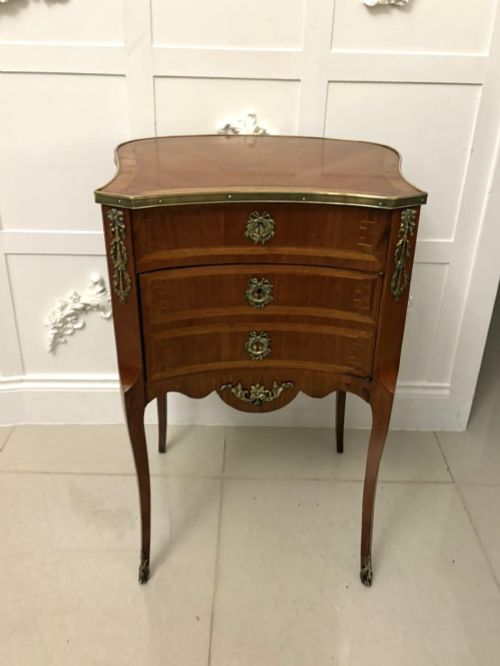
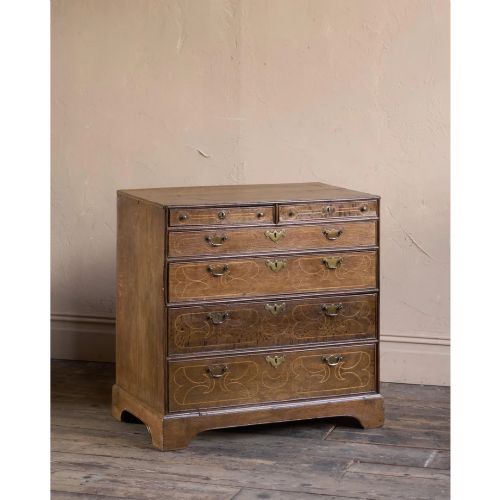
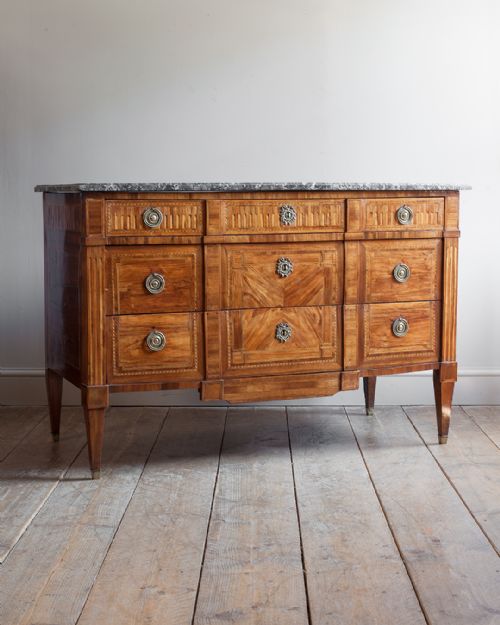
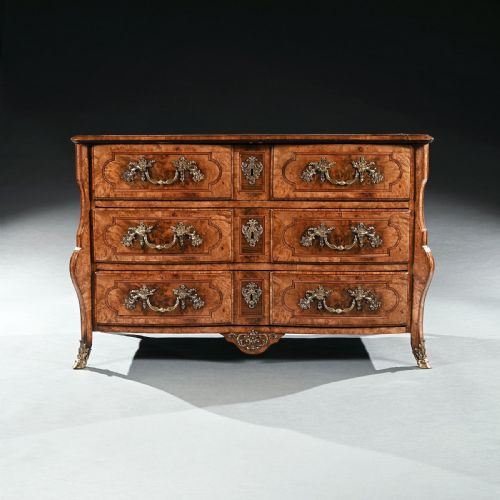
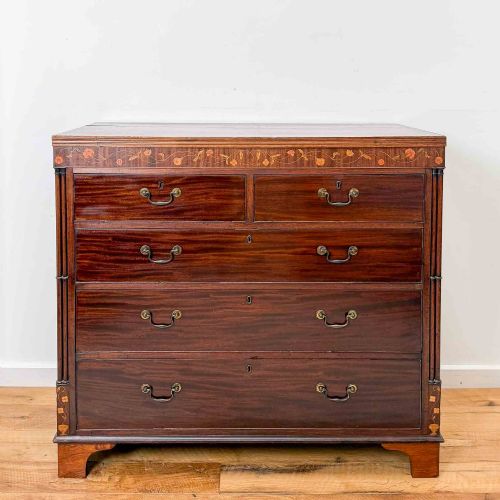
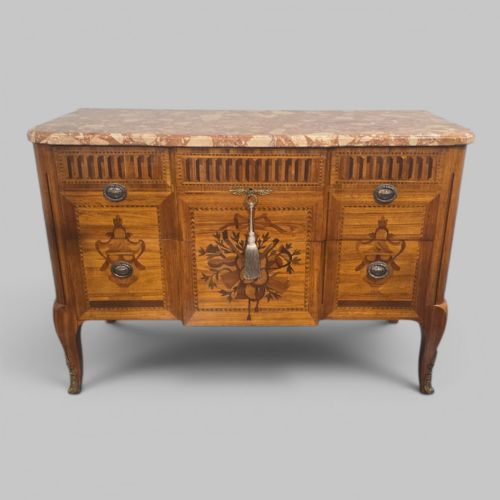
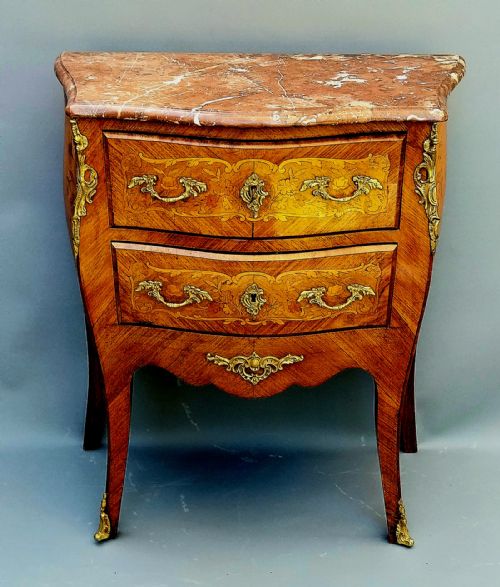
A marquetry wood commode is a low storage chest fitted with drawers or doors, decorated with detailed wood-veneer patterns. When you search this phrase, you meet forms ranging from serpentine French styles to early English chests of drawers.
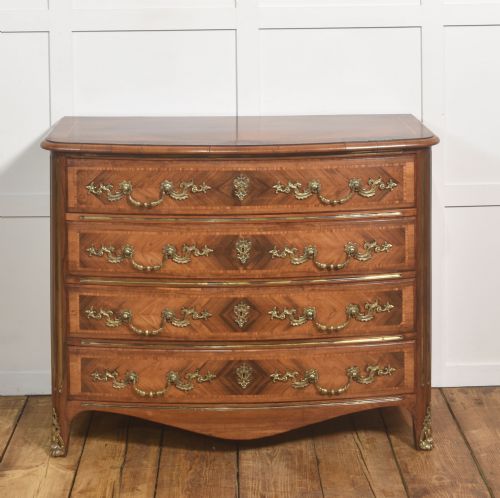
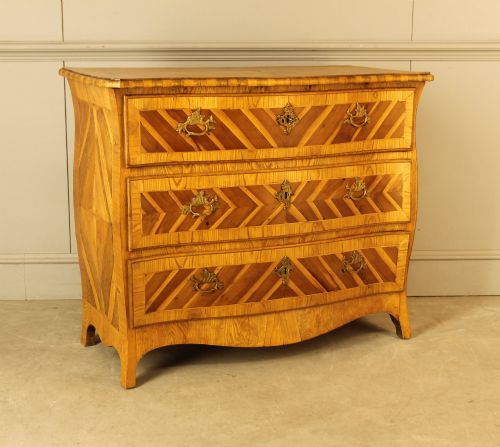
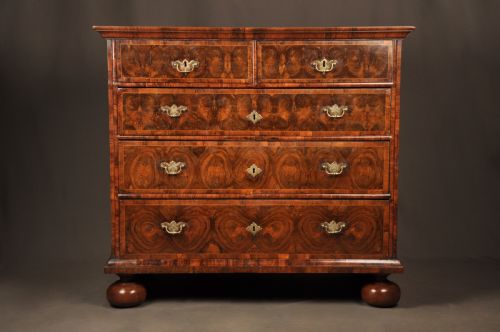
The pieces on this page span from the seventeenth century through the Edwardian era, incorporating regional variations such as Dutch bombe shapes and Italian cabinets. French Louis styles and William and Mary periods appear frequently among the selections.
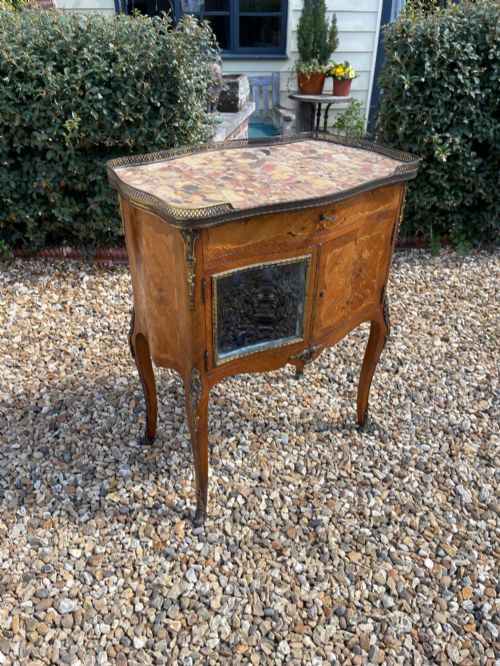
Makers and workshops across Europe utilised varied cabinet forms, including bedside tables, side cabinets, and miniature furniture. The primary function remains storage, expressed through decorative wood surfaces and contrasting borders.
How they were made
Cabinetmakers constructed carcases from solid timbers like oak, walnut, or mahogany, applying fine veneers of kingwood, tulipwood, fruitwood, and satinwood to the exterior surfaces. Selected grain patterns, such as burr elm, burr yew, and burr maple, provided natural movement and texture to the designs.
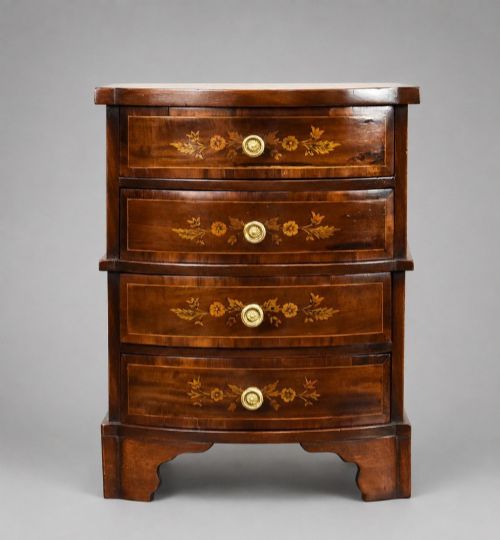
Workshops cut contrasting woods to form floral and geometric marquetry pictures, securing them into the background veneer. Mounts in brass, ormolu, and gilt bronze often finished the corners, feet, and handles of French and continental examples.
Slab marble tops, frequently in shades of white or variegated tones, were fitted to the upper surfaces of many continental and revival pieces. Oyster veneers, sliced from small branches to show circular cross-sections, characterised earlier seventeenth-century English and Dutch examples.
Certain tiny chests were built specifically for miniature displays or apprentice demonstrations, perfectly scaling down full-size floral marquetry details.
What varies in quality
The precision of the veneer matching and the complexity of the marquetry cuts dictate the distinction between standard and superior pieces. Finer examples display seamless transitions between contrasting woods without visible gaps or excessive filler.
The choice of secondary timbers and the weight of the mounts reveal the workshop standards behind each cabinet. Heavy cast ormolu mounts and substantial marble tops indicate higher production expenditures than thin brass pressings and plain wooden surfaces.
Structural integrity depends upon the stability of the carcase and the retention of the original drawer linings. Pieces retaining their early or original surface patination command greater appreciation than those stripped or heavily refinished.
Thomas Hache of Grenoble·Maison Millet Paris
The Marquetry Wood Commode Glossary
- Marquetry
- The art of forming decorative patterns by fitting together small pieces of wood veneer. This technique differs from inlay by covering the entire surface of the carcase.
- Bombe
- A swelling, outward-curved contour found on the front and sides of furniture. This bulbous profile became popular during the baroque and rococo periods.
- Ormolu
- Gilded bronze mounts applied to furniture edges and feet. The technique involves coating cast bronze with a mercury and gold amalgam.
- Oyster veneer
- Circular wooden slices cut across small branches to resemble oyster shells. This method creates repeating patterns across seventeenth-century drawer fronts.
- Serpentine
- A curved line bending alternately inward and outward. This undulating shape frequently defines the front profile of eighteenth-century cabinets.
Marquetry Wood Commode: Frequently Asked Questions
What is a marquetry wood commode?
A marquetry wood commode is a decorative cabinet or chest featuring detailed wood-veneer patterns across its facade and sides. These pieces combine storage drawers with elaborate timber craftsmanship.
Originating primarily in continental Europe and Britain, they served as both functional furniture and prominent display items in domestic interiors.
How do I date an antique commode?
Dating relies upon examining the construction methods, timber choices, and stylistic markers of the period. Seventeenth-century examples often feature oyster veneers and oak carcases, whereas eighteenth-century versions introduce serpentine shapes and exotic kingwood veneers.
Revival pieces from the nineteenth and early twentieth centuries frequently emulate these earlier styles using machinery-cut veneers and heavier internal framing.
Where should I place a commode at home?
These cabinets suit living rooms, hallways, and bedrooms where their decorative veneer work can be appreciated away from direct sunlight and dampness. Marble-topped versions offer durable surfaces for lamps and decorative objects.
Ensure the chosen space matches the depth and width of the piece, particularly for bombe shapes that bulge past their upper corners.
How do I care for antique wood veneer?
Maintain stable room humidity and protect surfaces from extreme temperature changes to prevent the veneer from lifting or cracking. Dust regularly with a soft, dry cloth without applying modern silicone polishes.
Occasional applications of traditional beeswax nourish the timber and preserve the historic patina of the surface.