

Marquetry Wood Chest
A marquetry wood chest brings intricate timber patterns and centuries of craftsmanship into a room.
Marquetry Wood Chest
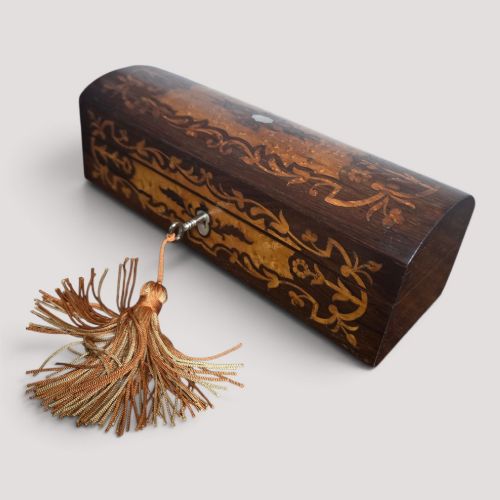
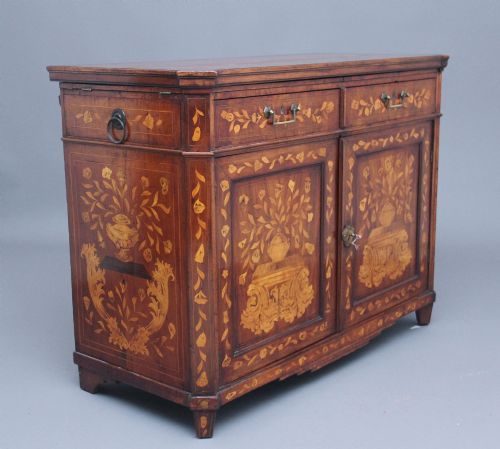
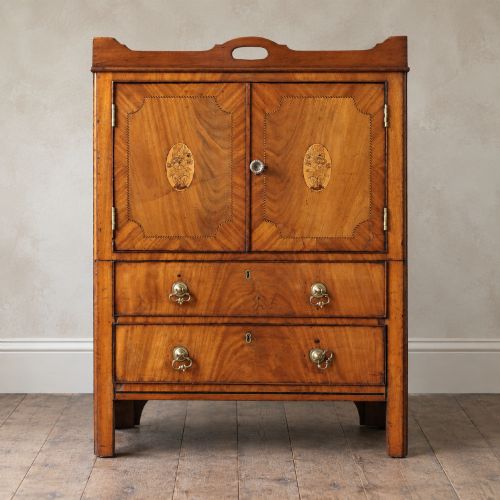
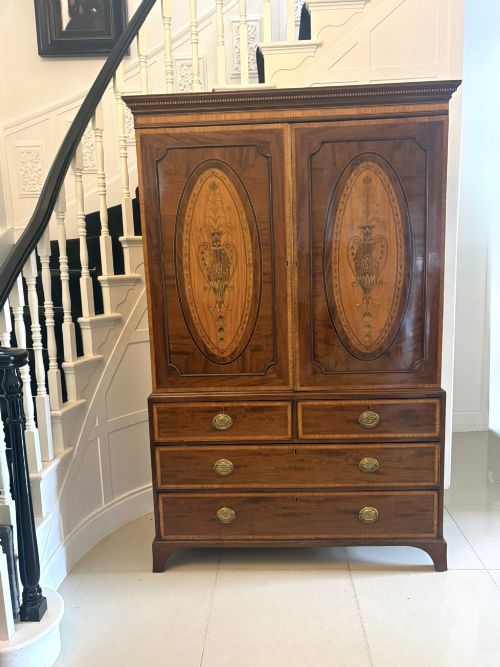
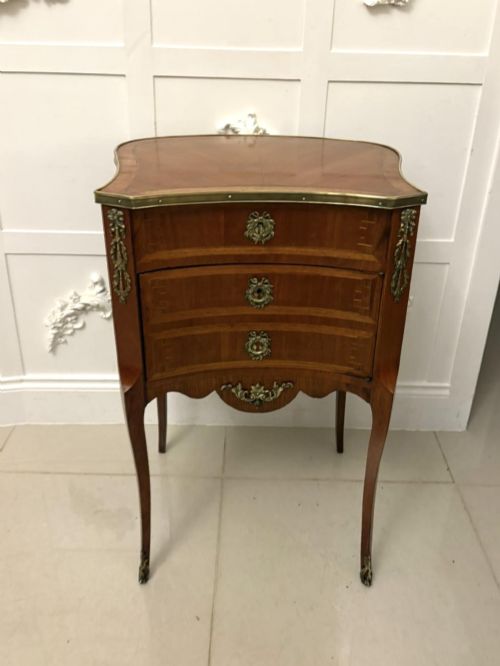
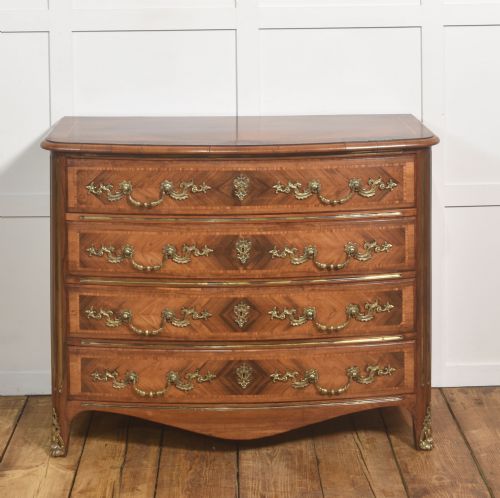
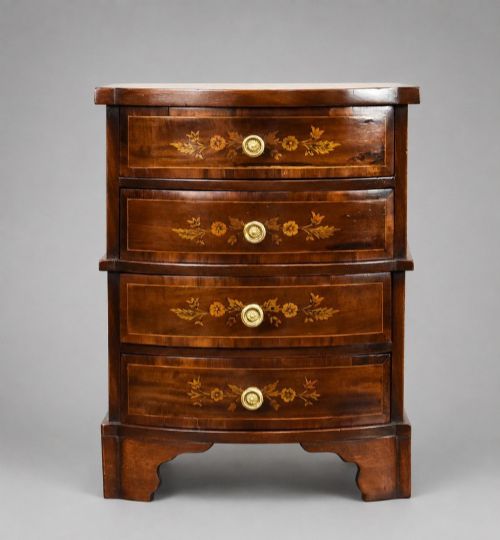
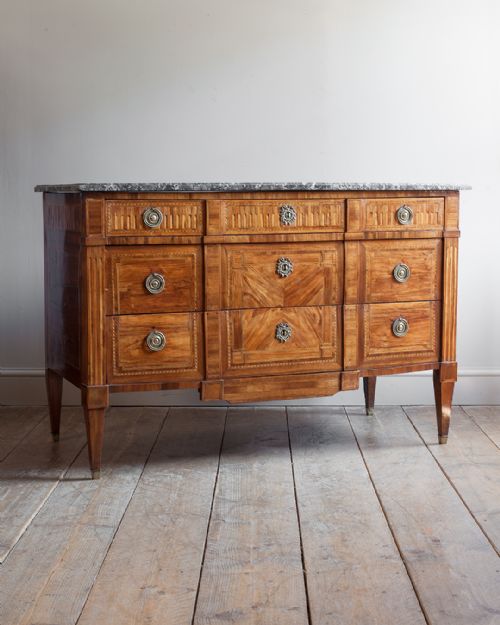
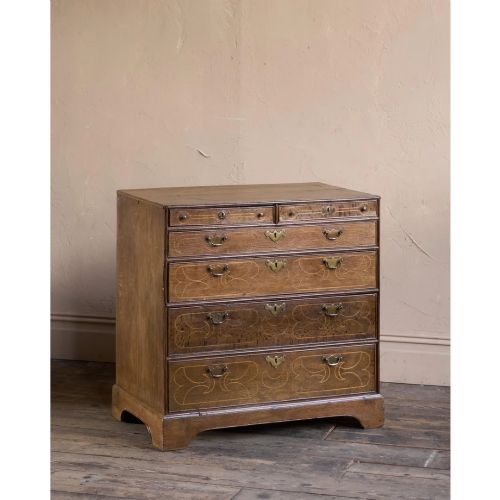
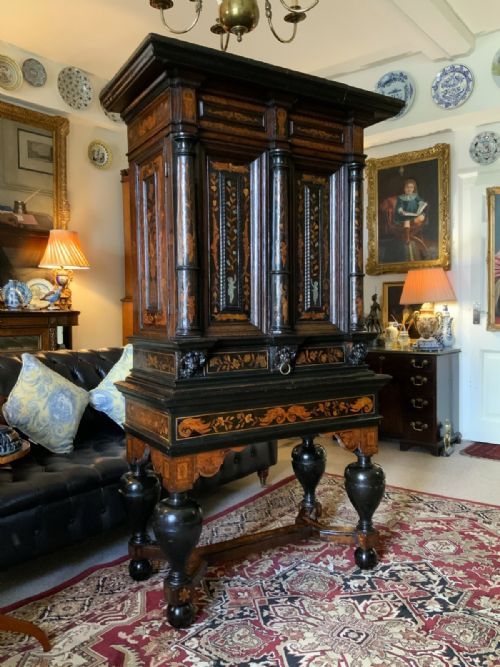
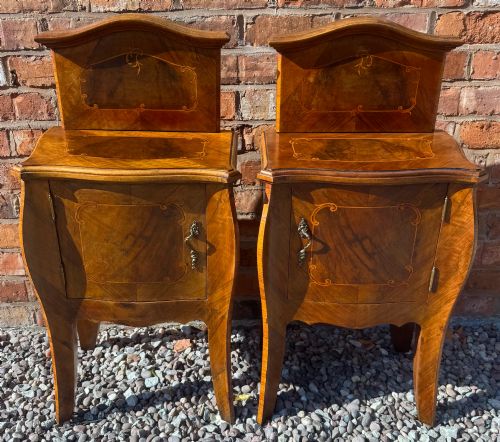
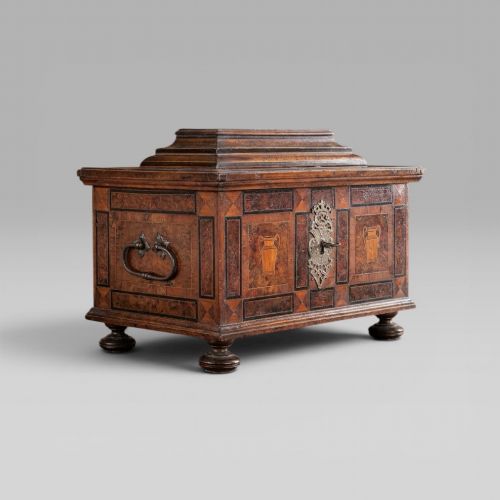
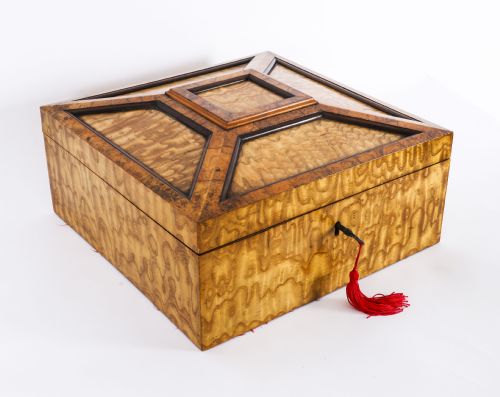
A marquetry wood chest spans periods from the seventeenth century through to the twentieth, encompassing pieces shaped as commodes, caskets, cabinets, and chests of drawers. Buyers encounter substantial case furniture alongside smaller storage forms, reflecting both grand domestic settings and travel.
The aesthetic vocabulary stretches across Georgian, Victorian, William and Mary, and Regency styles, alongside Dutch Baroque and French Louis XV revivals. Such variety means a buyer finds everything from sturdy oak and walnut designs to serpentine and bombe shapes topped with marble.
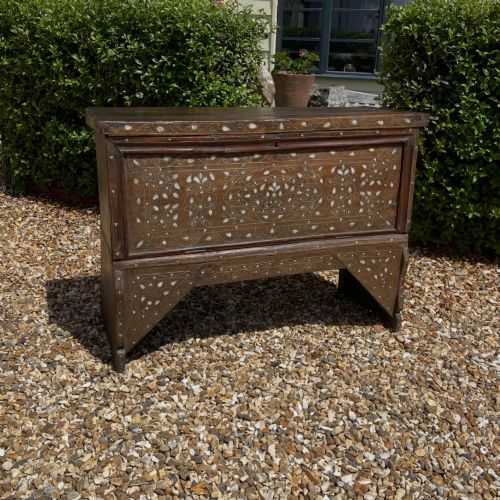
Origins are suitably diverse, taking in English, French, Dutch, German, Swedish, and Syrian workshops. This international scope brings distinct regional timbers and decorative motifs to the fore, creating clear choices for different interior schemes.
Craft and execution
Quality rests upon the precision of the veneer work and the tightness of the joinery across drawers, doors, and lids. Master workshops achieved seamless integration of contrasting timbers where lesser examples show coarser gaps and simpler grain selection.
Marquetry Wood Chest Retail Price Guide 2026
Typical asking prices for marquetry wood chest among the pieces listed under this phrase on Sellingantiques today, from the lower quarter to the upper quarter. They describe what is for sale here now, not the wider market.
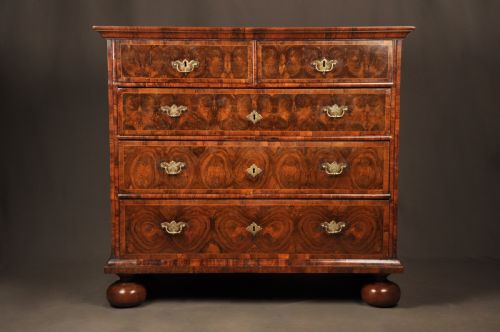
The inventory records seventeenth-century oyster veneered pieces alongside nineteenth-century French commodes and Edwardian miniature chests.
Thomas Hache·Henry Hollamby·Edwards & Roberts
The Marquetry Wood Chest Glossary
- Marquetry
- Decorative veneer work arranged in geometric patterns or pictorial scenes across a wooden surface. It distinguishes simpler inlaid items through its pictorial complexity.
- Commode
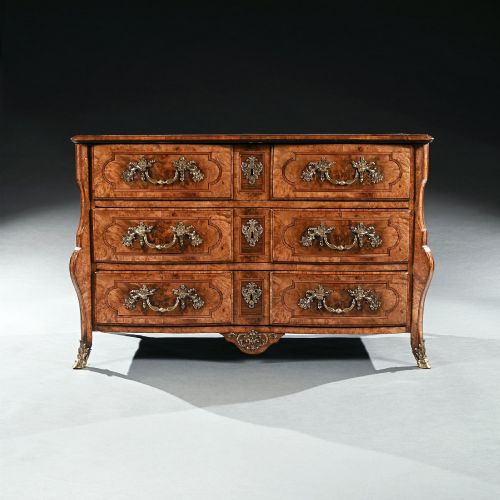
- A low chest of drawers or cabinet developed in France during the seventeenth century. These often feature serpentine or bombe profiles.
- Oyster veneer
- Transverse slices of small branches laid to resemble oyster shells. This technique creates distinctive circular grain patterns on seventeenth-century furniture.
- Bombe
- An outward-swelling, bulging contour found on case furniture. It requires considerable skill from the cabinetmaker to execute successfully.
- Parquetry
- Geometric mosaic woodwork formed of regular wooden tiles. It differs from marquetry by adhering to strict repeating patterns rather than pictorial designs.
Marquetry Wood Chest: Frequently Asked Questions
What is a marquetry wood chest?
A marquetry wood chest is a storage piece decorated with fitted wood veneers that form patterns or pictures.
Craftsmen cut different coloured timbers to create detailed surface designs on drawers, lids, and doors.
How were these chests used?
These pieces served practical storage needs for linens, garments, valuables, and tea.
Larger commodes stood in bedrooms and parlours, while smaller caskets and cabinets secured precious items.
How do I live with one?
Place your piece away from direct sunlight and heat sources to protect the delicate wood veneers.
Maintain stable humidity levels in the room to prevent the timber from warping or cracking over time.
How do I tell periods apart?
Examine the structural timber, hardware, and overall silhouette to identify the period.
Seventeenth-century examples often feature oyster veneers and heavy oak, whereas Georgian pieces favour mahogany and satinwood.