




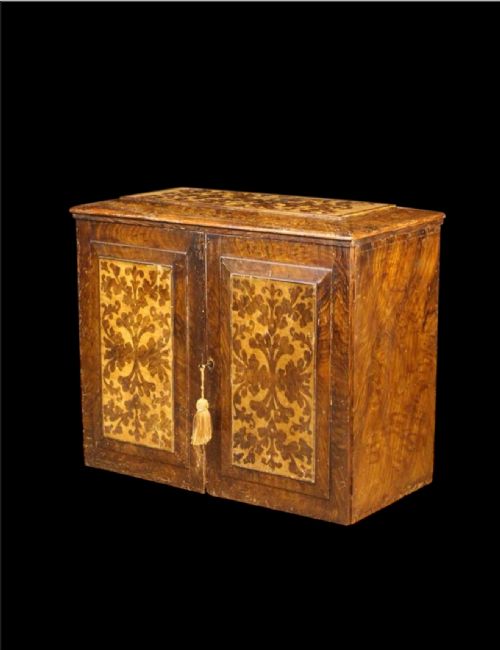


Marquetry Tabletop Box
A marquetry tabletop box brings intricate wood inlay and compact utility together, offering a handsome place to store small treasures on a desk or chest.
Marquetry Tabletop Box
When you search for a marquetry tabletop box, you encounter pieces designed for storage or display upon a surface, ranging from compact cabinets to specialised musical and dressing boxes. The selection reflects diverse origins and forms, including Dutch Baroque mirrors, Georgian spice cabinets, and Ottoman chests.
The version most commonly met on this page is the 19th Century or Victorian box, often featuring hinged lids, drawers, or swing mirrors. These pieces served practical domestic purposes, housing spices, cosmetics, or valuables while displaying decorative skill.
Makers adapted these tabletop forms to suit changing tastes across the 18th, 19th, and early 20th centuries, resulting in objects that vary from utilitarian spice storage to ornate musical instruments. Their enduring appeal lies in the combination of functional compartments and detailed surface decoration.
How they were made
Craftsmen built the core structures of these pieces using sturdy timbers like mahogany and walnut, providing a stable foundation for decorative treatment. Surfaces received meticulous wood inlay, incorporating contrasting materials such as boxwood and satinwood to form pictorial or geometric patterns.
Detailing often included functional and decorative hardware made from brass, alongside fitted glass elements or bone accents where appropriate. These materials were shaped and assembled by hand to create durable tabletop cabinets, mirrors, and musical boxes.
Marquetry Tabletop Box Retail Price Guide 2026
Typical asking prices for marquetry tabletop box among the pieces listed under this phrase on Sellingantiques today, from the lower quarter to the upper quarter. They describe what is for sale here now, not the wider market.
Some Victorian musical boxes were built to play exactly six distinct airs to entertain guests after dinner.
What varies in quality
The precision and complexity of the wood inlay set superior pieces apart from simpler examples, showing tight joints and careful matching of contrasting timbers. Master craftsmen achieved sharp geometric lines and expressive pictorial scenes using boxwood, satinwood, and walnut.
Structural integrity and the retention of original brass hardware or glass components distinguish well-preserved examples. The integration of functional elements, such as working musical movements or smoothly pivoting mirrors, reflects the standard of the original workshop.
The Marquetry Tabletop Box Glossary
- Marquetry
- Decorative veneer applied to a structure in patterns or pictures. This technique uses contrasting woods like boxwood and satinwood to create visual depth on the surface.
- Inlay
- The technique of embedding pieces of material into a solid surface to form a design. Craftsmen sink contrasting woods into a mahogany or walnut base.
- Tabletop Cabinet
- A small storage chest designed to sit upon a desk, table, or dresser. These pieces typically feature multiple drawers, compartments, or hinged doors.
- Swing Mirror
- A looking glass mounted on a frame with pivots that allow the angle of the glass to be adjusted. These are often integrated into dressing table mirrors and tabletop stands.
Marquetry Tabletop Box: Frequently Asked Questions
What did people store inside these boxes?
Owners used these tabletop pieces to secure small valuables, letters, spices, and cosmetics depending on the specific form of the box or cabinet.
Specialised interiors often included compartments tailored for specific items, such as fitted spice drawers or spaces for musical movements.
How do I care for a wood inlaid box?
Keep the piece away from direct sunlight and steady heat sources to prevent the delicate wood veneers and boxwood inlays from drying out or lifting.
Dust gently with a soft dry cloth and avoid applying modern chemical polishes that can damage antique finishes.
Are musical boxes difficult to maintain?
Mechanical musical movements require careful handling and should be wound gently without forcing the mechanism beyond its natural stop point.
Professional restoration helps preserve the pins and comb inside older Swiss musical works so they continue to play their assigned airs correctly.
How can I tell a Dutch Baroque piece apart?
Dutch Baroque items often display elaborate floral and foliage marquetry using multiple contrasting timbers across curved or architectural surfaces.
These pieces frequently date from the 18th century and exhibit a heavier, more dramatic silhouette than later Victorian variations.