




Marquetry Escritoire
A marquetry escritoire brings together intricate wood inlay and compact writing quarters, offering a stately drop-front desk for correspondence.
Marquetry Escritoire
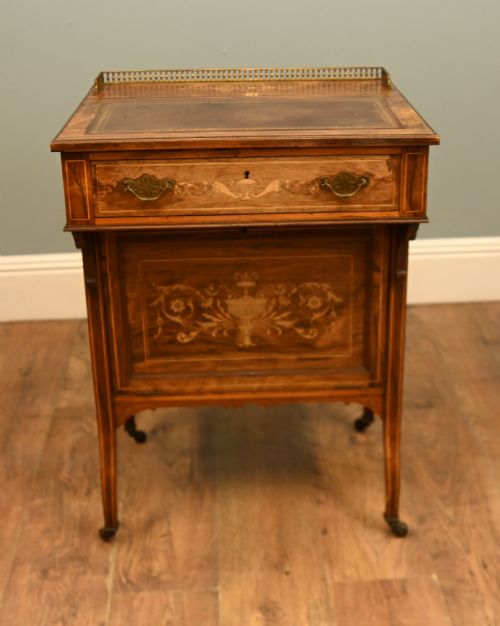
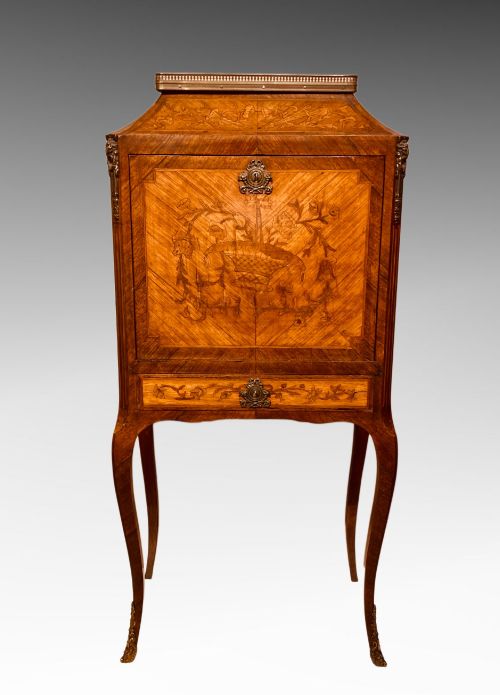
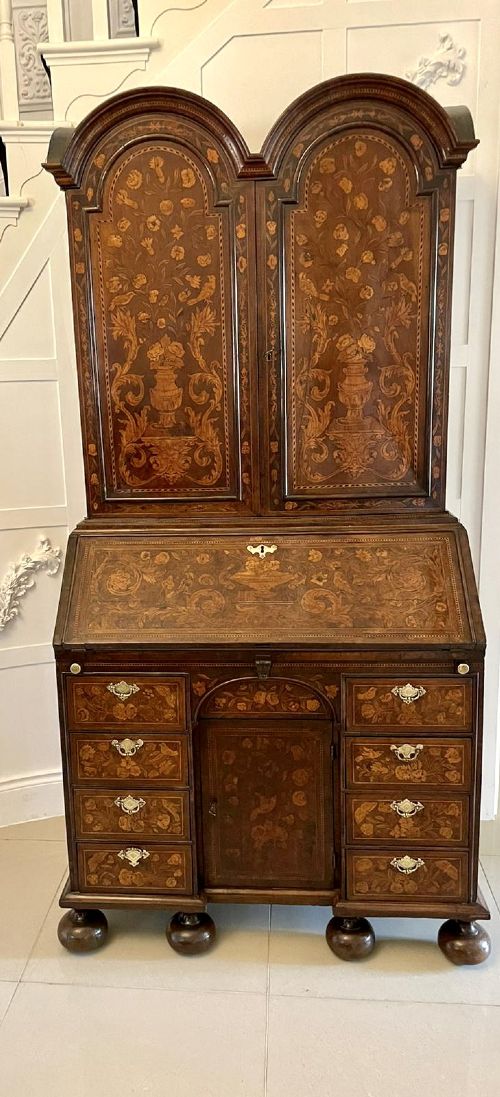
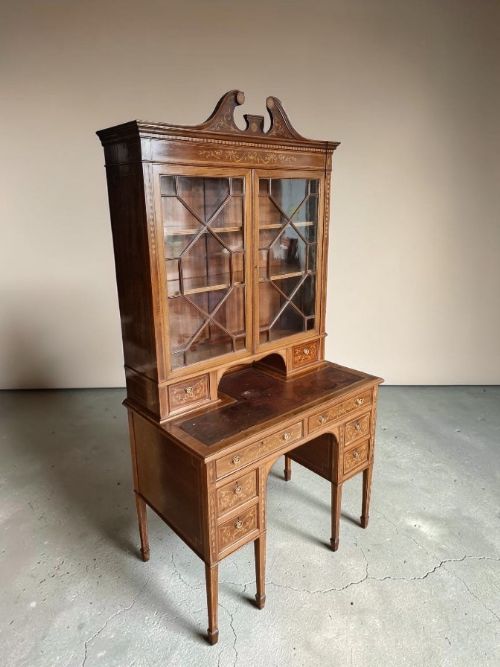
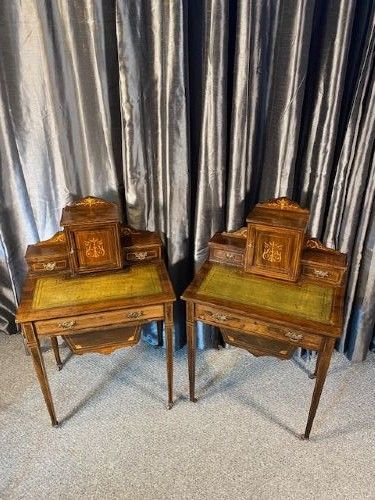
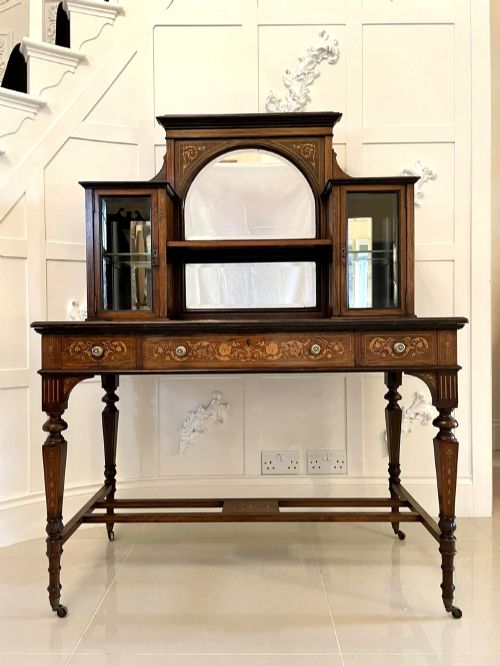
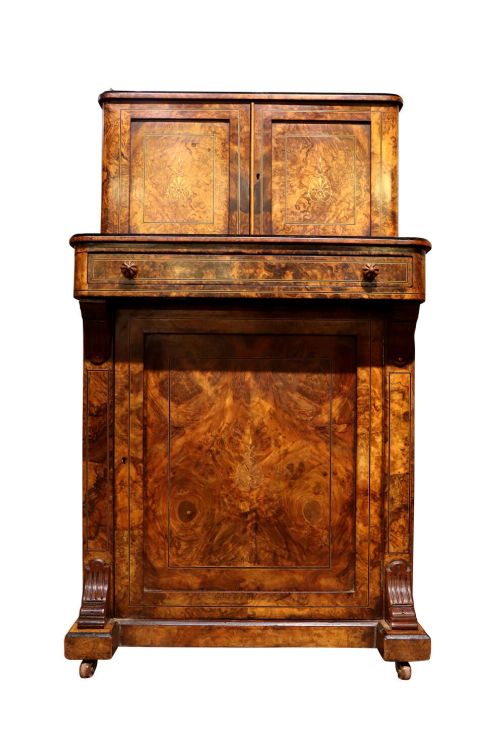
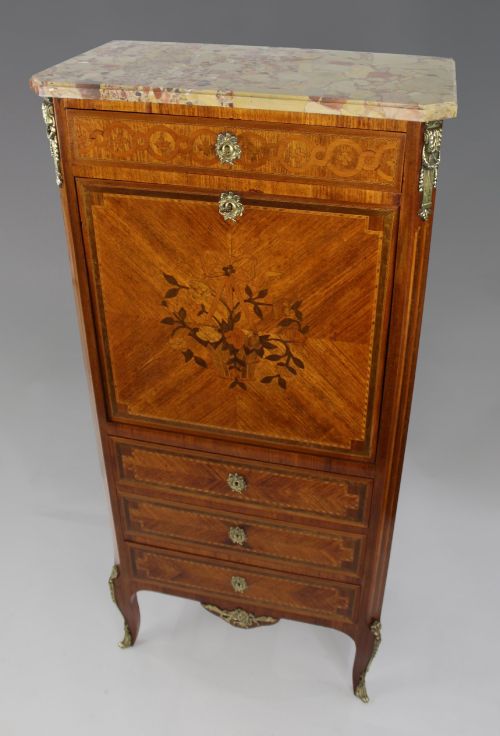
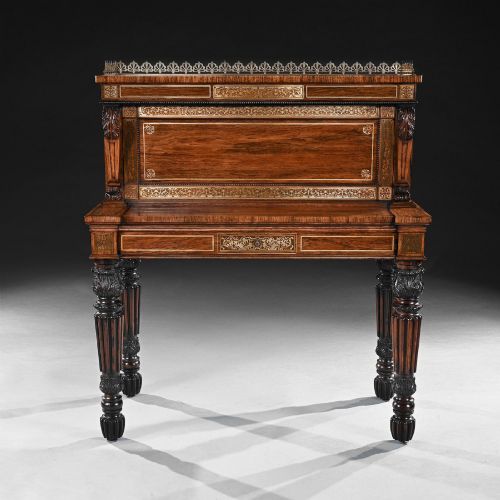
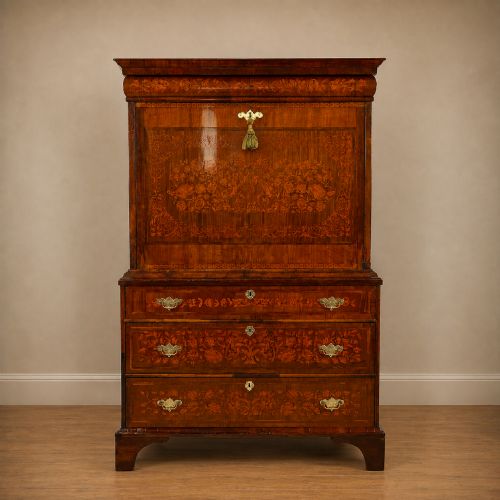
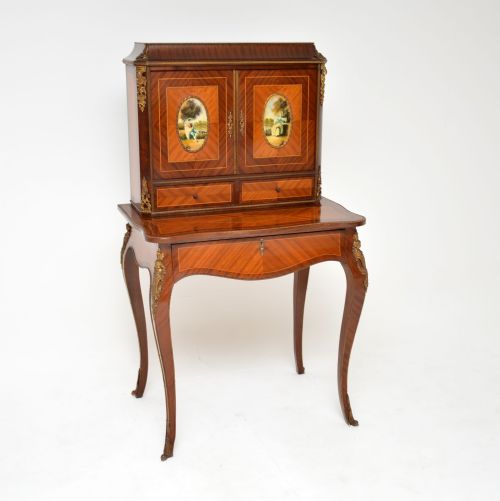
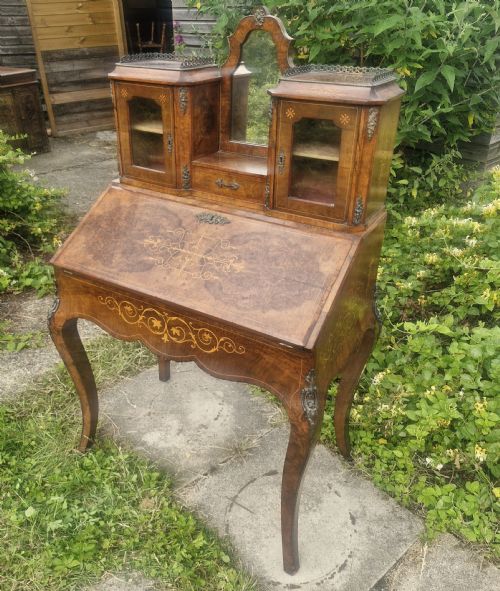
When you search for a marquetry escritoire, you encounter sophisticated writing cabinets and fall-front desks embellished with complex floral and pictorial veneers. These pieces range from compact lady's writing desks and bureau de dame forms to grander double dome bureau bookcases.
The selections span the seventeenth century through to the nineteenth century, taking in Georgian, Victorian, and revival movements such as Louis XV and Sheraton Revival. French and Dutch examples frequently appear alongside English interpretations.
The primary forms utilise a hinged fall-front panel that drops down to reveal fitted interior pigeonholes and small drawers. Smaller bonheur du jour styles and cylinder desks also populate the category.
Materials and construction
Carinthian and European hardwoods form the foundational structure, employing walnut, burr walnut, rosewood, kingwood, satinwood, and mahogany. Finer veneers are meticulously hand-cut and pieced together to create detailed marquetry motifs.
Metal mounts in ormolu and brass provide structural reinforcement and decorative accenting around edges and key escutcheons. Interior writing surfaces frequently incorporate fitted panels of tooled leather.
Marquetry Escritoire Retail Price Guide 2026
Typical asking prices for marquetry escritoire among the pieces listed under this phrase on Sellingantiques today, from the lower quarter to the upper quarter. They describe what is for sale here now, not the wider market.
Listings feature walnut, rosewood, satinwood, and kingwood timbers alongside brass, ormolu, and leather components.
Distinctions in craftsmanship
The finesse of the veneer work separates standard joinery from exceptional cabinet making. Pieces featuring dense floral marquetry executed across multiple contrasting timber tones demonstrate higher technical ambition.
Internal arrangement complexity dictates standing within the category, particularly where secret compartments, revolving tabernacles, and finely turned pigeonholes remain intact and operational.
Gillows Oxford Street Workshop
The Marquetry Escritoire Glossary
- Marquetry
- Decorative patterns formed by the insertion of small pieces of wood, veneer, and shell into a veneered surface. This technique allows cabinet makers to build complex pictorial scenes and floral arrangements.
- Escritoire
- A writing cabinet featuring a fall-front flap that lowers to serve as a desk surface. It conceals internal compartments designed for stationery and correspondence.
- Ormolu
- Gilded bronze mounted onto furniture as decorative hardware and edging. The technique involves applying a mercury and gold amalgam to shaped bronze.
- Bureau de Dame
- A small ladies writing desk, often featuring delicate cabriole legs and an upper cabinet or superstructure. These pieces gained popularity during the eighteenth and nineteenth centuries.
- Bonheur du jour
- A light day table for a lady, typically featuring a small tiered cabinet with drawers and shelves above the writing surface. The form emerged in mid-eighteenth-century France.
Marquetry Escritoire: Frequently Asked Questions
What is a marquetry escritoire?
A marquetry escritoire is a designated writing cabinet featuring a hinged fall-front writing surface decorated with detailed wood veneer patterns. These pieces combine decorative artistry with practical letter storage.
Interior compartments organise papers, while the exterior displays floral or geometric inlay across walnut, rosewood, or satinwood foundations.
How do I date a walnut escritoire?
Dating relies upon examining construction methods, timber choice, and decorative style markers. Seventeenth-century examples often display oyster walnut veneers, whereas nineteenth-century pieces lean towards revival French aesthetics.
Hardware styles, dovetail construction, and secondary woods inside drawers provide further clues regarding the exact period of manufacture.
Where were these writing desks placed?
Escritoires historically occupied private withdrawing rooms, libraries, and boudoirs where personal correspondence took place. Their compact footprints suited domestic spaces dedicated to letter writing.
Unlike large partners desks, these cabinets functioned as personal writing stations kept in refined living quarters.
How do I care for antique veneer?
Maintaining antique marquetry requires stable indoor humidity levels and protection from direct sunlight to prevent veneer lifting and timber fading. Regular dusting with a soft, dry cloth preserves the polished finish.
Application of appropriate conservation wax helps nourish old hardwoods without harming the delicate inlaid details.