


Marquetry Desk on Stand
These marquetry desk on stand pieces combine intricate wood inlay with elevated forms, offering a striking centrepiece for any study or drawing room.

Marquetry Desk on Stand
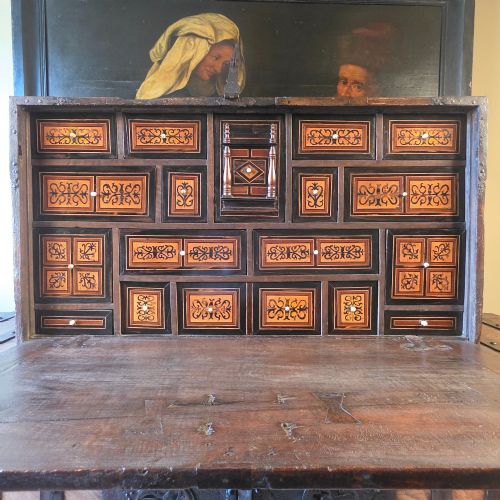
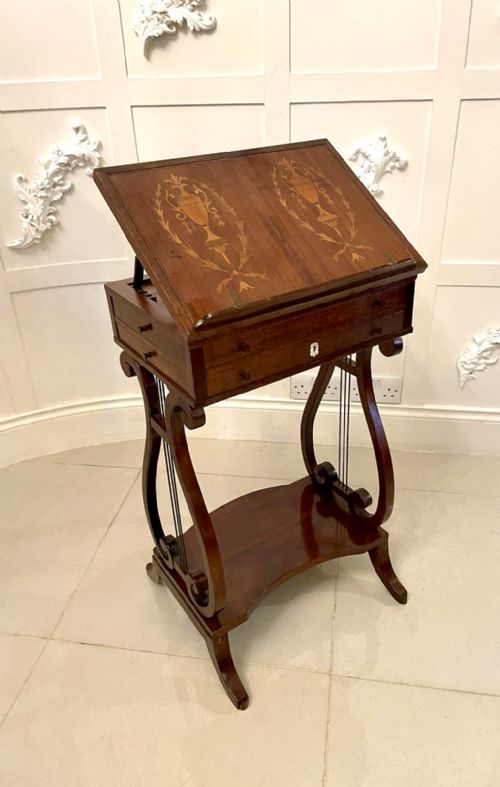
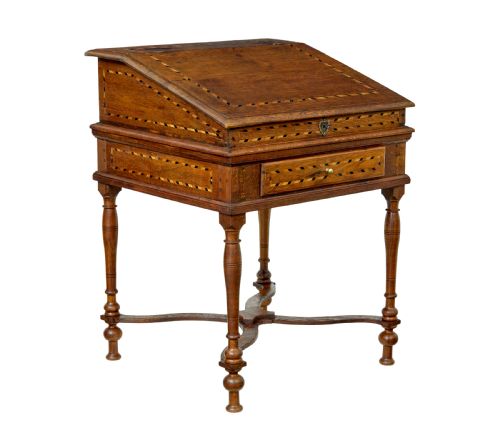
A marquetry desk on stand brings together decorative wood patterns and raised furniture forms, often appearing in forms such as writing desks, bureaux, and cabinets originating from the seventeenth century onwards. When searching for a marquetry desk on stand, collectors frequently encounter Victorian interpretations alongside earlier continental examples.
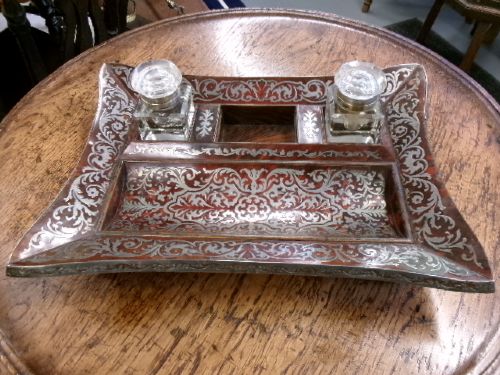
The evidence shows these works span periods from the seventeenth century through to the early twentieth century, encompassing styles like Queen Anne, Regency, and Napoleon III. While desks and bureaux dominate the selection, related accessories such as inkstands and writing slopes share the same meticulous craftsmanship.
Makers utilised various foundational woods, mounting them on distinct stands or legs that elevate the primary writing or storage compartment. The selection ranges from compact tabletop writing boxes to larger freestanding cabinet pieces.
Materials and construction
Artisans built these pieces using dense cabinet timbers such as walnut, rosewood, mahogany, and satinwood, frequently applying contrasting fruitwoods to create detailed pictorial or geometric inlays. Brass mounts, ormolu, and tortoiseshell further enriched the surfaces of nineteenth-century examples.
Cabinetmakers cut thin veneers of coloured woods and assembled them into complex patterns before applying them to carcases constructed from secondary timbers like oak. Stands and legs were then joined securely to support the weight of the upper writing compartment.
Listings feature walnut, rosewood, and mahogany as primary timbers, frequently embellished with brass, satinwood, and tortoiseshell.
Markers of quality
The distinction between standard and superior pieces lies in the precision of the wood inlay and the depth of the timber grain. Finer examples display seamless integration of contrasting veneers without excessive filler, maintaining sharp lines in floral or geometric motifs.
Quality also manifests in the hardware and secondary materials, such as fire-gilded ormolu mounts, well-fitted internal drawers, and robust structural joinery in the supporting stand. Superior specimens retain their original patination and show thoughtful balance between the decorative surface and the underlying form.
Edwards & Roberts·Rupert Favell·Adriano Brambilla
The Marquetry Desk on Stand Glossary
- Marquetry
- A decorative technique where small pieces of veneer are arranged into pictorial or geometric patterns on a wooden carcase. This method transforms plain surfaces into elaborate displays of contrasting wood colours and grains.
- Escritoire
- A small writing cabinet with a fall-front panel that conceals compartments and small drawers. This form provides a compact writing surface while keeping correspondence concealed.
- Tunbridge ware
- A specific type of British woodwork featuring mosaic patterns constructed from hundreds of tiny tinted wood blocks. Items such as book slides and boxes often display this distinctive geometric craft.
- Ormolu
- Gilded bronze mounts applied to furniture and decorative objects during the eighteenth and nineteenth centuries. These metallic accents highlight corners, feet, and key escutcheons.
Marquetry Desk on Stand: Frequently Asked Questions
What is a marquetry desk on stand?
A marquetry desk on stand is an elevated writing or storage furniture piece decorated with patterned wood veneers.
These works combine a cabinet or writing compartment with a distinct supporting frame, reflecting styles from the seventeenth century to the Edwardian era.
How do I care for inlaid wood furniture?
Inlaid wood pieces require stable room temperatures and protection from direct sunlight to prevent the delicate veneers from lifting or fading.
Apply a microcrystalline wax periodically to nourish the timber and maintain the surface sheen without building up heavy residues.
Are these pieces suitable for daily writing?
Many of these pieces function effectively for writing, provided the fall-front or writing slope offers adequate support and proper clearance.
Users should verify the interior depth and drawer operation before utilising the surface for modern writing tasks.
How can I identify the period of a desk?
Dating relies on observing the secondary woods, the style of the marquetry motifs, and the construction methods used in the drawers.
Comparing the hardware, such as hinges and locks, against known period examples helps confirm the date of manufacture.