



Marquetry Chess Top Table
A marquetry chess top table brings intricate woodworking and functional design together, offering a surface for play that doubles as a striking decorative centrepiece.
Marquetry Chess Top Table
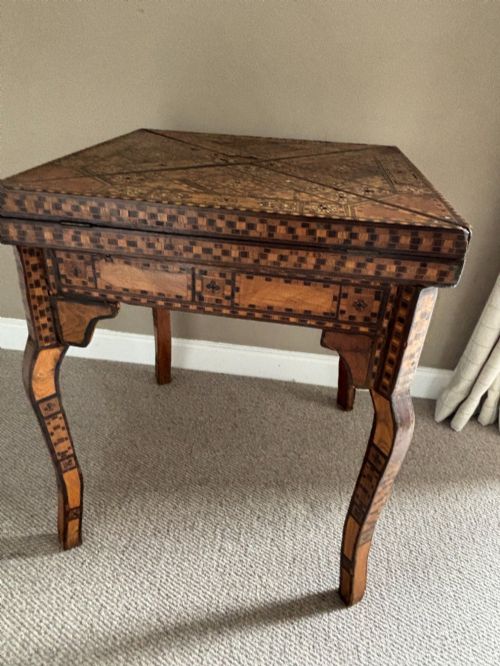
A marquetry chess top table combines fine parquetry or pictorial wood inlays with the traditional framework of a games or occasional table. Buyers seeking a marquetry chess top table encounter diverse historical forms ranging from Victorian walnut and kingwood examples to Georgian pieces and Edwardian satinwood designs.
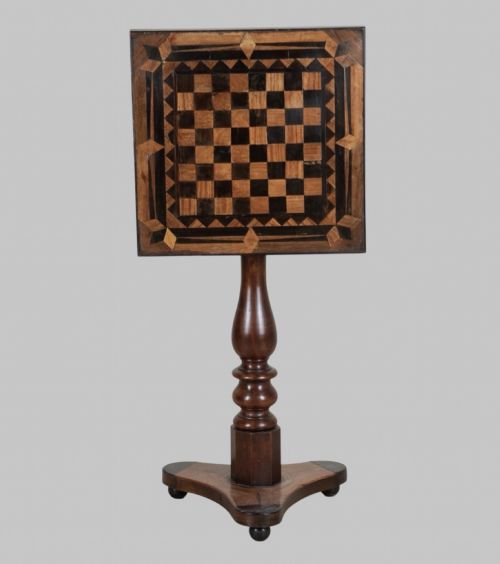
The selection includes specialised formats such as envelope games tables, tilt-top Sorrento pieces, and single-drawer centre tables. Walnut, burr walnut, mahogany, rosewood, and fruitwood form the primary structural and decorative foundations across these varied nineteenth-century and early twentieth-century creations.
Materials and construction
Cabinetmakers utilised dense hardwoods like walnut, mahogany, and rosewood for the primary carcases and framing of these tables. Contrasting timbers such as satinwood, fruitwood, and burr walnut provided the tonal variation required for complex inlaid surfaces.
Surface decoration frequently incorporated detailed floral marquetry alongside geometric chequerboards rendered in diverse woods. Specialised regional workshops also integrated exotic specimen woods, mother of pearl, and bone to embellish the top panels.
Marquetry Chess Top Table Retail Price Guide 2026
Typical asking prices for marquetry chess top table among the pieces listed under this phrase on Sellingantiques today, from the lower quarter to the upper quarter. They describe what is for sale here now, not the wider market.
Some nineteenth-century makers concealed entire gaming surfaces inside folding envelope tops that twist open like origami.
Assessing quality
The distinction between standard examples and superior pieces rests entirely upon the precision of the timber matching and the complexity of the inlay. Tables featuring intricate floral marquetry combined with specimen wood chequerboards demonstrate a higher grade of craftsmanship than plain veneered alternatives.
Structural sophistication also dictates standing, with multi-functional formats like envelope folds and tilt-top mechanisms requiring superior engineering. The careful selection of burr walnut, kingwood, or satinwood elevates the visual depth of the finished piece.
The Marquetry Chess Top Table Glossary
- Marquetry
- Decorative veneer work applied to a wooden structure to form geometric patterns, landscapes, or floral designs. Artisans cut contrasting thin sheets of wood to fit together precisely before gluing them to the substrate.
- Chequerboard
- A pattern of alternating light and dark squares utilised for games such as chess and draughts. On these tables, this pattern is formed directly from individual wood inlays.
- Specimen wood
- Furniture constructed from or decorated with a wide variety of different native and exotic timbers. Makers often arranged these varied woods to showcase natural colour contrasts.
- Envelope table
- A type of games table featuring a square top that folds open by rotating the leaves diagonally to reveal a baize-lined playing surface. The folding mechanism requires precise joinery to ensure the leaves meet flush.
- Tilt-top
- A table construction where the surface pivots on a central column and tilts vertically when not in use. This design allowed tables to be stored flat against a wall.
Marquetry Chess Top Table: Frequently Asked Questions
What periods do these tables come from?
The available selection spans from the Georgian era through the Victorian period and into the Edwardian age. Most examples date from the nineteenth century, including specific decades such as the eighteen-fifties and eighteen-sixties.
Craftsmanship evolves across these periods, moving from early nineteenth-century specimen wood designs to mid-century walnut and kingwood marquetry and later satinwood variations.
How were these tables used originally?
These tables served a dual purpose in period drawing rooms as both decorative furniture and functional gaming boards. Owners utilised them for chess, draughts, and general card play.
When not in use for games, the inlaid tops functioned as ordinary occasional surfaces for lamps, books, or decorative objects.
What woods appear most often?
Walnut and burr walnut dominate the selection, frequently paired with kingwood, mahogany, and rosewood. Lighter timbers like satinwood and fruitwood provide contrast for the inlays.
Regional variations introduce specialised specimen woods, alongside occasional decorative additions of bone and mother of pearl.
How do tilt-top tables function?
A tilt-top table utilises a pivoting mechanism beneath the surface that allows the chess top to swing from a horizontal position to a vertical plane. A catch secures the top in place when lowered for use.
This mechanism enabled nineteenth-century households to save floor space by storing the table against the perimeter of a room.