



Marquetry Bureau Abattant
A marquetry bureau abattant combines a display of intricate wood inlay with a practical drop-front writing surface that conceals fitted drawers inside.
Marquetry Bureau Abattant
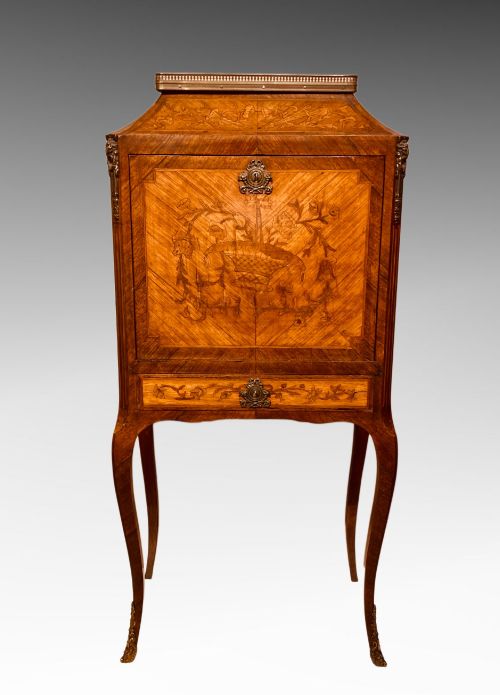
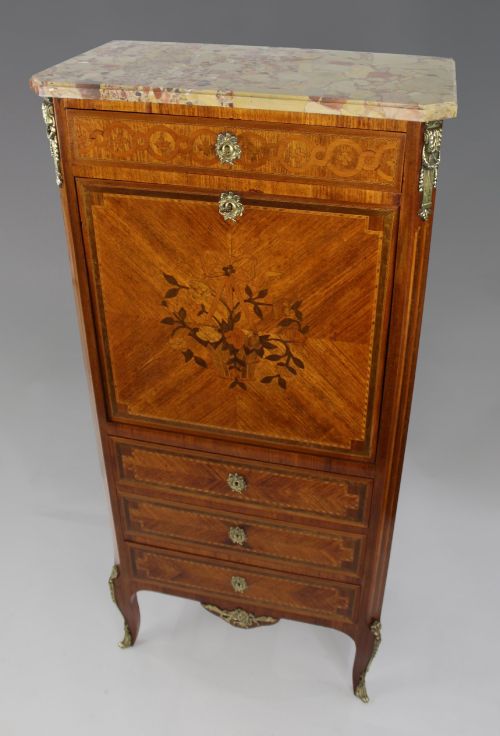
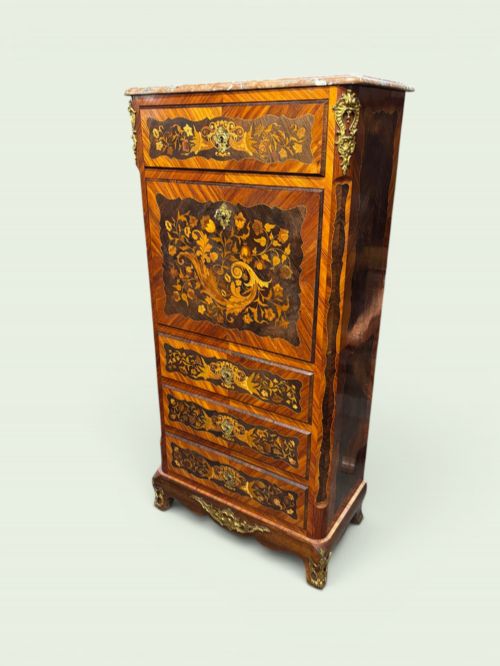
A marquetry bureau abattant is a tall, vertical writing cabinet featuring a hinged fall-front panel that opens to reveal a desk interior. When you search for this phrase, you encounter pieces designed to save floor space while offering secret compartments and writing surfaces.
The most common examples on this page originate from nineteenth-century France, often following Louis XV or Louis XVI revival styles, alongside eighteenth-century Dutch floral variations. These cabinets serve as both functional desks and statement furniture pieces for drawing rooms and studies.
Makers utilised various object types including secretaire cabinets, escritoires and writing desks to meet domestic demands for concealed storage. Each piece balances decorative veneered patterns on the exterior with practical pigeonholes and small drawers within the main carcase.
Materials and construction methods
Cabinetmakers constructed these writing cabinets using carcases of walnut or fruitwood, applied with expensive decorative veneers of kingwood and rosewood. Detailed floral or geometric marquetry patterns were meticulously cut from contrasting timber veneers and fitted together by hand.
Many examples feature polished marble tops designed to protect the wooden surface and add visual weight to the upper section. Gilt bronze, ormolu and brass mounts frame the edges, protect the corners and accent key areas of the cabinet façade.
Marquetry Bureau Abattant Retail Price Guide 2026
Typical asking prices for marquetry bureau abattant among the pieces listed under this phrase on Sellingantiques today, from the lower quarter to the upper quarter. They describe what is for sale here now, not the wider market.
Materials recorded across the selection include rosewood, kingwood, walnut, fruitwood, marble, ormolu, brass and gilt bronze.
Distinctions in craftsmanship
The sophistication of the marquetry design separates standard production from finer masterworks, seen in the varied use of exotic woods like kingwood and rosewood to create depth and shadow. Precision in the cutting and fitting of individual veneer pieces dictates the visual sharpness of the floral or geometric motifs.
Metalwork quality also marks the distinction, as cast ormolu and gilt bronze mounts show sharper chisel work and heavier gilding on superior cabinets. The internal arrangement of the bureau abattant, including secret drawers and matched grain finishes inside the fall-front, reflects the original maker's investment of time.
Adriano Brambilla
The Marquetry Bureau Abattant Glossary
- Marquetry
- The decorative craft of applying small pieces of wood veneer to a structure to form intricate pictures or patterns. It differs from parquetry by forming pictorial designs rather than geometric grids.
- Bureau abattant
- A tall writing cabinet with a vertical drop-front panel that lowers to form a desk surface. This form conceals an interior fitted with pigeonholes and small drawers.
- Ormolu
- Gilded bronze mounts and decorative trimmings applied to furniture. It provides metallic contrast against dark timbers like kingwood and rosewood.
- Escritoire
- An alternative term for a writing cabinet or desk with drawers and compartments. These pieces often share the vertical format of the abattant.
- Parquetry
- Geometric wood inlay work arranged in repeating patterns such as cubes or chequers. It creates a structured surface texture distinct from floral marquetry.
Marquetry Bureau Abattant: Frequently Asked Questions
What is a bureau abattant?
A bureau abattant is a vertical writing cabinet featuring a hinged fall-front panel that drops down to create a flat writing surface.
Inside this drop-front section, users find an arrangement of small drawers and pigeonholes designed for correspondence and stationery storage.
How were these cabinets used?
These pieces functioned primarily as private writing desks and storage cabinets for letters, documents and valuables in period homes.
The vertical design allowed owners to conceal their writing materials and lock the fall-front panel when not in use.
How do you distinguish styles?
French revival pieces often display curved cabriole lines, floral marquetry and ormolu mounts inspired by Louis periods.
Dutch examples tend to feature dense, highly pictorial floral marquetry covering the entire exterior surface of the cabinet.
How do you live with them?
These cabinets suit studies, drawing rooms or hallways where vertical storage is required without sacrificing floor space.
The drop-front provides a dedicated writing area that remains hidden away when closed to maintain a tidy room.