

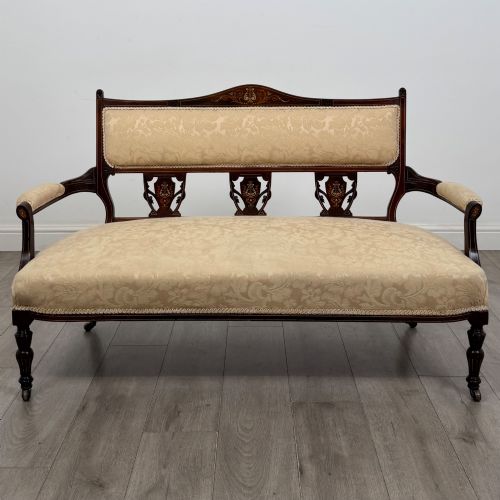
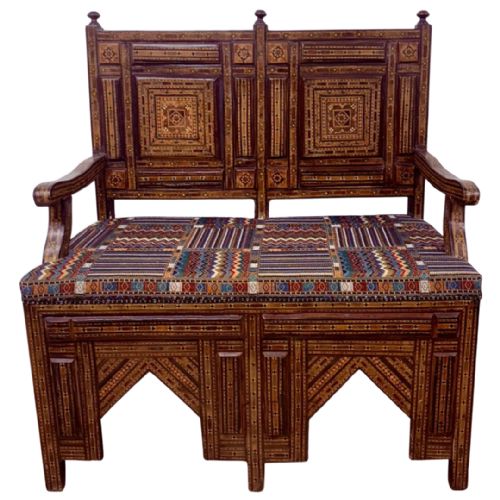
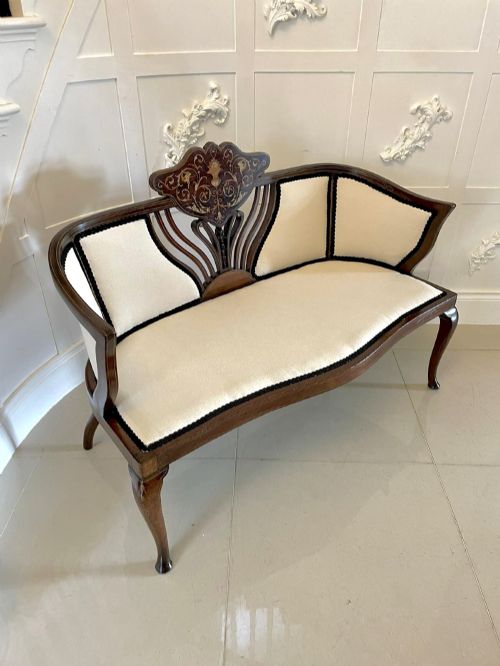
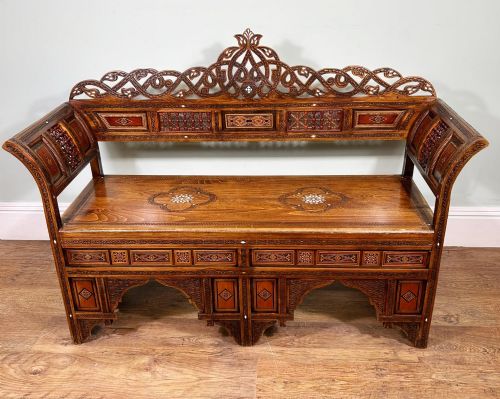


Marquetry Bench
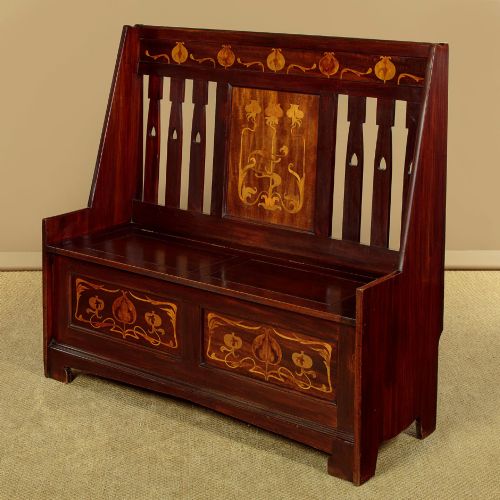
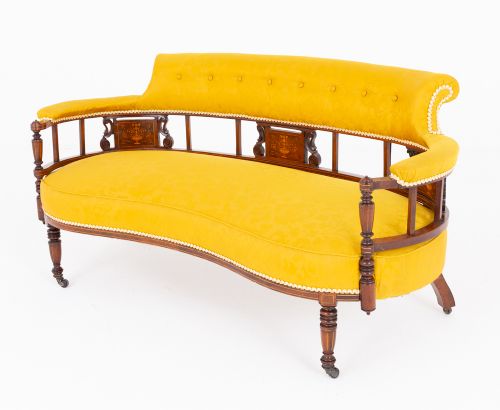
These marquetry bench forms span settees, window seats and piano stools, bringing detailed inlaid timbers and upholstered comfort into hallways, salons and bedrooms.
Marquetry Bench
The Edwardian period supplies a large share of the available furniture, typically featuring mahogany frames with delicate contrasting inlays. Alongside these British pieces, stylistic influences from Syrian, Ottoman and Italian workshops introduce alternative forms of inlaid hardwood and structured seating.
Makers and manufacturers utilised various formats, from open-framed window seats to box settles with storage compartments. Buyers encounter everything from compact piano stools to extensive three-piece salon suites featuring matched seating.
How they were made
Framing relies predominantly on dense timbers such as mahogany, walnut, rosewood and hardwood, providing a stable structural base for decorative work. Workshops applied contrasting veneers of satinwood, boxwood and bone to build intricate patterned surfaces across the backrests and aprons.
Detailed inlay techniques define the ornamentation, incorporating floral, geometric or scroll motifs into the wooden panels. Upholstery sits within these decorated wooden frameworks, utilising fabric surfaces across seats, couches and end-of-bed sofas.
Marquetry Bench Retail Price Guide 2026
Typical asking prices for marquetry bench among the pieces listed under this phrase on Sellingantiques today, from the lower quarter to the upper quarter. They describe what is for sale here now, not the wider market.
Listings feature mahogany, satinwood, walnut and rosewood combined with bone and boxwood inlay across multiple seating forms.
What varies in quality
The crispness and variety of the inlay work set individual pieces apart, distinguishing simple linear banding from complex multi-timber pictorial designs. Richness in the choice of primary timber, such as figured mahogany or rosewood, elevates the visual depth of the frame.
Structural harmony between the upholstered components and the inlaid wooden chassis determines the overall success of the piece. Superior examples maintain balanced proportions across settees, window seats and piano stools without sacrificing the integrity of the decorative veneer.
James Shoolbred & Co
The Marquetry Bench Glossary
- Marquetry inlay
- Decorative veneer applied to furniture surfaces in patterned wood arrangements. This technique forms the primary ornamentation across the timber frames.
- Settee
- A long upholstered seat with a back and arms designed for multiple occupants. These items appear frequently in Edwardian and Victorian salon settings.
- Window seat
- A narrow bench designed to fit into a window recess. They often feature open frames or modest upholstered tops.
- Piano stool
- A low seated piece intended for keyboard practice. Examples occasionally incorporate X-framed supports or hinged storage compartments.
- Satinwood
- A pale, lustrous timber utilised for contrasting inlay work. Artisans deploy this material to highlight specific geometric or floral motifs.
Marquetry Bench: Frequently Asked Questions
What periods do these benches cover?
The selection spans from the late nineteenth century through the Edwardian era into the early twentieth century. Victorian and Edwardian examples dominate the available styles.
Craftsmanship from these periods incorporates traditional timber framing with detailed veneer work and period upholstery fabrics.
Where were these pieces used?
These seats served multiple domestic functions across bedrooms, hallways and formal reception rooms. Window seats fitted specific architectural recesses, while salon settees furnished entertaining spaces.
Smaller forms like piano stools worked closely with musical instruments in period parlours.
How do I identify Edwardian examples?
Edwardian pieces often display lighter mahogany frames combined with satinwood and bone inlay. The overall aesthetic leans towards refined elegance rather than heavy Victorian mass.
Many incorporate slender tapered legs and delicate floral marquetry motifs characteristic of the early twentieth century.
What materials make up the frames?
Primary structures rely on hardwoods including mahogany, rosewood and walnut. Surface decoration introduces contrasting elements of boxwood, satinwood and bone.
Upholstered sections add fabric elements to the wooden chassis of settees and couches.