



Marquetry Arm Chair
A marquetry arm chair brings pattern and presence to a room, using contrasting timbers to form intricate botanical or architectural scenes across the wood.
Marquetry Arm Chair
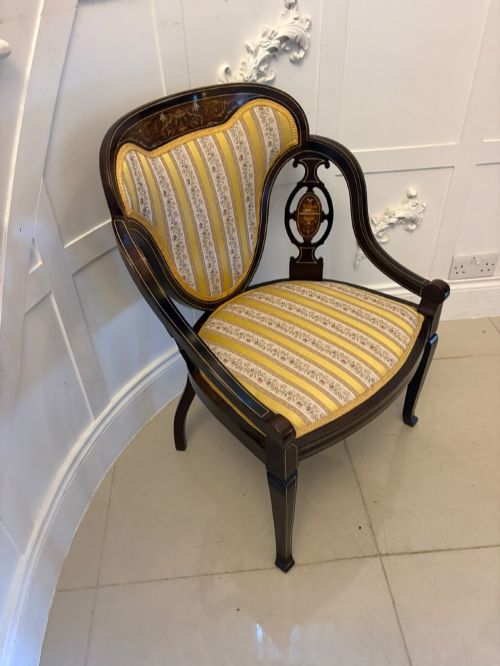
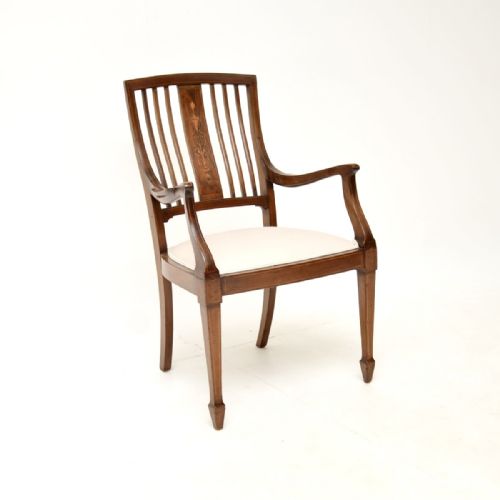
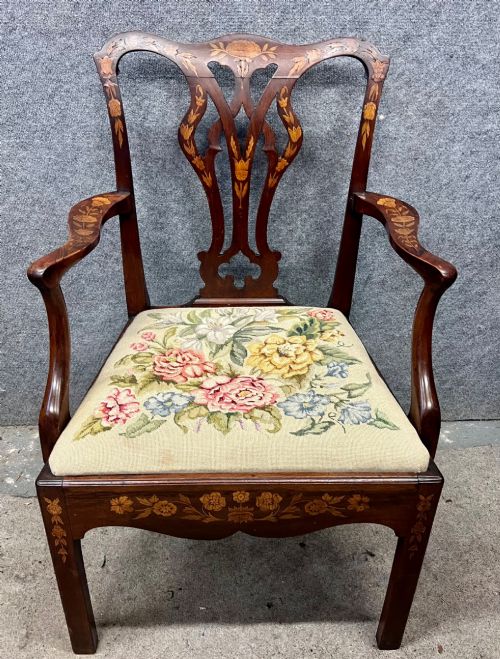
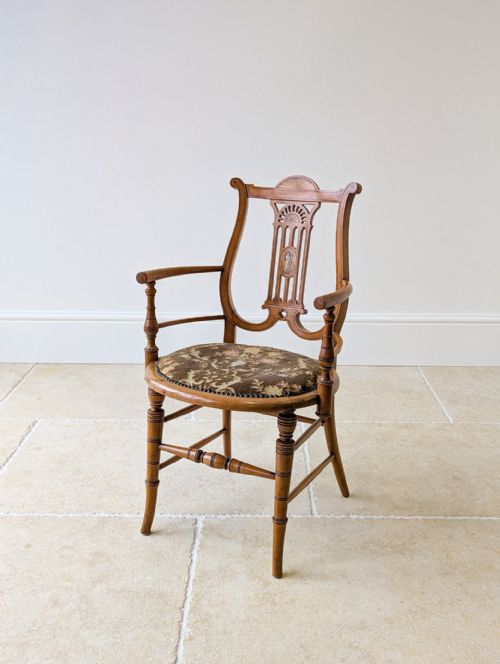
A marquetry arm chair stands as a sophisticated seating form defined by decorative wood veneers arranged in pictorial or geometric patterns. These chairs appear in several distinct historical guises, spanning the eighteenth century through to Edwardian interpretations.
Makers utilised these varied styles to suit different domestic spaces, from formal morning rooms to intimate studies. Each piece demonstrates how cabinetmakers applied surface decoration to functional seating frames.
Materials and construction
The primary carcase construction relies on solid timbers such as mahogany, walnut, and rosewood, which provide a stable structural foundation for the seat. Artisans selected these durable woods for their strength in supporting an upright frame and arm supports.
Surface decoration depends on precise veneer work, incorporating satinwood, fruitwood inlay, and varied wood inlays to create distinct tonal contrasts. Craftsmen cut thin slices of different coloured woods and fitted them together tightly before applying them to the chair back or rails.
Marquetry Arm Chair Retail Price Guide 2026
Typical asking prices for marquetry arm chair among the pieces listed under this phrase on Sellingantiques today, from the lower quarter to the upper quarter. They describe what is for sale here now, not the wider market.
Listings feature mahogany, walnut, satinwood, and fruitwood inlay across periods from the eighteenth century to the Edwardian era.
Assessing craftsmanship and finish
The standard of a marquetry arm chair rests upon the precision of the veneer cutting and the complexity of the fitted wood inlays. Finer examples show seamless integration between the pictorial elements and the surrounding timber ground.
Structural integrity also dictates quality, particularly in the joinery of the arms, legs, and backrests where daily use exerts pressure. Superior pieces maintain tight joints and retain their original timber patination without excessive restoration.
Shoolbred
The Marquetry Arm Chair Glossary
- Marquetry
- Decorative veneer work assembled in pieces to form pictures or ornamental designs on a wooden surface. This technique requires meticulous hand-cutting of contrasting timbers.
- Sheraton Revival
- A late nineteenth-century design movement inspired by the lightness and classical ornamentation of eighteenth-century cabinetmaker Thomas Sheraton. Pieces from this period often feature delicate satinwood inlay and refined proportions.
- Elbow chair
- An armchair designed with low arms intended to support the elbows rather than the full length of the arms. These chairs frequently served as desk or occasional seating.
- Corner chair
- A seating form engineered to fit into the corner of a room, featuring a diagonal seat plan and a continuous curved back rail supported by posts. They often incorporate inlaid decoration along the crest rail.
- Satinwood
- A lustrous, hard timber native to Ceylon and India, prized for its golden colour and reflective grain. It was frequently used in stringing and contrasting panels during the eighteenth and nineteenth centuries.
Marquetry Arm Chair: Frequently Asked Questions
How do I date a marquetry arm chair?
Dating relies on examining the timber species, the style of the inlay, and the overall construction methods used in the frame. Edwardian and Victorian pieces often exhibit machine-prepared elements alongside hand-cut veneers, whereas earlier eighteenth-century examples display entirely hand-wrought joinery.
Changes in stylistic revivals also offer clues, as nineteenth-century makers frequently reinterpreted earlier Sheraton or Dutch Baroque motifs using contemporary shop practices.
Where were these chairs placed historically?
These chairs served multiple functions within period homes, appearing in morning rooms, reception spaces, and private studies. Desk chairs and corner chairs were positioned to provide functional seating while contributing to the decorative scheme of a room.
Lighter salon chairs and low armchairs were easily moved about for conversation or reading, functioning as decorative accents as well as practical furniture.
How do I care for wood inlay?
Preserving inlaid surfaces requires keeping the furniture away from direct sunlight and maintaining stable indoor humidity levels to prevent the veneers from lifting. Regular dusting with a soft, dry cloth helps protect the polished finish without introducing moisture.
Applying microcrystalline wax periodically feeds the timber and enhances the contrast of the varied wood species without building up heavy residues.
What is the difference between marquetry and inlay?
Marquetry covers the entire surface of a ground with fitted veneers to create a pictorial or patterned mosaic. The pieces are assembled together first as a complete sheet before being glued to the carcase.
Inlay involves recessing individual pieces of contrasting material directly into a solid wooden channel or cavity. Marquetry is primarily compositional, whereas inlay tends to be linear or spot-motif work.