
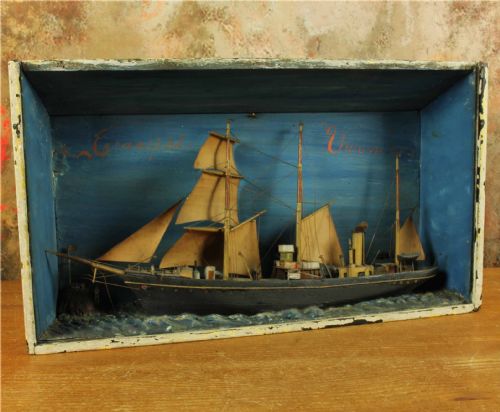


Maritime Folk Art Box
A maritime folk art box brings the sea into the parlour, offering intricate dioramas, shellwork, and scratch-built ship models for the dedicated collector.
Maritime Folk Art Box
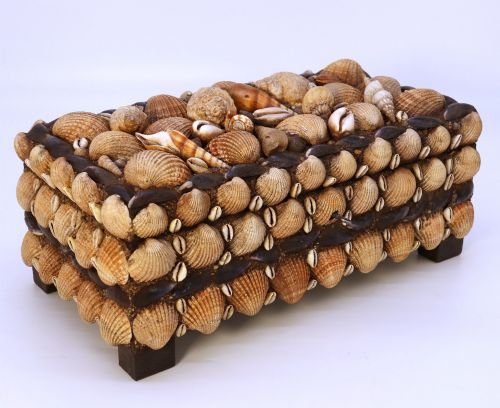
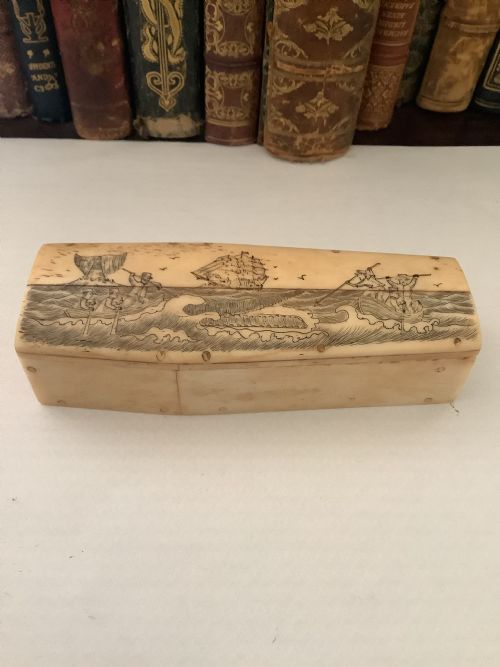
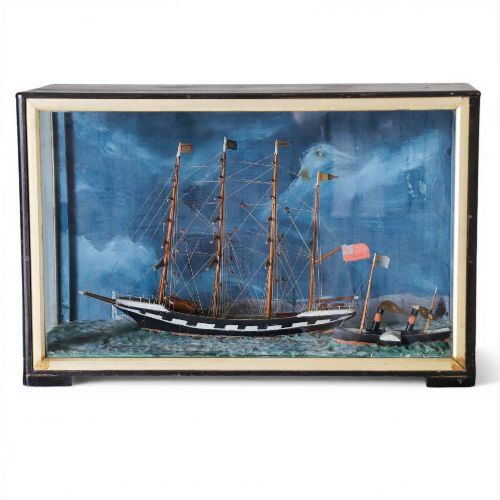
A maritime folk art box encompasses cased ship dioramas, shellwork boxes, and decorated chests created during the nineteenth and early twentieth centuries. These pieces reflect the maritime passions of makers who translated the scale of the ocean into intimate, enclosed spaces.
The objects span Victorian maritime folk art through to interwar pieces, including shadow boxes, trinket boxes, and detailed ship models housed behind glass. Examples range from Cornish dioramas and French handmade boat models to educational alphabet blocks depicting vessels like the sloop.
Buyers will encounter painted pine seaman's chests alongside delicate shell grottoes and straw work ship dioramas. Each form preserves a distinct vernacular approach to commemorating naval and merchant shipping.
Materials and Construction
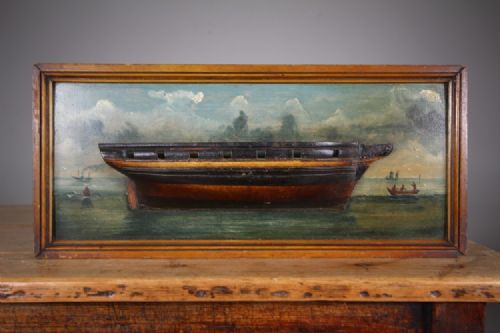
Construction relies heavily on wood, particularly pine for structural boxes and chests, alongside carved bone, canvas, and glass to protect delicate interiors. Makers utilised paint to render seascapes and vessels, often employing Turneresque techniques for atmospheric depth.
Decorative elements frequently incorporate natural materials such as seashells and plaster to build textured shorelines and grottoes within the shadow boxes. Scratch-built ship models within these cases demonstrate intricate rigging and miniature craft using everyday components available to the maker.
Listings feature works spanning the nineteenth century up to 1930, incorporating painted pine, glass, canvas, plaster, and seashells.
Judging Quality
Quality rests on the intricacy of the interior construction and the preservation of delicate organic components like shellwork and straw. Superior examples maintain the original painted surface of the timber case and the integrity of the glass protecting the diorama.
The sophistication of the ship model itself distinguishes the work, from simple profile hulls to fully rigged four-masted sailing vessels with detailed canvas or carved components. Provenance tied to specific vessels, such as named ships like the Queen Anne or Glynllifon, elevates the historical interest of the piece.
The Maritime Folk Art Box Glossary
- Shadow Box Diorama
- A shallow display case featuring a three-dimensional scene built up in layers behind glass. This format protected fragile maritime models from dust and handling in domestic spaces.
- Shellwork
- The decorative arrangement of small seashells into geometric patterns, floral motifs, or miniature grottoes. Sailors and coastal artisans produced these intricate works during the nineteenth and early twentieth centuries.
- Scratch-Built
- Describing a model constructed from raw materials rather than from a commercial kit. These pieces rely on the maker's ingenuity and observation of actual vessels.
- Seaman's Chest
- A robust wooden storage trunk used by sailors, sometimes decorated with painted maritime emblems and folk art motifs. These chests served practical purposes while at sea before finding a place on land.
- Straw Work
- A decorative technique utilising split and flattened straw applied to surfaces to create mosaic-like pictures. In maritime pieces, this method depicted ships and coastal scenes with a distinctive golden sheen.
Maritime Folk Art Box: Frequently Asked Questions
How were ship dioramas displayed?
Ship dioramas were typically housed in wooden shadow boxes fitted with glass fronts to protect the delicate rigging and models from dust.
They were designed to sit on mantelpieces, tables, or hang on walls within nineteenth-century homes and parlours.
Are shellwork boxes fragile?
Shellwork boxes contain numerous small, glued natural elements that require careful handling to prevent displacement.
Keeping them away from direct sunlight and excessive humidity helps preserve the plaster and organic materials used in their construction.
How do I date a maritime box?
Dating relies on stylistic clues, construction methods, and materials, such as Victorian framing techniques or interwar shellwork styles.
Inscribed names of specific nineteenth-century sailing ships or documented maker origins also provide reliable chronological markers.