




Maritime Desk Decor
Maritime desk decor brings the precision of the sea indoors through scaled models, instruments, and sculptures.
Maritime Desk Decor
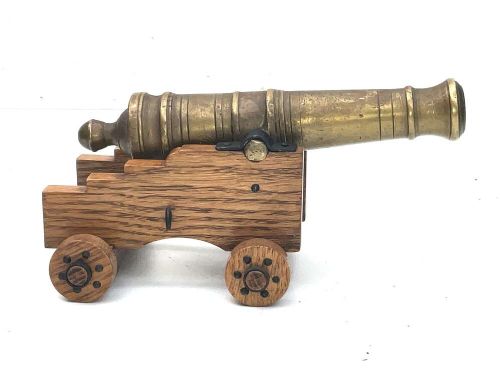
Maritime desk decor comprises functional nautical instruments, desk ornaments, and miniature watercraft designed for workspace display. These objects translate shipboard navigation, signaling, and engineering into compact forms suitable for a tabletop.
The pieces appearing on this page span from the nineteenth century through the art deco period, mixing Victorian brass and bronze with twentieth-century nickel plating and carved wood. You encounter everything from adjustable tabletop telescopes and signal cannons to heavy brass bookends and miniature sailing vessels.
How they were made
Makers shaped these objects using traditional foundry and metalworking methods, casting bronze and brass for structural weight and durability. Nickel plating often provided a bright, corrosion-resistant finish on utilitarian items like telescopes, while wood and paint finished the decorative model ships.
Precision engineering defined the scientific instruments, requiring careful assembly of lenses and adjustable barrels to ensure working accuracy. Carvers applied detailed handwork to wooden models of sailing boats and anchors to capture the correct proportions of working vessels.
Maritime Desk Decor Retail Price Guide 2026
Typical asking prices for maritime desk decor among the pieces listed under this phrase on Sellingantiques today, from the lower quarter to the upper quarter. They describe what is for sale here now, not the wider market.
Listings feature items spanning the nineteenth century, 1890, and the 1910 through 1930 decades, utilising brass, bronze, nickel, and wood.
What varies in quality
Quality rests upon the fidelity of the scale and the crispness of the casting work, distinguishing commercial novelties from pieces intended for actual maritime use. Heavier metals like solid bronze and thick brass indicate sturdiness and better original manufacture.
The finesse of the finishing details, from legible engravings on scientific instruments to the rigging accuracy on model ships, separates standard items from finer examples. Preserved surface patinas and intact mechanical adjustments also elevate the standing of a piece.
The Maritime Desk Decor Glossary
- Signal cannon
- A small ordnance piece used on ships for communication, salutes, or signaling distress. These heavy bronze or brass models sit securely on tabletops.
- Tabletop telescope
- A compact optical instrument mounted on a stand for desktop use. These typically feature brass or nickel-plated brass bodies with adjustable focus lengths.
- Byers stockless anchor
- A specific anchor design that lacks traditional flukes that stick up, allowing it to stow flat against a ship's hull. Scale models of this mechanism serve as desk ornaments.
- Ship's bell
- A bronze or brass bell struck to mark the passage of watches on a vessel. Examples adapted for desks often bear the inscribed name of the steam ship they served.
Maritime Desk Decor: Frequently Asked Questions
How were these items used?
Many of these objects served practical roles aboard vessels before finding a place on land. Telescopes assisted with navigation, and bells marked time on deck.
Other pieces, such as model ships and miniature anchors, were constructed purely as decorative displays or commemorative items for officers and shipping companies.
How do I date these pieces?
Dating relies on material choices, manufacturing techniques, and stylistic markers associated with specific periods. Victorian items often display heavier brass castings, while art deco pieces introduce streamlined forms.
Inscriptions, maker signatures, and documented ship names also help pinpoint the exact era of manufacture.
How do I care for brass and bronze items?
Metal objects require gentle dusting with a soft cloth to prevent surface grime from accumulating. Avoid harsh chemical cleaners that strip away the natural historical patina.
Maintaining a stable room temperature protects mixed-media pieces that combine wood, glass, and metal from humidity shifts.