

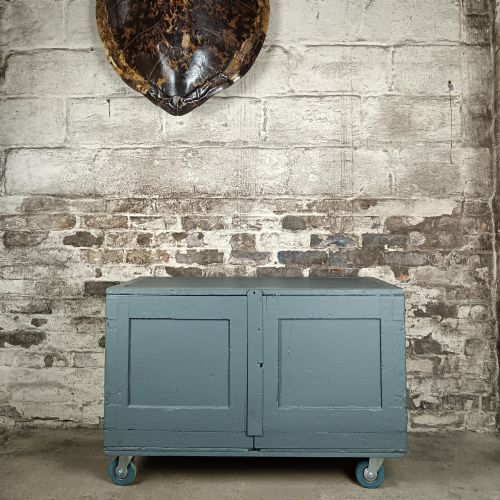


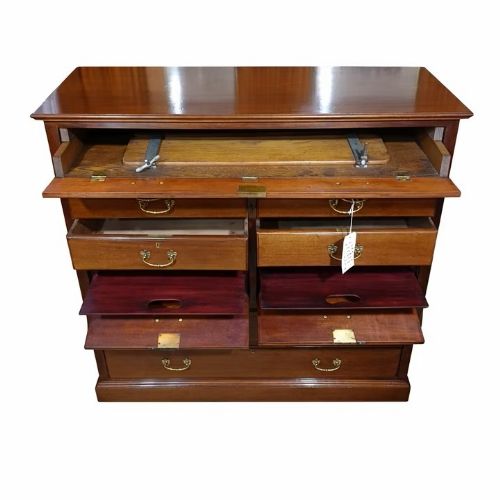


Maritime Campaign Furniture
Maritime campaign furniture is utilitarian travel equipment built for officers at sea, offering clever folding mechanics and robust timbers designed to endure long voyages.
Maritime Campaign Furniture
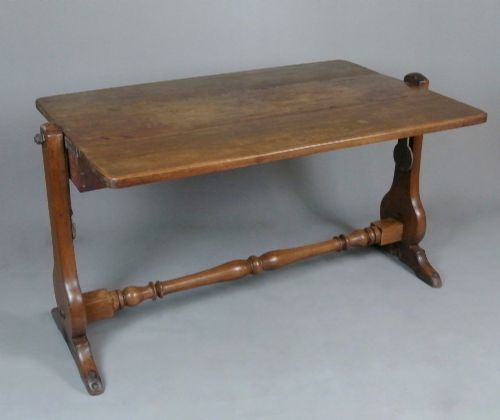
Maritime campaign furniture comprises practical pieces designed for naval officers, merchants, and travellers needing portable storage and utility aboard vessels. These items encompass trunks, chests of drawers, washstands, and tables that disassemble or fold for transport.
The selections available here lean heavily toward nineteenth-century camphor wood and teak trunks, alongside mahogany chests and specialised shipboard washstands. Buyers frequently encounter nineteenth-century camphor wood chests and teak travel boxes fitted with recessed brass hardware.
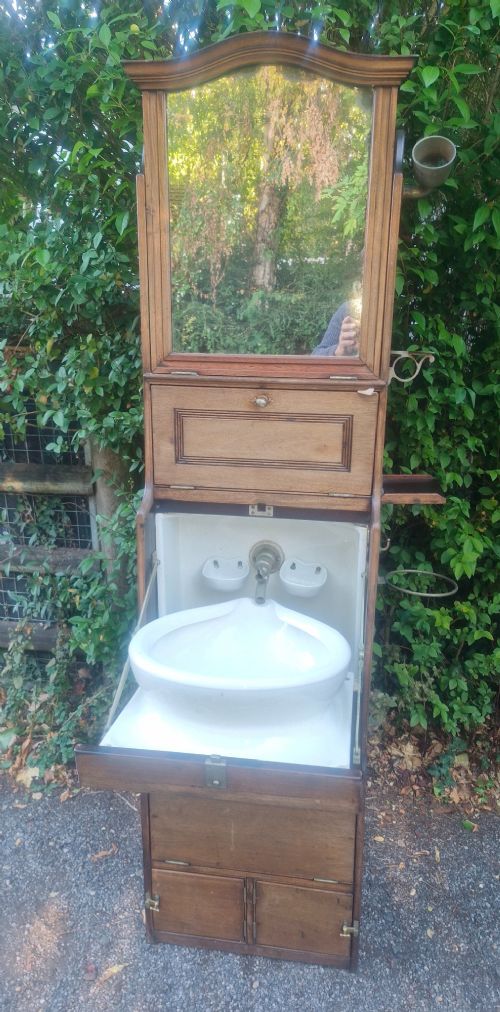
Originating from periods spanning the late eighteenth century through the early twentieth century, these objects reflect the practical requirements of maritime life. Pieces range from simple pine storage boxes to sophisticated mahogany cabinets equipped with sinks for yachts.
Materials and construction methods
Construction relies on durable hardwoods such as teak, camphor wood, and mahogany, chosen for their resistance to moisture and warping in marine environments. Pine and pitch pine also appear in utility contexts, while iron and brass provide structural reinforcement.
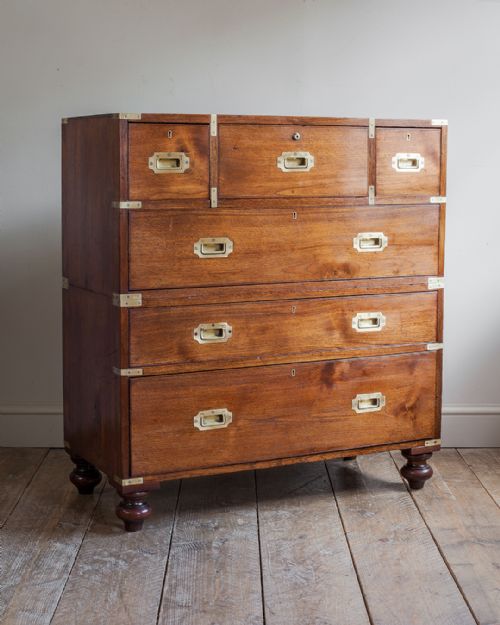
Joinery and hardware focus on portability and strength, utilising brass binding, flush-fitting handles, and sectional designs that allow furniture to split into separate modules. These mechanical elements enable heavy chests and washstands to withstand the rigours of shipboard transit.
Maritime Campaign Furniture Retail Price Guide 2026
Typical asking prices for maritime campaign furniture among the pieces listed under this phrase on Sellingantiques today, from the lower quarter to the upper quarter. They describe what is for sale here now, not the wider market.
A tiny lock and key kept an officer's personal journals safe from inquisitive crew members while tossing on the Atlantic.
Evaluating the standard of execution
Quality in these portable pieces depends upon the precision of the hardware integration and the stability of the sectional joins. Superior examples feature well-fitted brass corners, recessed handles that sit flush with the wood, and tight-grained timbers like camphor or teak.
The sophistication of the internal mechanisms, such as folding washstand basins or fitted vanity compartments, distinguishes standard transport trunks from bespoke officer pieces. Original keys, secondary woods, and the integrity of the structural framing further define the standard of the item.
The Maritime Campaign Furniture Glossary
- Camphor wood
- An aromatic timber traditionally used for campaign trunks due to its natural insect-repellent properties. It often shows a warm tone and distinct grain.
- Brass bound
- A construction method where edges and corners are reinforced with brass straps and brackets. This protects the wood from impacts during travel.
- Campaign chest
- A chest of drawers built in two or more separate sections for easy transport. They typically feature recessed brass drop handles and carrying brackets.
- Ship washstand
- A specialised piece of furniture designed for maritime use, often incorporating folding basins and compartments for toiletries. Pitch pine and mahogany are common materials for these items.
- Recessed hardware
- Handles, escutcheons, and brackets set flush into the surface of the wood. This design prevents snagging and allows pieces to pack tightly together.
Maritime Campaign Furniture: Frequently Asked Questions
What is maritime campaign furniture?
Maritime campaign furniture refers to portable tables, chests, and washstands built for officers and travellers on ships. These pieces utilise clever construction to allow easy dismantling and secure storage.
Items range from simple pine boxes to elaborate mahogany cabinets and camphor wood trunks designed to withstand ocean voyages.
How do I identify campaign furniture?
Look for modular construction, such as chests built in stacked sections, and protective brass corners. Recessed hardware and folding mechanisms are also primary indicators.
Timbers like teak, camphor wood, and mahogany dominate these pieces, reflecting the need for durable materials at sea.
Were these pieces used on actual ships?
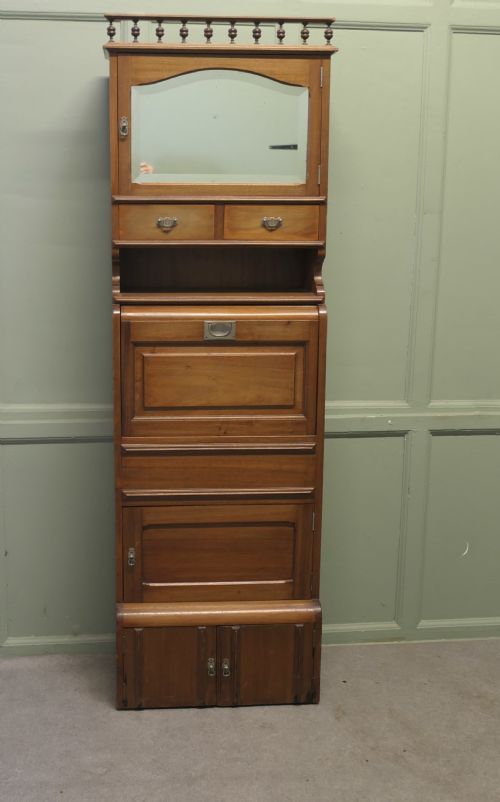
Many items were constructed specifically for use aboard naval vessels, yachts, or merchant ships during long journeys. Specialised pieces include ship washstands with integrated sinks and compact vanity cabinets.
Their design allowed officers to maintain functional quarters within the restricted space of a cabin.
How do I care for camphor wood?
Camphor wood requires minimal intervention, benefiting from stable indoor humidity and gentle dusting. Avoid placing these pieces in direct sunlight to preserve the natural tone of the timber.
The wood retains its characteristic aromatic quality, which helps protect contents naturally.