




Marbled Top Vitrine
When you search for a marbled top vitrine, you enter a world of glazed French display cabinets topped in stone and mounted in gilt bronze.
Marbled Top Vitrine
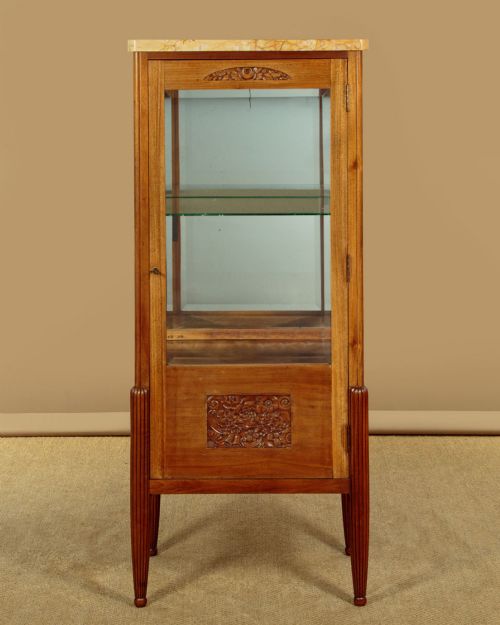
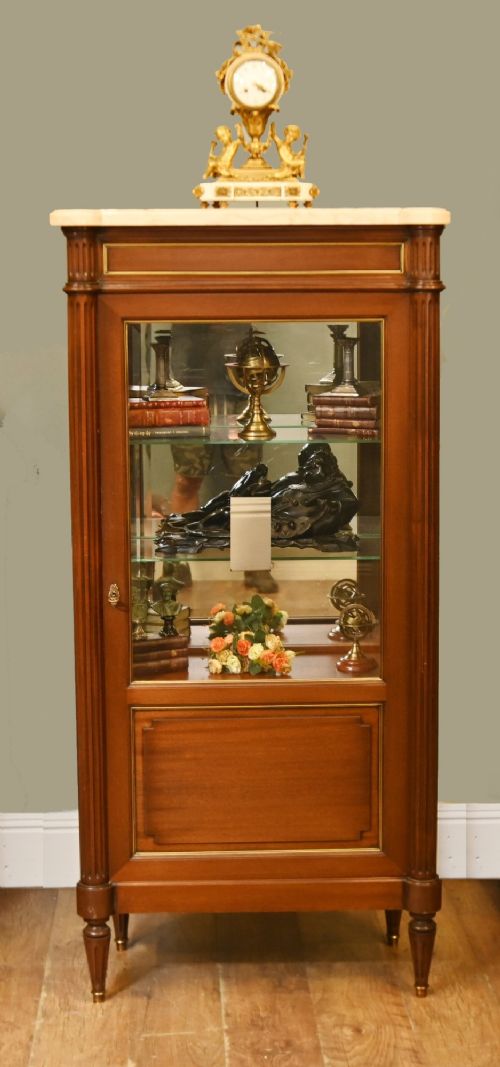
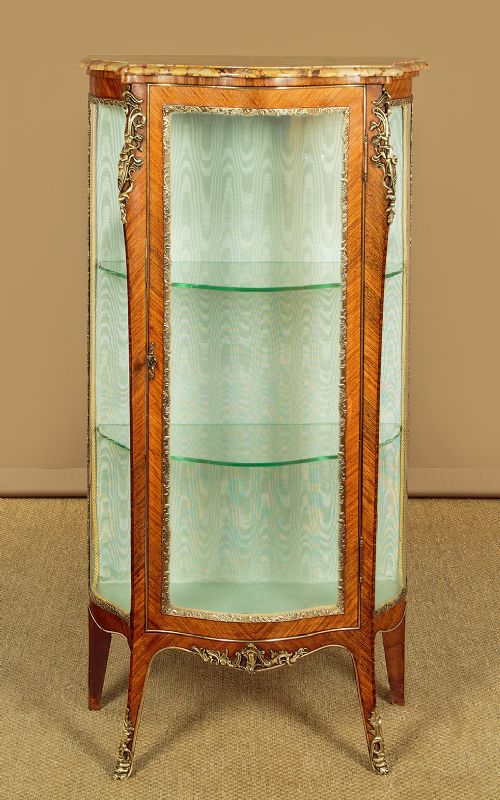
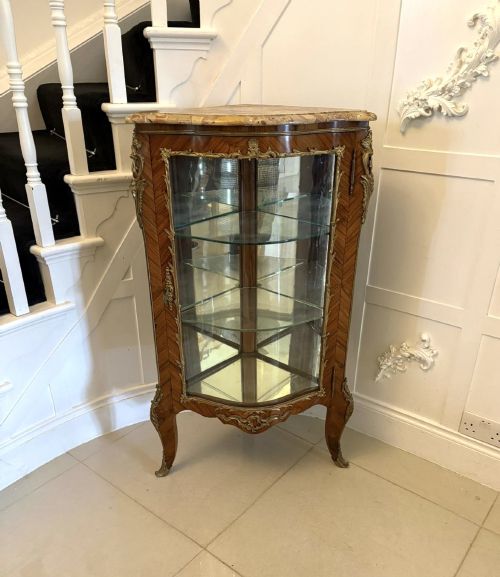
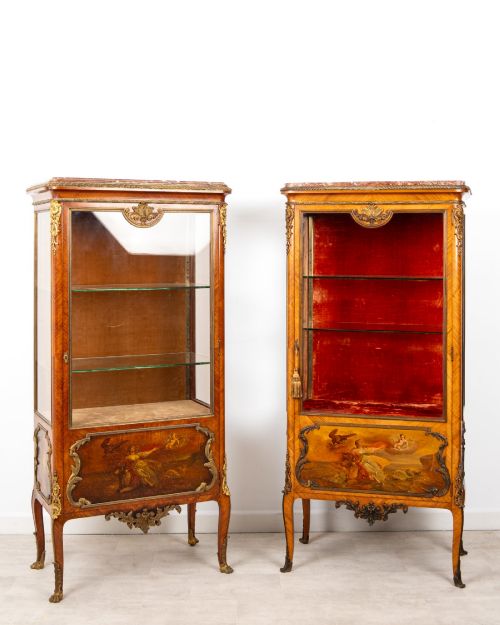
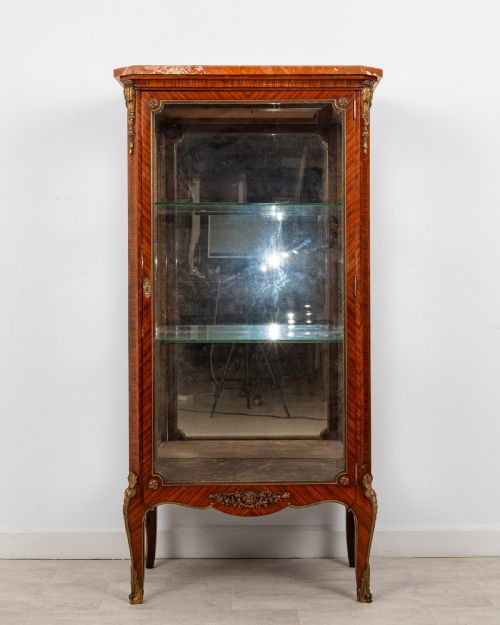
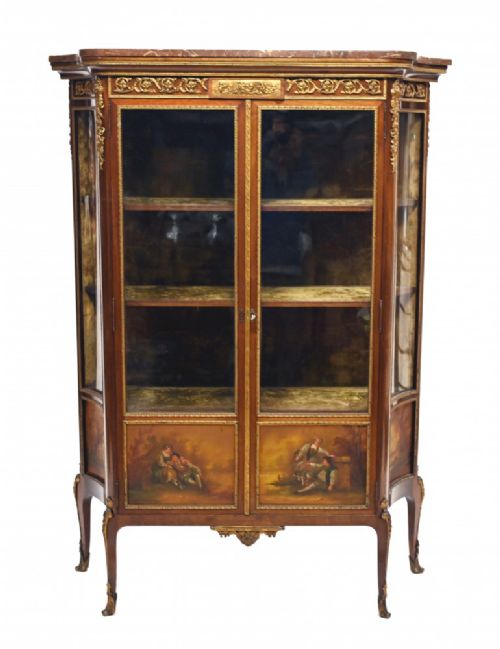
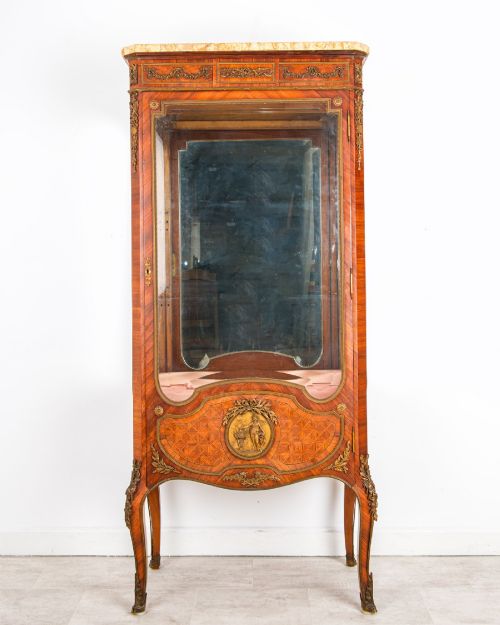
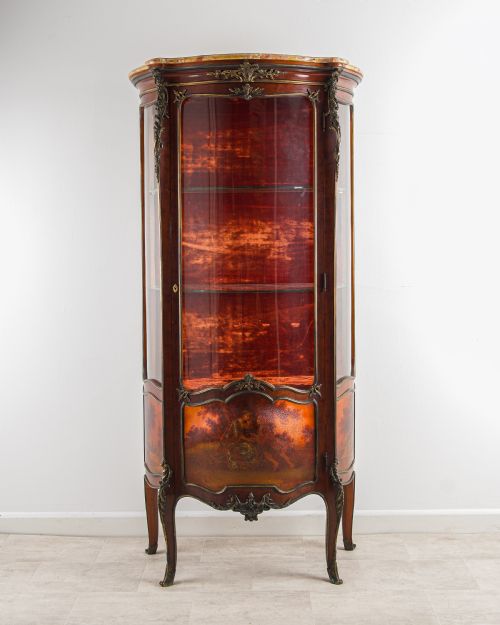
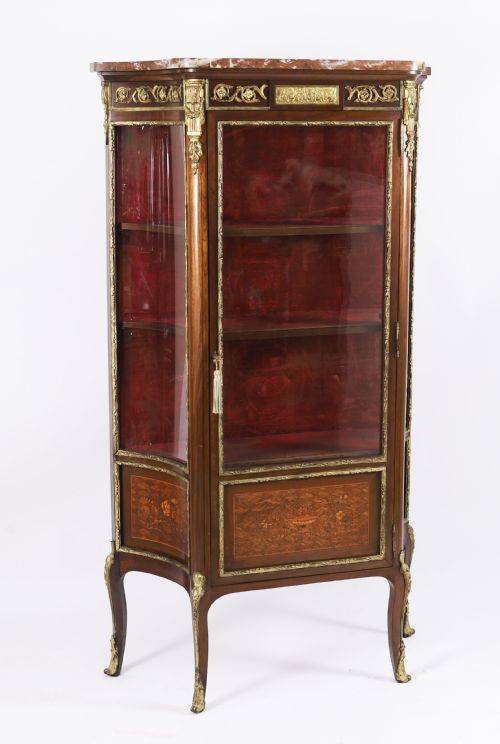
A marbled top vitrine is primarily a display cabinet designed to showcase porcelain, glassware and small valuables behind glass panels. The form draws heavily on eighteenth-century French design, with Louis XV and Louis XVI revival styles dominating the selection. You will encounter serpentine fronts, corner cabinets and upright pier cabinets created during the nineteenth century and into the early decades of the twentieth.
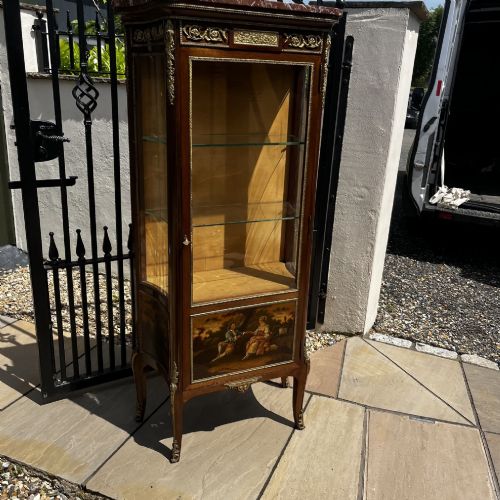
The materials combine fine timbers like kingwood, mahogany and walnut with glazed doors and heavy stone slabs. Many pieces incorporate painted lower panels executed in the Vernis Martin tradition, depicting pastoral scenes or floral motifs. Ormolu or gilt bronze mounts frame the glass and accent the corners, edges and feet.
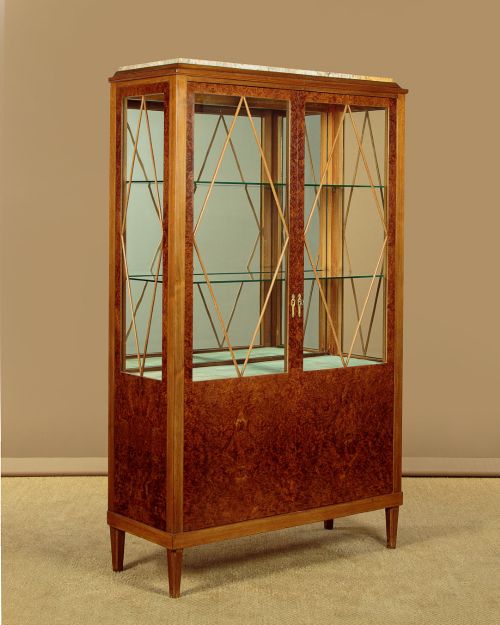
While most examples originate from French workshops, variations range from grand nineteenth-century revival pieces to cleaner Art Deco designs from the 1930s. The common thread is the combination of display space with a durable stone surface, uniting utility with ornamental cabinetmaking.
How they were made
Makers built the carcases from native and exotic timbers, often applying kingwood or mahogany veneers arranged in geometric parquetry or intricate marquetry patterns. Carved wooden frames received hand-applied varnishes, while painted lower panels utilised layered translucent lacquers in the Vernis Martin technique to mimic Chinese export screens.
Foundry-cast ormolu and gilt bronze mounts were chased by hand and secured with brass screws to accentuate the structural lines of the cabinet. Heavy marble slabs, cut to follow straight, curved or serpentine profiles, rested directly on the timber tops to complete the construction.
Marbled Top Vitrine Retail Price Guide 2026
Typical asking prices for marbled top vitrine among the pieces listed under this phrase on Sellingantiques today, from the lower quarter to the upper quarter. They describe what is for sale here now, not the wider market.
Listings feature cabinets spanning the nineteenth and twentieth centuries, utilising marble, glass, ormolu, kingwood, mahogany, gilt bronze, brass and walnut.
What varies in quality
The standard of a marbled top vitrine depends heavily on the crispness of the gilt bronze mounts and the depth of hand-chasing applied to the metal. Superior pieces display fluid, individually cast ormolu ornaments that integrate seamlessly with the timber curves, whereas lesser examples use rigid, mass-produced fittings with softer detail.
Timber selection and veneer work also dictate the grade of the cabinet. Fine execution involves meticulously matched grain patterns, precise parquetry and hand-painted panels with careful shading, contrasting with plain surfaces or flat, uninspired decoration.
François Linke·G. Durand·Gouffel·Maison Krieger
The Marbled Top Vitrine Glossary
- Vitrine
- A glass-fronted display cabinet intended for showing ceramics and curiosities. The term derives from the French word for glass.
- Ormolu
- Gilt bronze mounts used as decorative enrichment on furniture. The technique involves applying a gold amalgam to a bronze base and firing it.
- Vernis Martin
- A simulated lacquer finish developed in eighteenth-century France. Artisans applied successive coats of varnish to create translucent painted scenes.
- Parquetry
- Geometric wood inlay work arranged in patterns such as squares, lozenges or cubes. Cabinetmakers used contrasting veneers to achieve this effect.
- Serpentine
- A furniture front or marble top characterised by a double-curved line, convex in the centre and concave at the sides.
Marbled Top Vitrine: Frequently Asked Questions
What is a marbled top vitrine used for?
These cabinets serve to display precious collections of porcelain, glassware and small ornaments behind protective glass doors. The glazed sides and shelves allow light to pass through to illuminate the contents.
The stone surface on top provides a durable display area for lamps, bronze figures or larger decorative objects. Historically, they occupied formal reception rooms and parlours to showcase the taste and wealth of the household.
How do I tell Louis XV style from Louis XVI style?
Louis XV style pieces, often called rococo revival, feature flowing asymmetrical curves, serpentine fronts and naturalistic scrollwork. The mounts and legs twist organically and embrace asymmetry.
Louis XVI style cabinets shift toward neoclassical symmetry, straight lines and geometric precision. You will notice fluted columns, rectangular panels, urn motifs and crisp right angles rather than sweeping curves.
Where were these cabinets made?
The vast majority of these display cabinets originate from Parisian workshops and factories active during the nineteenth and early twentieth centuries. Master cabinetmakers and larger commercial houses produced these pieces to satisfy an international demand for French eighteenth-century revival furniture.
Some examples bear the signatures or stamps of renowned makers who supplied high-end clientele across Europe and America. Their work represents the peak of nineteenth-century cabinetmaking skill.
How do I fit a vitrine into a modern room?
A glazed cabinet acts as a focal point in a dining room, hallway or sitting room by introducing warm wood tones and reflective glass surfaces. The slim profile of pier cabinets and corner units allows them to occupy narrow wall spaces without dominating the floor plan.
Interior lighting can be added discreetly inside the glass enclosure to highlight displayed collections. The stone top provides a robust surface that withstands daily use while anchoring the piece visually in the space.