


Marble Washstand Table
A marble washstand table brings solid stone and timber together for practical bedroom use.
Marble Washstand Table
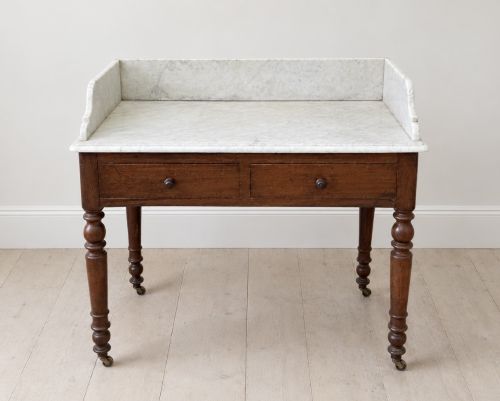
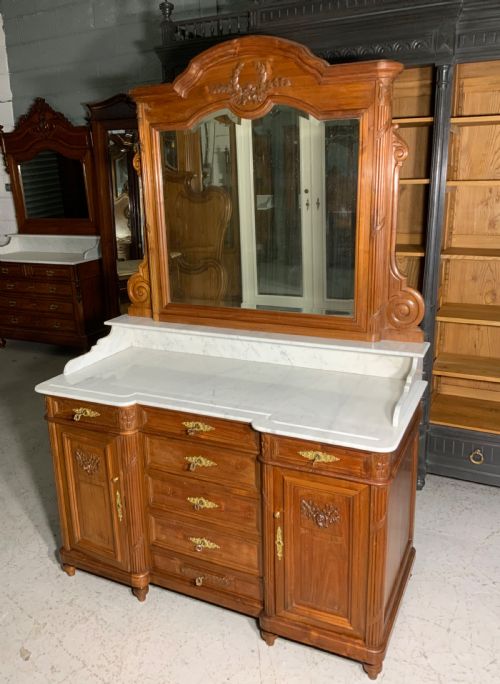
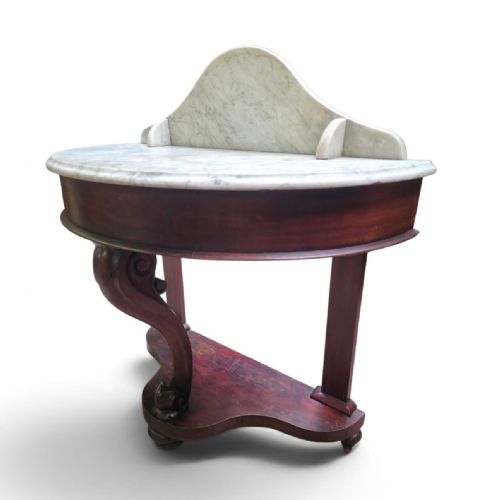
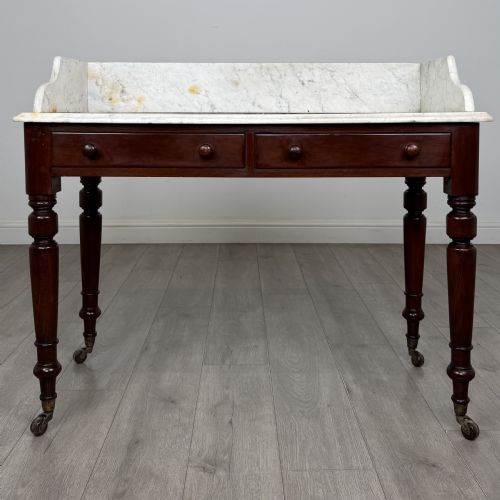
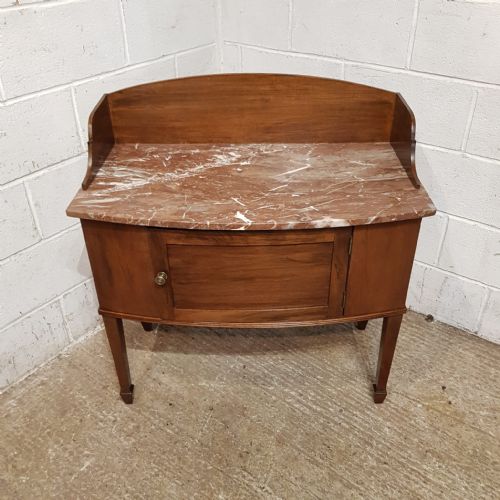
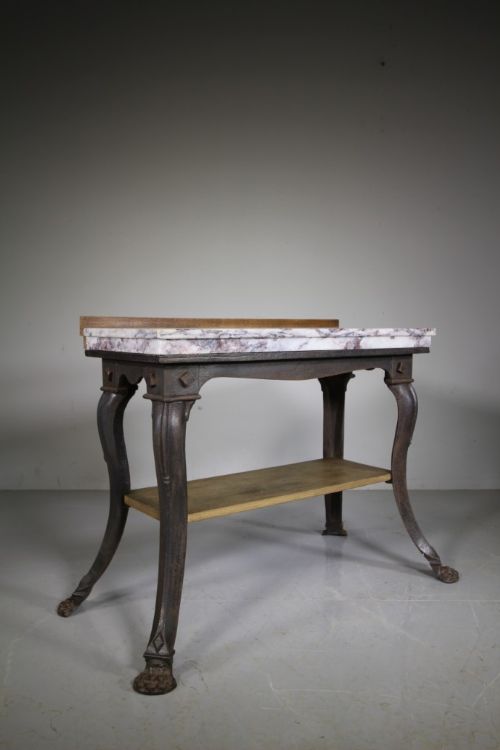
A marble washstand table is a practical bedroom piece designed for personal hygiene before modern plumbing became standard. These items combine a durable stone slab with timber frames to handle daily washing routines safely.
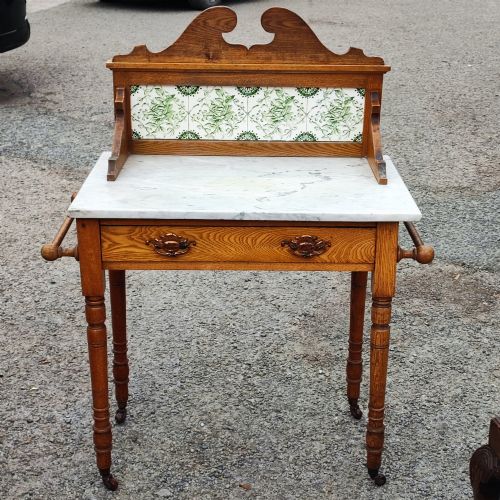
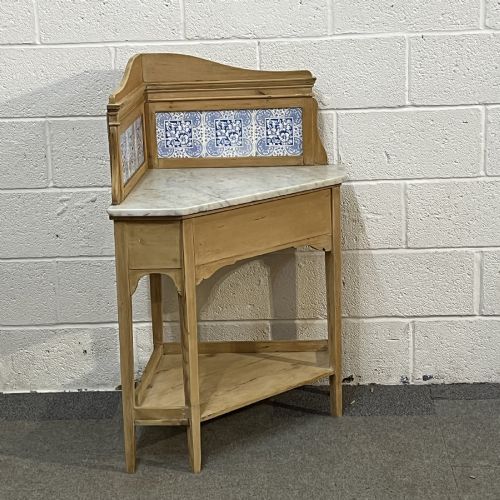
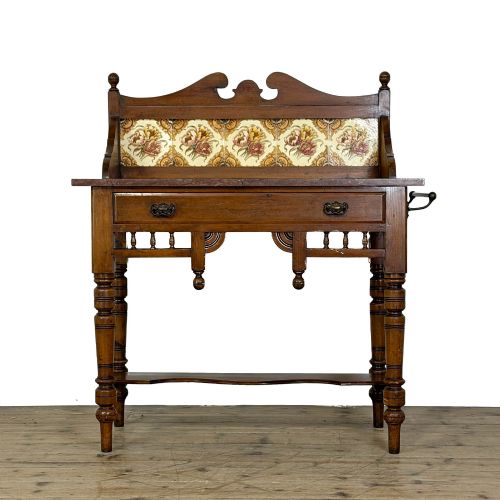
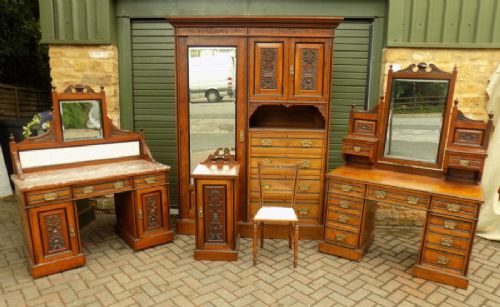
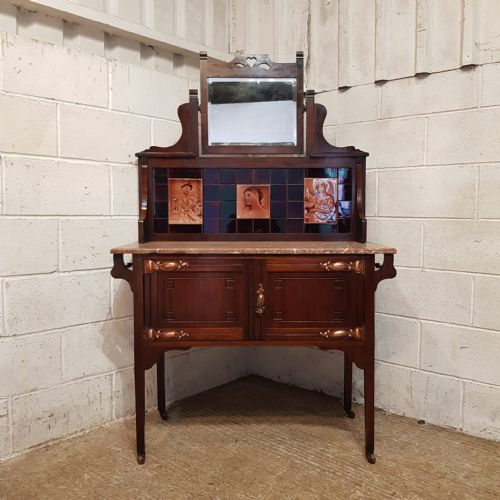
The most common examples on this page date from the Victorian and Edwardian periods, constructed in pine, mahogany, walnut, or oak. Many feature tiled splashbacks or ceramic basins integrated into the wooden framework.
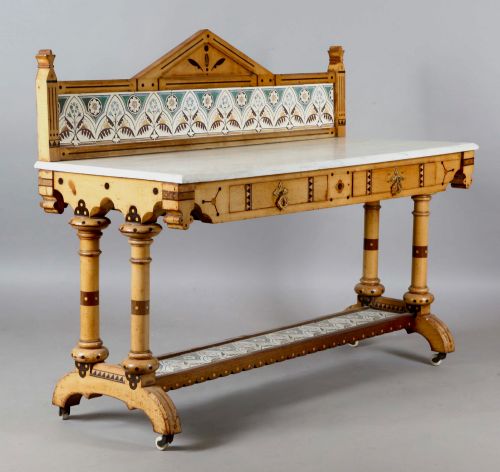
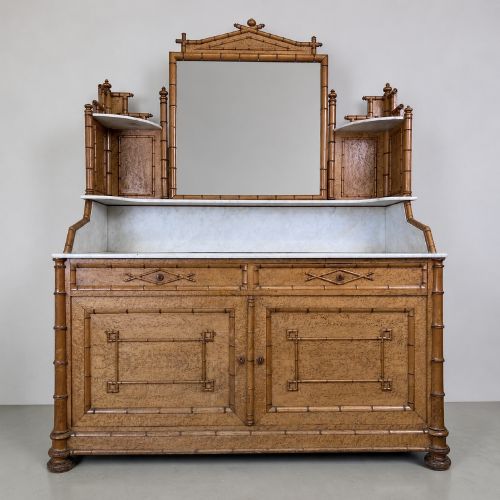
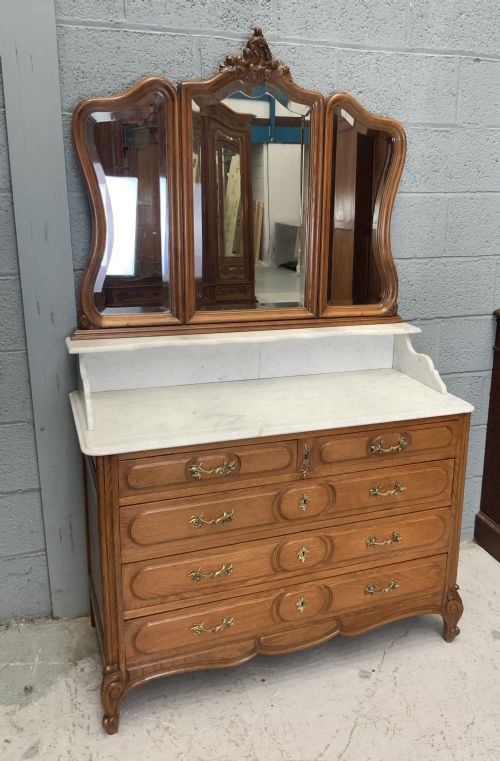
Makers shaped these utilitarian pieces in various regional styles, ranging from simple pine country versions to sophisticated ebonised, inlaid, or bow-fronted designs. Some continental examples adopt French provincial or faux-bamboo forms.
How they were made
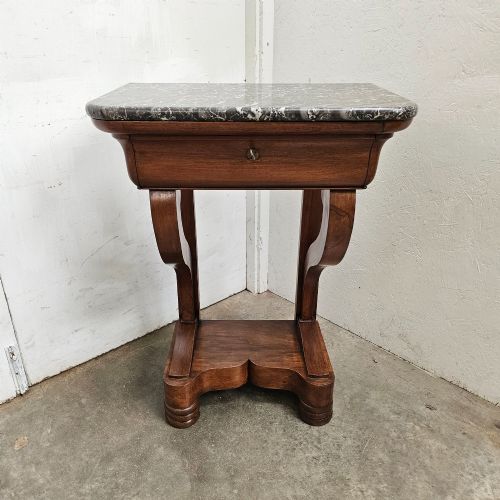
Makers relied on dense hardwoods like mahogany, walnut, and rosewood alongside softer pine and oak to build the supporting frames. Stone slabs, including white and rouge marble varieties, were fitted to the upper surfaces to resist water damage.
Ceramic tiles and glass inserts frequently appeared in the upper splashbacks, secured alongside brass fixtures and hardware. Joinery techniques varied from painted faux finishes on early pine pieces to intricate inlaid satinwood details on later Edwardian models.
Marble Washstand Table Retail Price Guide 2026
Typical asking prices for marble washstand table among the pieces listed under this phrase on Sellingantiques today, from the lower quarter to the upper quarter. They describe what is for sale here now, not the wider market.
Some nineteenth-century makers turned solid wood to mimic bamboo shoots, proving that even washstands enjoyed a brush with botanical fashion.
What varies in quality
The choice of stone and timber dictates the refinement of each piece, moving from utilitarian painted pine to figured burr walnut and rouge marble. Selection of materials reflects the intended room placement, from modest chambers to principal bedrooms.
Detailing in the woodwork and ceramic elements separates standard workshop production from finer cabinet work. Inlays, carved ornamentation, and original tile arrangements elevate the execution of the design.
Maples
The Marble Washstand Table Glossary
- Marble top
- A polished stone surface fitted to the upper frame to provide a water-resistant counter for washing utensils.
- Splashback
- A vertical panel rising behind the stone surface, frequently fitted with ceramic tiles to protect the wall from water splashes.
- Faux bamboo
- A decorative turning technique applied to wood to imitate natural bamboo stalks, popular in late nineteenth-century French furniture.
- Bow front
- A convex, curved front section that softens the linear profile of the cabinet frame.
- Duchess washstand
- An elaborate dressing and washing combination piece featuring extended surfaces and upper mirror or drawer tiers.
Marble Washstand Table: Frequently Asked Questions
What is a marble washstand table?
A marble washstand table is a nineteenth or early twentieth-century bedroom furnishing designed to hold washing bowls, jugs, and toiletries.
The stone top provided a durable, waterproof surface for daily hygiene routines before plumbed bathrooms became common in homes.
How do I date a washstand?
Dating relies on observing the timber types, structural styles, and associated decorative elements recorded in the listings. Victorian pieces often display heavier mahogany or pine construction, whereas Edwardian examples favour lighter satinwood and mahogany.
Specific design movements like the Aesthetic style or Arts and Crafts provide further chronological markers for individual pieces.
Are the marble tops fixed in place?
Most marble slabs on these tables rest unattached directly upon the wooden framing to allow for easier lifting and transport.
Due to the considerable weight of the stone, gravity keeps the top secure during normal use without requiring permanent fixings.
How can I use a washstand today?
These tables adapt well to modern interiors as hallway consoles, bathroom vanity supports, or side tables in living spaces.
The stone surface easily accommodates lamps, decorative objects, or bathroom accessories while maintaining its historical character.