



Marble Top Washstand Cabinets
These marble top washstand cabinets combine stone slabs with timber frames to serve bedrooms with utility and style.
Marble Top Washstand Cabinets
Marble top washstand cabinets are bedroom furnishings designed for personal hygiene before modern plumbing became standard in every room. The pieces recorded here span the Victorian, Edwardian, and 1900 periods, reflecting the domestic habits of the late nineteenth and early twentieth centuries.
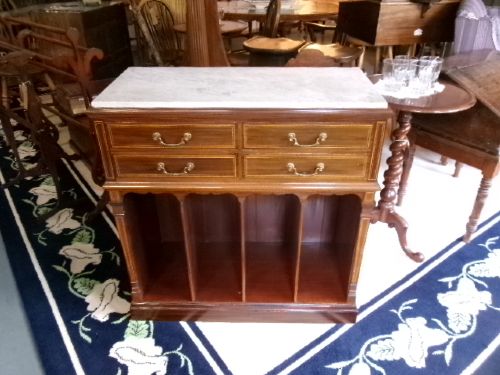
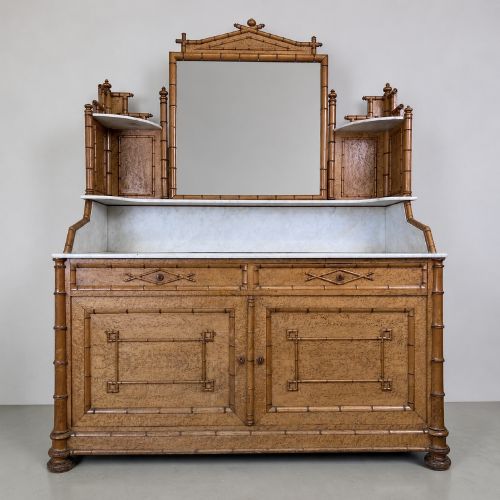
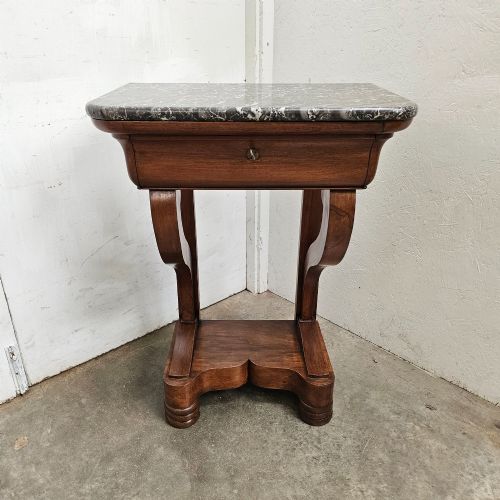
Most examples take the form of traditional washstands, though variations include console tables, chests of drawers, and bedside cabinets. Timber frames in mahogany, walnut, oak, satinwood, and bird's-eye maple support heavy stone surfaces designed to withstand daily washing routines.
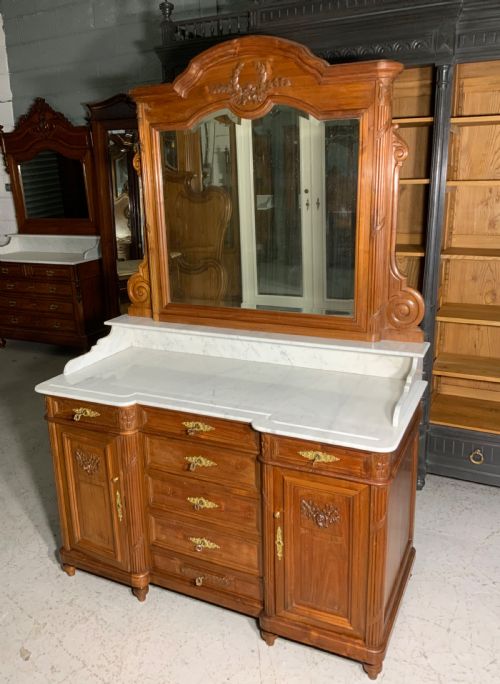
Stylistically, these pieces draw upon Victorian and Edwardian tastes, alongside French Rococo Revival, Louis Philippe, Art Nouveau, and Arts and Crafts movements. The selection on this page shows how makers adapted functional sanitary furniture into decorative bedroom cabinets.
How they were made
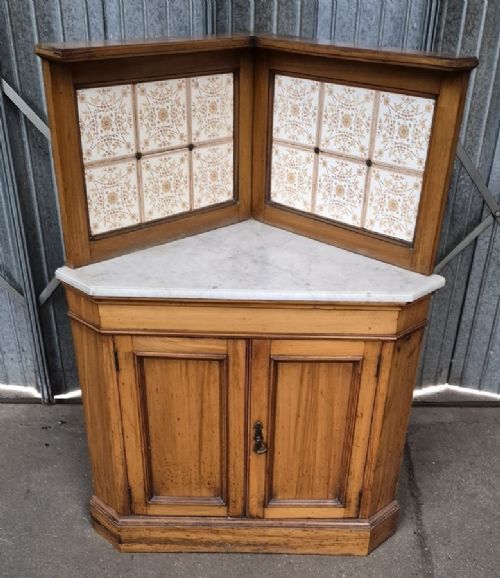
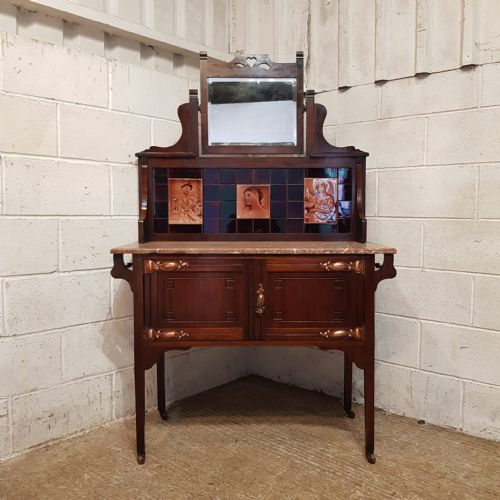
Makers constructed these cabinets using dense timbers such as mahogany, walnut, and oak to support the heavy weight of stone slabs. Selected pieces incorporate decorative elements like satinwood inlay, ceramic components, brass hardware, and glass details.
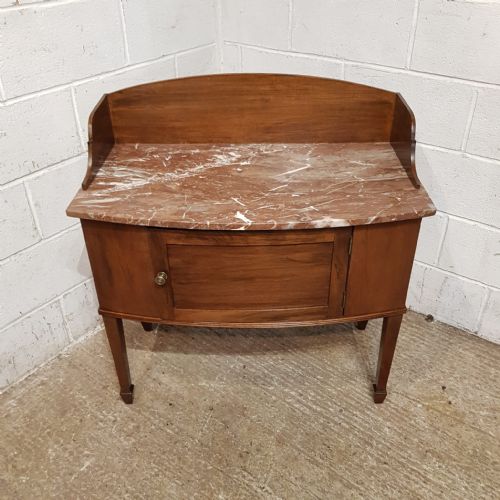
The stone surfaces utilise shaped and polished marble, occasionally in rouge variants, providing a durable and water-resistant top. Structural joinery and turned or framed supports unite the timber base with the heavy stone top.
Cabinetmakers applied regional design idioms, ranging from the linear simplicity of the Arts and Crafts movement to the curving lines of Art Nouveau and French revival styles.
Marble Top Washstand Cabinets Retail Price Guide 2026
Typical asking prices for marble top washstand cabinets among the pieces listed under this phrase on Sellingantiques today, from the lower quarter to the upper quarter. They describe what is for sale here now, not the wider market.
Faux-bamboo carving turns solid maple into tropical stems, proving Victorian cabinetmakers enjoyed a botanical joke.
What varies in quality
The grade of timber and the complexity of the cabinetwork distinguish standard utilitarian pieces from finer chamber furniture. Well-executed pieces feature thoughtful proportions, precise joinery, and careful selection of wood grains.
Surface details such as fine inlay work, ceramic fittings, and brass mounts elevate the execution of the piece. The thickness, colour variation, and edge profiling of the marble slab also indicate the level of investment in the original manufacture.
Walker and Sons·Gillows
The Marble Top Washstand Cabinets Glossary
- Rouge marble
- A reddish variety of limestone marble often incorporated into the tops of finer Victorian and Edwardian cabinet pieces. It provides a striking contrast to darker timbers like mahogany and walnut.
- Satinwood
- A pale, lustrous hardwood utilised for decorative veneers and fine inlay work on late nineteenth-century furniture. Its reflective grain adds brightness to cabinet facades.
- Bird's-eye maple
- A figured timber exhibiting small circular markings resembling birds' eyes, created by local disruptions in the wood's growth. French makers favoured this material for decorative bedroom suites.
- Aesthetic style
- A late nineteenth-century design movement focusing on artistic expression and simplicity rather than heavy historic revivalism. Pieces in this style often feature clean structural lines and refined decorative details.
- Arts and Crafts
- A movement prioritising traditional handcraftsmanship and simple construction over mass production. Furniture from this origin displays honest joinery and sturdy timber frames.
Marble Top Washstand Cabinets: Frequently Asked Questions
What is a marble top washstand cabinet?
These pieces are historic bedroom cabinets topped with stone slabs designed to hold basins and jugs before plumbed bathrooms existed.
Today, they serve as decorative storage units or vanity surfaces in modern homes.
How do I date a washstand?
Dating relies on identifying stylistic markers, timber types, and construction methods associated with the Victorian and Edwardian periods.
Art Nouveau and Arts and Crafts details point toward the turn of the twentieth century.
Can I use it as a bathroom vanity?
Many buyers repurpose these sturdy cabinets to hold modern basins and plumbing fittings in contemporary spaces.
The stone top provides a practical, water-resistant surface well-suited to bathroom environments.
What woods were commonly used?
Makers relied on durable hardwoods including mahogany, walnut, and oak to support the heavy marble slabs.
Finer examples feature decorative veneers such as satinwood and bird's-eye maple.