
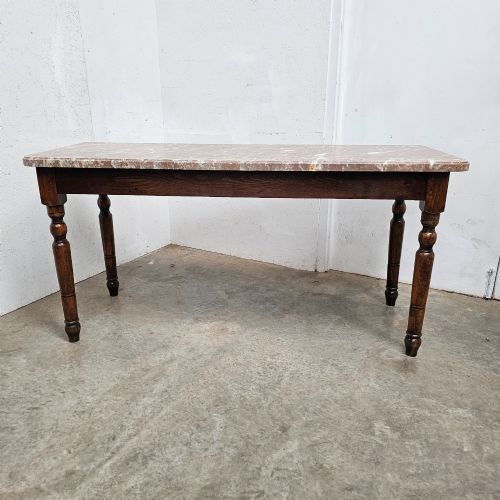
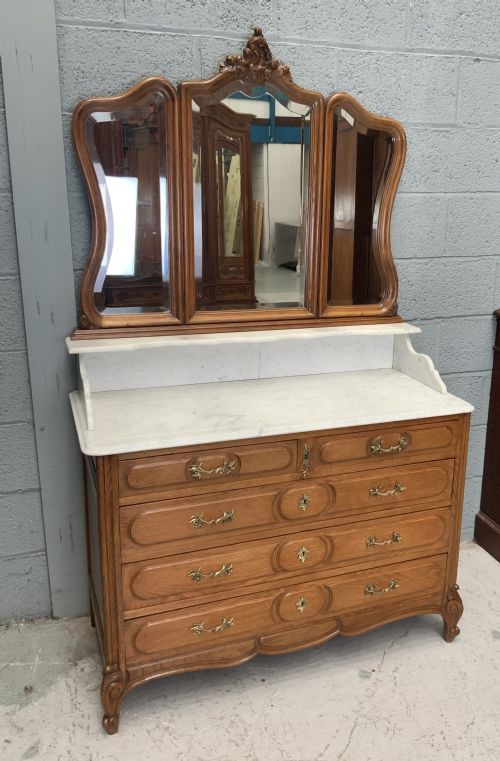


Marble Top Oak Sideboard
A marble top oak sideboard brings together sturdy timber and cool stone for a practical piece that serves dining rooms and halls alike.
Marble Top Oak Sideboard
A marble top oak sideboard combines a heavy timber frame with a smooth stone surface, appearing in forms such as sideboards, buffets, washstands, and console tables. These pieces span the nineteenth century, the Victorian era, and into the 1920s and 1930s, reflecting both English and French origins.
The versions most commonly met on this page include French Provincial and Arts and Crafts designs, alongside utilitarian washstands and patisserie display tables. Oak provides the structural carcase while marble forms the top, creating a utilitarian yet decorative surface for food preparation, washing, or display.
Makers such as Krieger of Paris occasionally marked these forms, though many examples remain unattributed work from French workshops and English cabinet makers. Whether built for a townhouse bathroom or a provincial dining room, the core combination of oak and marble remains constant across these diverse object types.
How they were made
Carpenters constructed the carcases using solid oak, frequently employing carved panels, brass hardware, and ceramic details to finish the exterior. The timber underwent seasoning and joinery techniques typical of nineteenth and early twentieth century cabinet making.
The stone tops utilised thick slabs of marble or granite, cut and polished to fit precisely over the wooden base. These stone surfaces provided a durable, water-resistant counter for washing and serving.
The page includes forms designated as washstands, console tables, buffets, and commodes originating from French and English traditions.
What varies in quality
Quality rests in the selection of materials and the depth of the carving on the oak frame. Better examples display finely figured timber, crisp hand-carved details, and substantial marble slabs fitted cleanly to the woodwork.
Simpler pieces rely on plain sawn oak and standard hardware, reflecting domestic utility rather than workshop artistry. The integration between the heavy stone top and the wooden base distinguishes standard production from finer cabinet work.
KRIEGER of Paris
The Marble Top Oak Sideboard Glossary
- Carcase
- The main body or skeleton of a piece of furniture before drawers, doors, and tops are attached. It provides the structural integrity for heavy stone surfaces.
- Arts and Crafts
- A design movement emphasising handcraftsmanship, simple forms, and local materials. Pieces from this style often feature minimal decoration and exposed construction.
- Commode
- A low chest of drawers or cabinet with doors, functioning as storage furniture in bedrooms and living spaces. In French contexts, the term often applies to decorative case pieces.
- Patisserie Display Table
- A specialised table designed for showcasing baked goods, frequently fitted with a cold marble slab to keep food cool. These tables often double as console furniture.
Marble Top Oak Sideboard: Frequently Asked Questions
How do I clean the marble top?
Wash the stone surface with warm water and a mild, non-abrasive soap. Avoid acidic cleaners that etch the polished finish.
Dry the marble thoroughly with a soft cloth to prevent water spots and maintain the natural sheen of the stone.
Are the marble tops attached?
Most marble slabs rest freely on top of the wooden base under their own considerable weight. This allows the stone to be lifted off for easier transport.
Some heavier sideboards secure the marble with hidden brackets or mortar, so check the construction before attempting to move the piece.
Can I use a washstand as a sideboard?
Washstands and sideboards share similar proportions and materials, making them adaptable for modern living spaces. A washstand with a marble top serves well as a small server or hallway console.
Consider the height and depth of the specific piece to ensure it fits the intended room and functional needs.
How do I date an oak sideboard?
Examine the construction methods, hardware, and stylistic clues such as Arts and Crafts or Art Deco motifs. Nineteenth-century pieces often show hand-cut joinery and heavy oak carving.
Later pieces from the 1920s and 1930s tend toward simpler lines, bleached oak finishes, or French provincial styling.