




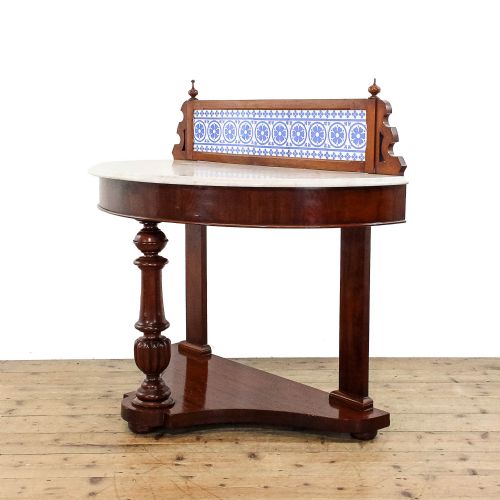


Marble Splashback Vanity
A marble splashback vanity brings solid stone and period timber together to anchor a bedroom with genuine nineteenth and early twentieth century utility.
Marble Splashback Vanity
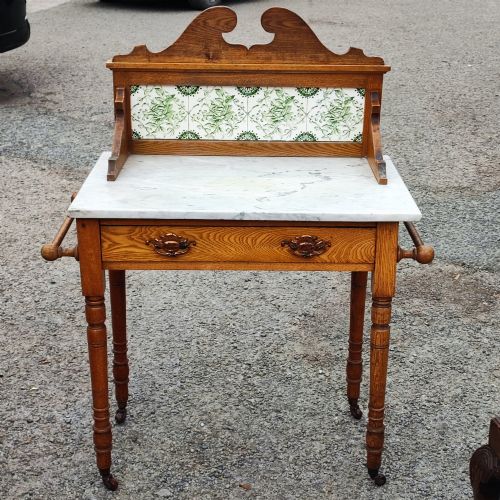
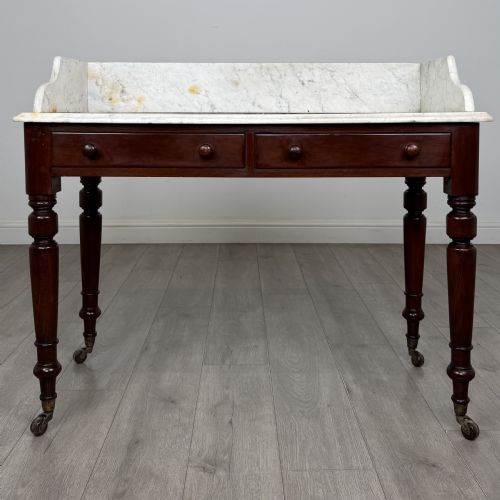
When you search for a marble splashback vanity, you are looking at washstands designed to protect bedroom walls from water while holding a wash basin and pitcher. The pieces on this page span the Victorian and Edwardian eras, stretching from the late nineteenth century into the nineteen hundreds.
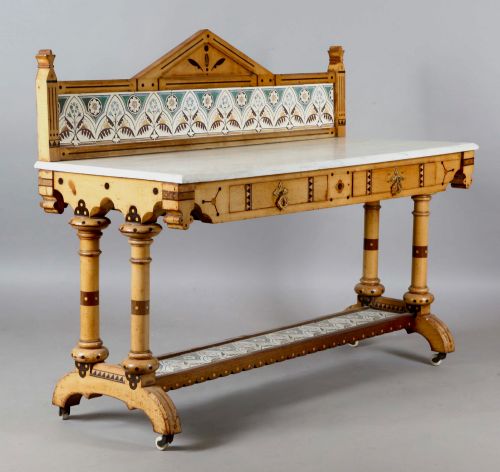
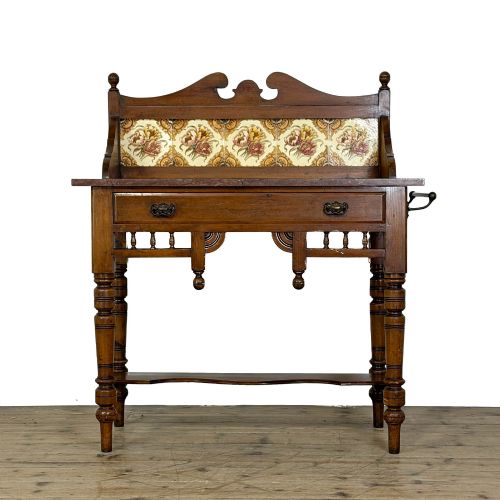
You will encounter mahogany, walnut, satinbirch, and painted pine frames supporting heavy stone tops. Many examples incorporate ceramic tiles into the splashback alongside the marble, while others pair the stone with brass towel rails and glass accessories.
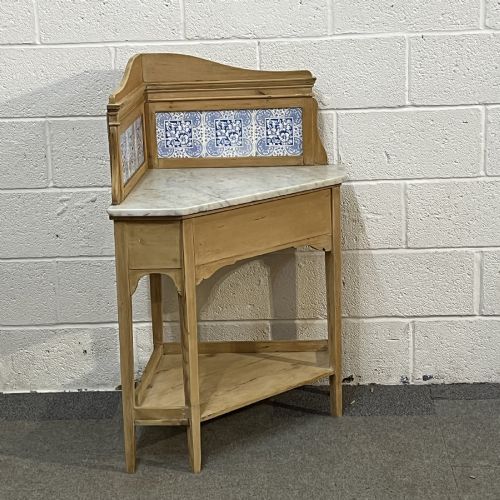
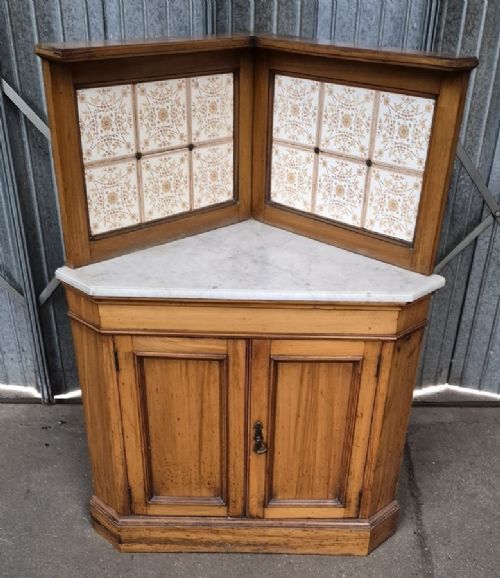
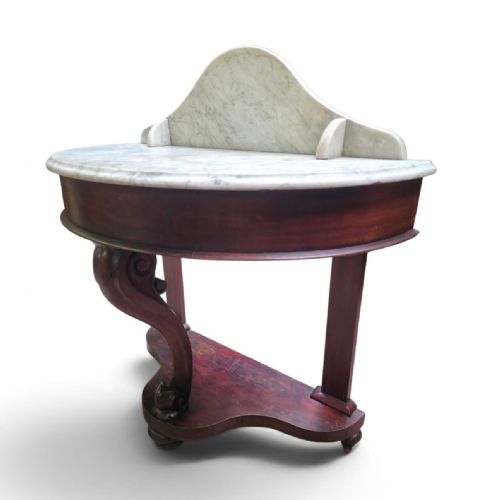
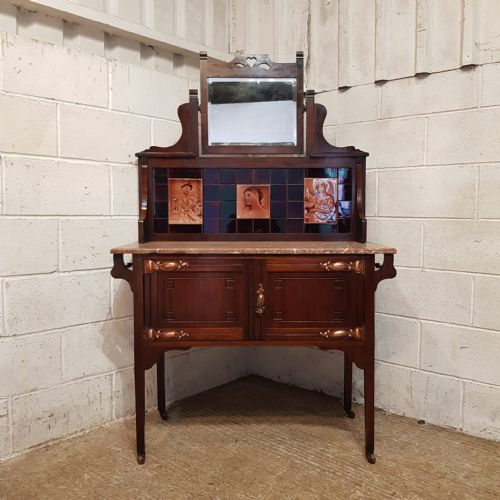
The prevailing forms range from corner washstands and standard rectangular tables to elaborate duchess styles and Arts and Crafts cabinets. Edwardian Sheraton Revival pieces and French provincial interpretations appear regularly among the selection.
Materials and construction
Cabinet makers built these frames using dense hardwoods like mahogany and walnut, alongside lighter timbers such as satinbirch and painted pine. Joinery techniques relied on traditional cabinet construction to support the considerable weight of stone tops.
Slab marble forms the integral splashback and surface, sometimes specified as rouge marble or paired with decorative ceramic tiles. Brass fittings, inlaid satinwood details, and glazed elements complete the construction of the washstands.
Marble Splashback Vanity Retail Price Guide 2026
Typical asking prices for marble splashback vanity among the pieces listed under this phrase on Sellingantiques today, from the lower quarter to the upper quarter. They describe what is for sale here now, not the wider market.
The listings on this site span Victorian and Edwardian periods, utilising mahogany, walnut, oak, satinbirch, and painted pine alongside marble and ceramic tiles.
Distinctions in grade and execution
Quality rests in the selection of materials, from figured mahogany and rich walnut down to plain painted pine. Finer pieces display careful satinwood inlay and integrated ceramic tiling that elevates the timber frame.
The thickness and figuring of the marble slab define the upper tier of production, particularly when paired with substantial brass hardware and sophisticated Arts and Crafts or Art Nouveau detailing.
Gillows·Walker & Sons
The Marble Splashback Vanity Glossary
- Washstand
- A piece of bedroom furniture designed to hold a basin, jug, and washing accessories before plumbed bathrooms became standard. These forms evolved into marble splashback vanities as sanitation standards rose.
- Splashback
- The vertical upstand of marble or tiled backing attached to the rear of the washstand to protect walls from water splashes. It serves as the defining visual feature of the vanity.
- Rouge marble
- A deep reddish-brown limestone variety with prominent veining, imported for high-end Victorian and Edwardian furniture tops. It provides a striking contrast against mahogany and walnut frames.
- Sheraton Revival
- A late nineteenth and early twentieth century design style drawing on eighteenth century neoclassical motifs, frequently featuring delicate satinwood inlay on mahogany. Pieces from this movement display lighter proportions.
- Arts and Crafts
- A design movement prioritising honest construction, visible craftsmanship, and simple forms. Washstands from this tradition often emphasise the natural grain of oak or walnut without excessive ornamentation.
Marble Splashback Vanity: Frequently Asked Questions
How were marble splashback vanities originally used?
These pieces stood in bedrooms before modern plumbing, holding a ceramic basin and water pitcher for daily washing. The marble top and splashback provided a waterproof surface that easily wiped clean after use.
Today, many buyers repurpose them as bathroom sink surrounds or hallway consoles. Their durable stone surfaces and storage cabinets suit contemporary living spaces while retaining their historical function.
How do I tell Victorian pieces from Edwardian ones?
Victorian washstands often feature darker timbers like mahogany and walnut, sometimes with heavy proportions and rich rouge marble tops. Aesthetic movement and Arts and Crafts examples from this era also display distinct linear carving.
Edwardian pieces generally lean towards lighter woods, satinwood inlay, and Sheraton Revival influences or larger tiled splashbacks. The overall aesthetic feels airier, reflecting changing interior tastes around the turn of the century.
Can I use a washstand as a modern bathroom vanity?
Many buyers adapt these wooden frames to hold modern undermount basins and plumbing fixtures. The marble top requires professional cutting to accommodate modern sink wastes and taps.
Careful sealing of the timber and stone protects the antique material from prolonged water exposure. This allows the furniture to function practically in a twentieth first century home.
What woods were commonly used for these vanities?
Makers relied heavily on durable timbers like mahogany and walnut for high-end urban pieces. Satinbirch and oak also appear frequently across the Victorian and Edwardian selections.
Painted pine and simpler softwood constructions served provincial or utilitarian requirements. These painted finishes often coordinated with specific bedroom suite decoration.