






Marble Plant Vases
Marble plant vases bring solid stone surfaces and carved wood together to elevate greenery in any room.
Marble Plant Vases
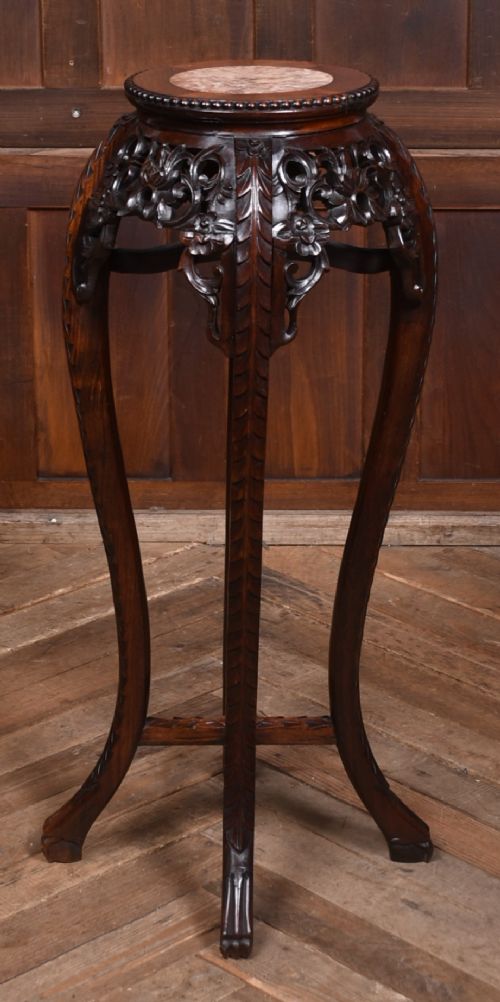
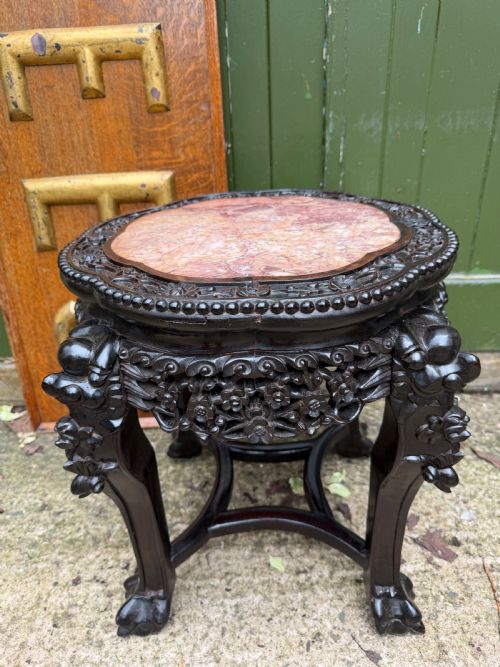
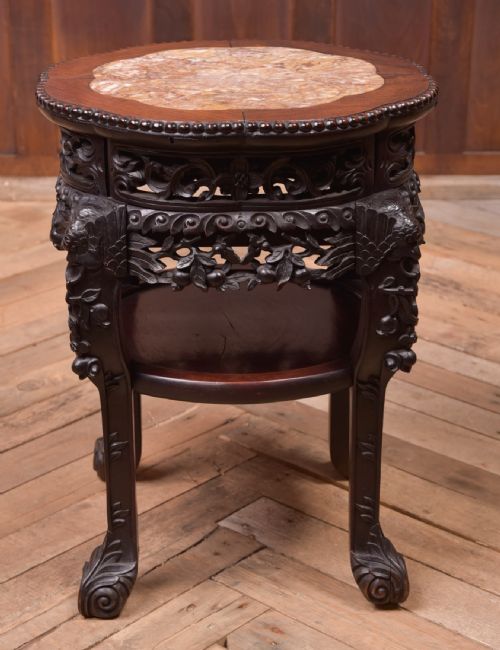
Marble plant vases and stands combine natural stone with carved hardwood to support heavy planters and urns. Buyers searching for marble plant vases will find low occasional tables, tall pedestals, and jardiniere stands designed to display plants.
The pieces appearing here span the nineteenth and early twentieth centuries, drawing heavily on Chinese export workshops and Louis XVI styling. A buyer meets carved hongmu and rosewood frames inset with variegated rouge or black marble panels.
Forms range from small wine and lamp tables to substantial pedestals with gilt-metal mounts. Each piece serves to lift botanical displays off the floor, utilising durable stone tops that resist water and soil.
How they were made
Maker's workshops built these stands using dense tropical hardwoods such as hongmu and rosewood, carved by hand with floral or geometric motifs. The wooden frames support heavy inset marble tops, requiring precise joinery to bear the weight of stone and ceramic planters.
Certain European-influenced pieces incorporate cast gilt-metal mounts fixed directly to black marble bodies. Stonemasons cut and polished the marble surfaces smooth, contrasting the cool veining of the stone against dark carved wood.
Marble Plant Vases Retail Price Guide 2026
Typical asking prices for marble plant vases among the pieces listed under this phrase on Sellingantiques today, from the lower quarter to the upper quarter. They describe what is for sale here now, not the wider market.
Early makers ensured that even indoor flora enjoyed proper architectural elevation.
What varies in quality
Quality rests in the depth and clarity of the wood carving, where crisp, undercut details outlast shallow, mechanical incisions. The choice of timber also dictates standard, separating heavy, well-seasoned hongmu from lighter secondary woods.
The selection of the marble insert matters greatly, with striking natural veining and secure, flush fitting indicating superior workshops. Metal mounts show quality through crisp chasing and secure attachment to the surrounding stone or timber.
The Marble Plant Vases Glossary
- Hongmu
- A dense, dark traditional Chinese hardwood used extensively for fine furniture and plant stands. It takes a high natural polish and supports intricate carving.
- Jardiniere
- An ornamental pot or stand designed to hold a plant or flower arrangement. These pieces often feature inset stone tops to prevent water damage.
- Rouge marble
- A decorative red limestone with distinctive white or dark veining, quarried primarily in France. It provides a rich colour contrast in nineteenth-century stands.
- Pedestal
- A tall, freestanding support structure used to elevate vases, urns, or sculptures. They give vertical presence to decorative arrangements in a room.
Marble Plant Vases: Frequently Asked Questions
How do I care for marble tops?
Marble tops require simple wiping with a damp cloth and immediate removal of spilled water or acidic plant feeds. Avoid harsh chemical cleaners that etch the polished stone surface.
Applying a neutral stone wax helps protect the grain and maintain a soft sheen. The natural resilience of marble makes it ideal for supporting damp planters.
Where were these stands made?
Many nineteenth-century stands originate from Chinese export workshops catering to international tastes, utilising indigenous hardwoods. Others follow European revival styles like Louis XVI, incorporating cast metal and black marble.
This blend of regional craftsmanship and global trade created diverse forms ranging from low side tables to tall pedestals. Makers adapted traditional joinery techniques to support heavy stone inserts.
How do I date a plant stand?
Dating relies on examining wood shrinkage, tool marks left by hand carving, and the style of the mounts or joinery. Nineteenth-century pieces often display dense hongmu frames and hand-carved detailing.
Later Victorian and Edwardian examples may show machine assistance or European neoclassical influences like gilt-metal mounts. Comparing the wear patterns on the feet and marble surface also aids attribution.