



Marble Figural Lamp
These marble figural lamp designs combine sculptural human and mythological figures with sturdy stone bases to illuminate interiors.
Marble Figural Lamp
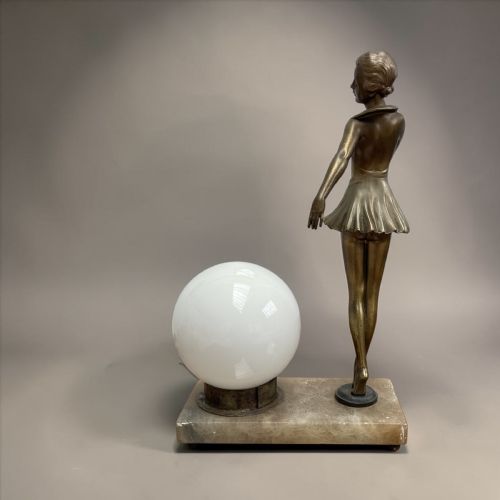
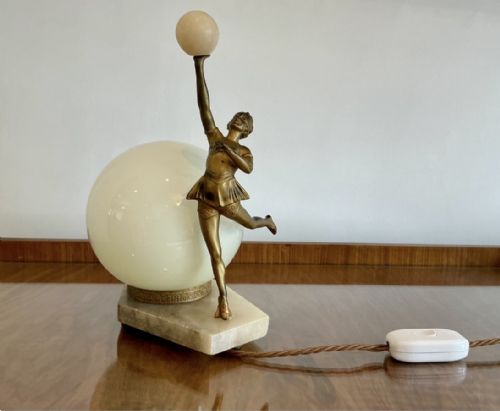
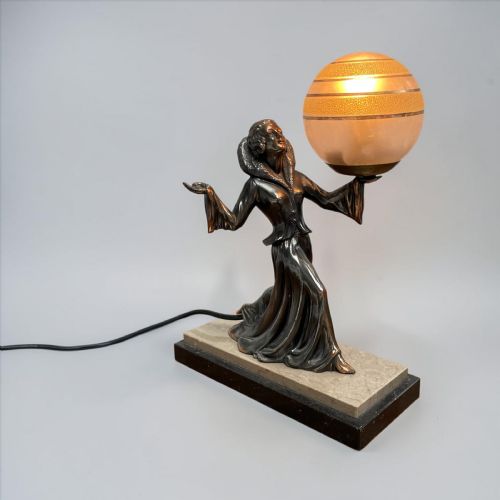
A marble figural lamp integrates a sculpted human, cherub, or allegorical figure with a stone base, often supporting a glass shade or bulb fitting. These objects function as both room lighting and sculptural works, blending utility with decorative art.
The versions most common here span from the late nineteenth century through the Art Deco period of the 1920s and 1930s. They range from small night lights to large floor-standing torchieres, utilising heavy stone plinths to anchor tall metal figures.
How they were made
Foundry workers cast figures in bronze, spelter, or patinated metal, frequently signing the finished work or mounting it upon turned marble and onyx plinths. Other examples incorporate carved alabaster or cast brass components to support glass elements and fabric elements.
Makers combined metal casting with stone masonry, securing hollow figures to weighted bases to house internal wiring safely. Surface treatments varied from silvering and gilding to natural patination on the metal bodies.
Marble Figural Lamp Retail Price Guide 2026
Typical asking prices for marble figural lamp among the pieces listed under this phrase on Sellingantiques today, from the lower quarter to the upper quarter. They describe what is for sale here now, not the wider market.
A small boy and his best friend share a quiet 1920 night light, cast in bronze upon a marble base.
What varies in quality
Artistic attribution, such as signatures from known sculptors, elevates certain pieces above anonymous factory output. The integration of high-grade materials like Baccarat frosted glass or heavy bronze rather than base spelter defines the upper tier.
F. De Luca·P. Sega·Auguste Moreau
The Marble Figural Lamp Glossary
- Spelter
- A zinc alloy commonly used as a cost-effective substitute for bronze in decorative figures. It takes patination and paint well but is softer than bronze.
- Torchiere
- A tall floor lamp that directs light upward. These often feature prominent figural columns mounted on heavy stone bases.
- Onyx
- A banded variety of chalcedony or calcite frequently utilised for lamp bases and decorative plinths during the Art Deco period. It provides translucent layering and polished surfaces.
- Baccarat
- A French manufacturing house renowned for high-quality crystal and glassware. Their frosted glass figurines often form the illuminated part of period lamps.
- Plinth
- A heavy rectangular or circular block acting as the base for a statue or lamp. In these pieces, it anchors the upright figural sculpture.
Marble Figural Lamp: Frequently Asked Questions
What periods do these lamps come from?
The pieces span from the late nineteenth century through the 1920s and 1930s Art Deco era. Earlier examples lean towards classical revival styles, while later ones feature stylised modernist figures.
Manufacturers utilised materials specific to their decade, moving from Victorian bronze and brass toward spelter, chrome, and onyx during the interwar years.
How were figural lamps used originally?
Owners placed them on side tables, desks, or mantels to provide ambient lighting alongside decorative presence. Larger torchiere versions stood directly on the floor to illuminate larger rooms.
Many functioned as mood lighting or night lights, casting soft glows through frosted glass shades or illuminating figures from behind.
How do I distinguish Art Deco from nineteenth-century pieces?
Nineteenth-century examples frequently draw on neoclassical or rococo motifs, displaying naturalistic drapery and patinated bronze. They often represent classical figures, cherubs, or romantic subjects.
Art Deco pieces from the 1920s and 1930s favor streamlined ladies, chrome finishes, geometric onyx bases, and stylised poses that reflect industrial modernity.
What materials make up the bases?
Bases are predominantly cut and polished marble or onyx, chosen for their weight and decorative veining. Some examples add brass or bronze mounts to the stone foundations.
The stone provides a stable counterweight to the tall metal or glass figures mounted on top.