
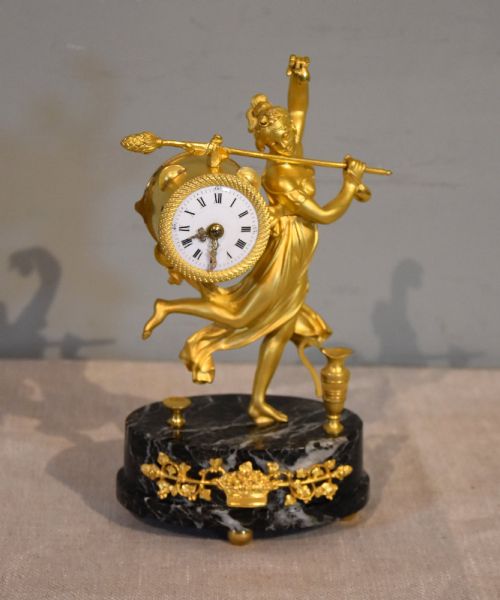
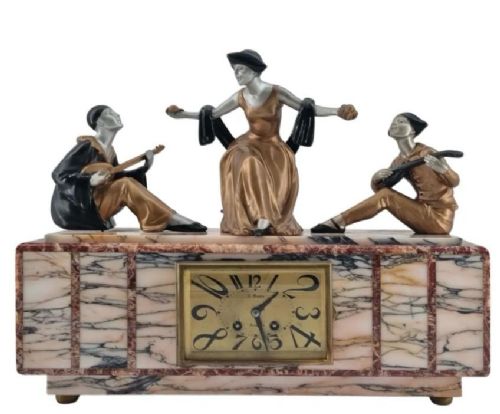


Marble Figural Clock
A marble figural clock combines precision timekeeping with sculptural bronze or spelter figures, offering a stately centrepiece for a mantelpiece.
Marble Figural Clock
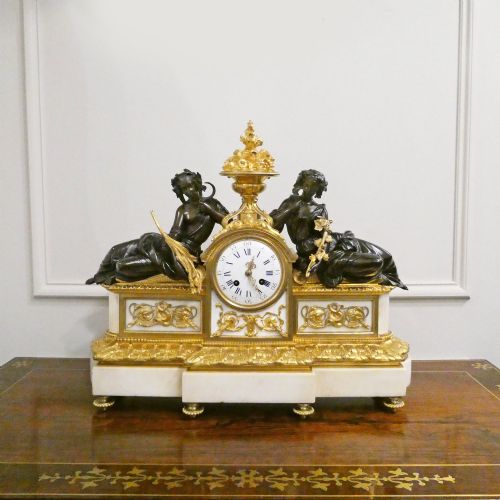
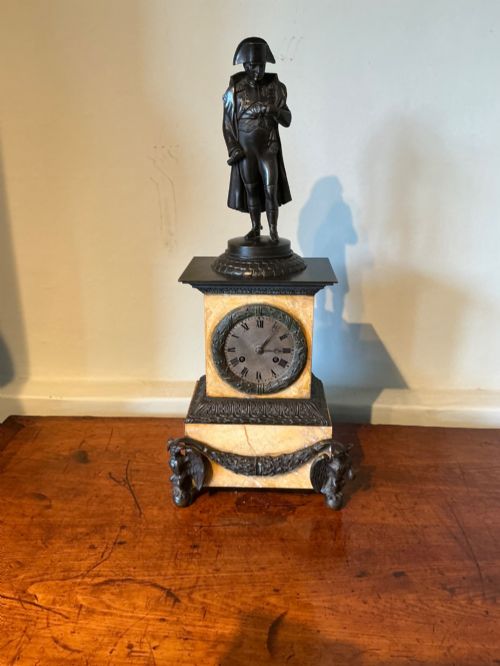
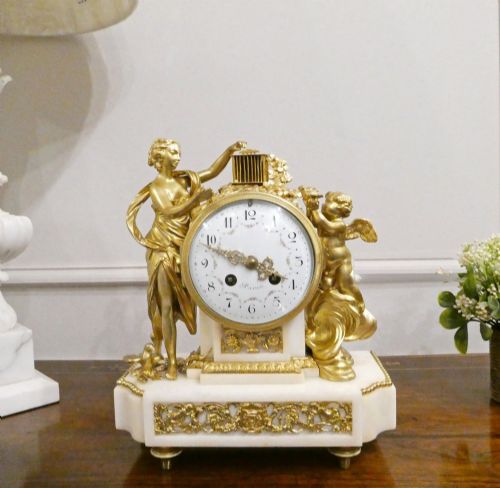
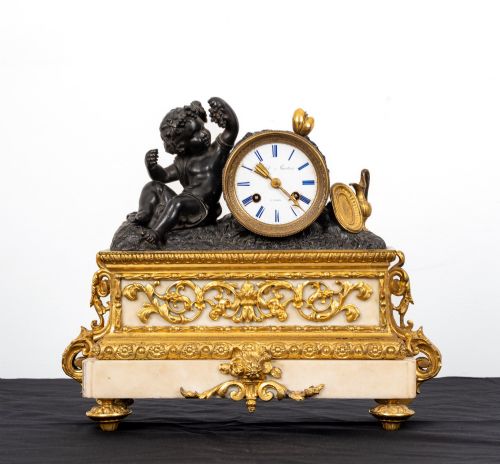
A marble figural clock pairs a heavy stone body with a cast metal figure representing mythological, historical or allegorical subjects. These pieces predominantly originate from nineteenth-century French workshops, spanning styles from Louis XVI Revival and Empire to Art Nouveau and Art Deco. Buyers will frequently encounter mantel clocks and larger clock garniture sets featuring figures such as Napoleon, Minerva, and classical cherubs.
The architectural housings utilise various marbles, sometimes paired with green marble, onyx, or rouge marble bases. Figures cast in bronze, ormolu, or gilt bronze often surmount or flank the dial, creating a sculptural composition. Complete garniture sets add matching side pieces to balance the central clock on a fireplace or console.
How They Were Made
Maker-craftsmen cut and polished heavy blocks of marble to form the structural housing, frequently embellishing the stone with cast bronze and ormolu mounts. Foundries produced the figural sculptures through traditional metal casting methods, applying gilding or patination to the bronze and spelter surfaces. Enamel dials received hand-painted numerals before mounting behind protective glass bezels.
Internal movements relied on mechanical gear trains driven by springs, including eight-day striking mechanisms and silk suspension systems. Artisans integrated these brass movements precisely into the stone and metal bodies alongside cast brass bezels and ornamental trims.
Among the bronze figures keeping watch over these clock dials, mythological astronomers and dancing Pierrots stand alongside Napoleon.
What Varies in Quality
The refinement of the cast metal figure largely determines the tier of the piece, distinguishing finely chased bronze sculptures from simpler spelter castings. Master bronze-workers achieved depth in drapery and expression that lesser production pieces miss entirely.
The selection and preparation of the marble housing further separate standard models from exceptional examples. Dense, uniform stone blocks fitted with heavy ormolu mounts and signed movement plates represent the higher echelon of nineteenth-century horology.
Vincenti·Siffel and Cartier·Japy Freres·Victor Paillard·Deniere and Cailleaux·F Marti·Auguste Moreau
The Marble Figural Clock Glossary
- Ormolu
- Gilded bronze produced by applying a mercury-gold amalgam to cast bronze. This technique creates a rich, durable golden surface finish characteristic of fine French decorative objects.
- Garniture
- A set of matching ornamental objects designed to be displayed together on a mantelpiece. These typically comprise a central clock flanked by two matching vases or urns.
- Spelter
- A zinc alloy commonly utilised as a less expensive alternative to bronze for figural castings. It accepts patination well but possesses lower tensile strength than bronze.
- Fusee
- A conical pulley connected to the mainspring by a chain or cord in mechanical clocks. This device equalises the driving force as the spring unwinds to improve timekeeping accuracy.
- Enamel dial
- A clock face made by fusing powdered glass to a metal substrate at high temperatures. These dials provide a smooth, glossy surface for painted numerals.
Marble Figural Clock: Frequently Asked Questions
How do I wind a marble figural clock?
Insert the winding key into the designated arbors on the enamel dial, typically one for the time train and one for the strike. Turn the key gently until you feel resistance, taking care not to overwind the mainspring.
Ensure you support the heavy marble case while operating the key to prevent accidental shifting on the mantel. Regular gentle winding preserves the tension in the brass movement.
What is a clock garniture set?
A clock garniture set consists of a central mantel clock accompanied by matching side ornaments, such as urns or candelabra. These matched pieces were designed to create a balanced decorative display across a mantelpiece or console table.
The side pieces share the same marble and metal materials as the main clock body, unifying the decorative scheme.
How do I distinguish bronze from spelter?
Bronze figures exhibit greater weight, sharper cast details, and superior durability compared to spelter alternatives. Spelter is a softer zinc alloy that often shows lighter weight and may reveal a grey metal beneath worn patination.
Examining the underside or unexposed areas of the figure can help reveal the underlying metal composition.
Where should I place a heavy marble clock?
Position the clock on a stable, level surface capable of supporting considerable stone weight, such as a sturdy mantelpiece or sideboard. A secure foundation ensures the pendulum swings evenly and the clock keeps accurate time.
Avoid placing the piece in direct sunlight or areas subject to extreme temperature fluctuations to protect the marble and internal mechanism.