


Marble Base Column Lamp
A marble base column lamp brings classical proportion and substantial weight to an interior, combining stone foundations with stately vertical shafts.
Marble Base Column Lamp
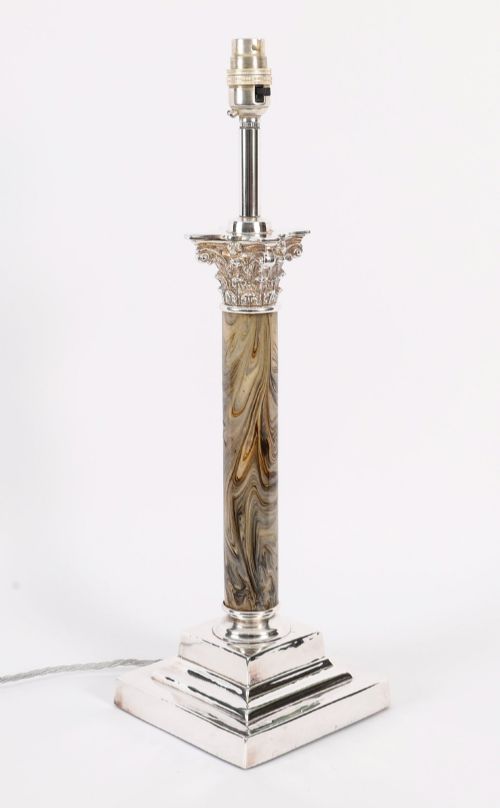
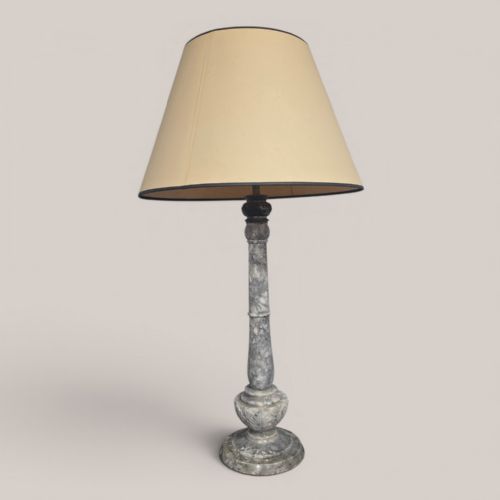
A marble base column lamp takes the architectural form of a classical column and adapts it for interior lighting. These pieces integrate weighty stone plinths with vertical shafts fashioned in metal, glass, or stone.
The selections encountered here span the nineteenth and early twentieth centuries, drawing heavily upon French Empire, Victorian Classical Revival, and Neoclassical design vocabularies. Alongside standard table lamps, the inventory includes hybrid occasional tables and converted candlesticks that utilise the same architectural vocabulary.
Makers and designers from these past periods favoured robust materials, resulting in substantial table lighting that anchors a room. The structural format relies on a secure stone footing to balance the height of the column above.
How they were made
Craftsmen built these lamps using heavy base stones such as grey marble, polished marble, and onyx to provide a stable foundation. These stone bases were frequently turned, shaped, and paired with cast metal elements.
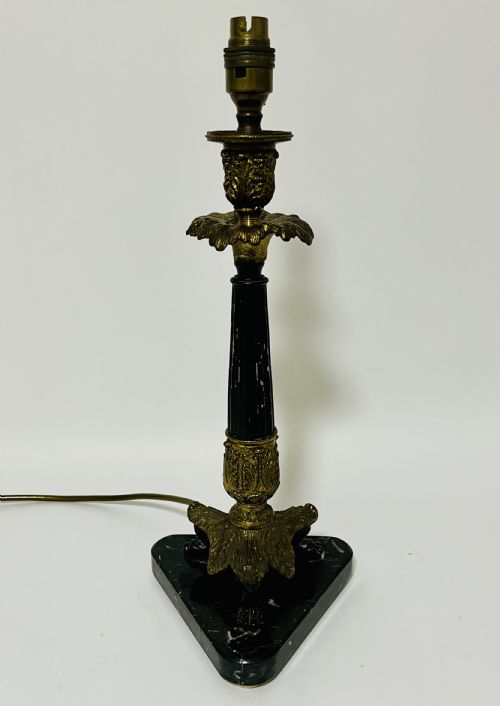
Upper columns and decorative mounts are typically executed in brass, ormolu, gilt bronze, or silver plate, often featuring reeded shafts reminiscent of ancient Greek and Roman architecture. Certain examples incorporate patinated bronze and black toleware to create stark contrasts against the polished stone and metal gilding.
At least one occasional table doubles as a lamp, proving that nineteenth-century makers firmly believed furniture should multitask.
What varies in quality
Quality rests in the precision of the casting work and the depth of the stone polishing. Finer examples display crisp detailing in the brass or ormolu mounts, where acanthus leaves and classical capitals remain sharp and well-defined.
The choice of stone heavily influences the character of the piece, with richly figured marble and translucent onyx marking the upper tier of production. Superior construction is evident in the secure union between the heavy stone base and the metal column it supports.
The Marble Base Column Lamp Glossary
- Ormolu
- Gilt bronze produced by applying a mercury and gold amalgam to a bronze object and heating it to drive off the mercury. This technique creates a durable, rich golden surface finish found on many nineteenth-century mounts.
- Corinthian column
- A classical architectural order characterised by slender fluted columns and ornate capitals decorated with acanthus leaves. Lamps utilising this form mimic ancient temples.
- Toleware
- Painted or lacquered metalware, frequently used for shades or cylindrical bodies in nineteenth-century lighting. It provides a smooth, durable dark surface that contrasts with bright metal mounts.
- Guéridon
- A small French table, often round and supported by a single central column or pedestal. Several listed forms combine this furniture type with lighting functions.
- Reeded
- A decorative moulding consisting of parallel convex strips resembling bundled reeds. This surface texture is frequently carved into stone or cast into metal columns.
Marble Base Column Lamp: Frequently Asked Questions
How do I date a marble column lamp?
Dating relies on examining the manufacturing techniques of the metal components, the style of the electrical wiring if original, and the specific characteristics of the marble or onyx base. Victorian and nineteenth-century pieces often display hand-chased brass work and heavy patination.
Later twentieth-century reproductions or adaptations generally feature machine-standardised fittings and lighter stone bases. Comparing the neoclassical motifs to known periods like the French Empire or Art Deco helps narrow the timeframe.
Were these always electric lamps?
Many examples from the nineteenth century began life as oil lamps or candlesticks before being converted to electricity at a later date. Metal collars, burners, and reservoirs often bear the marks of these earlier fuel systems.
Converted candlesticks maintain their original structural integrity while accommodating modern wiring through central channels. This adaptation is a standard part of their history and does not diminish their decorative utility.
How heavy are these lamps?
The combination of solid stone bases and cast metal columns creates a notably heavy object designed to remain stable on side tables and desks. The mass is concentrated at the bottom to prevent tipping.
When lifting or moving the lamp, support the stone base directly rather than relying on the upper column. This weight ensures the piece stays firmly in place once positioned.
How do I care for the marble and metal?
Dust the marble and metal components regularly with a soft, dry cloth to prevent the accumulation of grime in carved recesses. Avoid harsh chemical cleaners that can strip patination from brass or etch polished stone surfaces.
For gilt or ormolu parts, gentle wiping preserves the historical finish without abrading the thin gold layer. Natural stone benefits from occasional wiping with a damp cloth followed by immediate drying.