



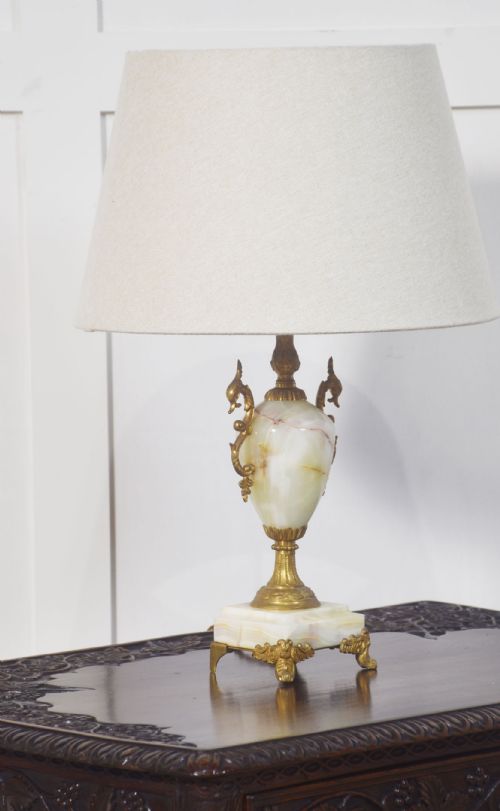


Marble and Metal Lamp
These marble and metal lamp pieces bring together substantial stone bases and gleaming cast mounts to light a room with genuine period character.
Marble and Metal Lamp
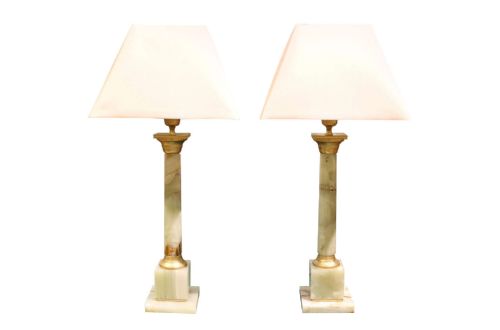
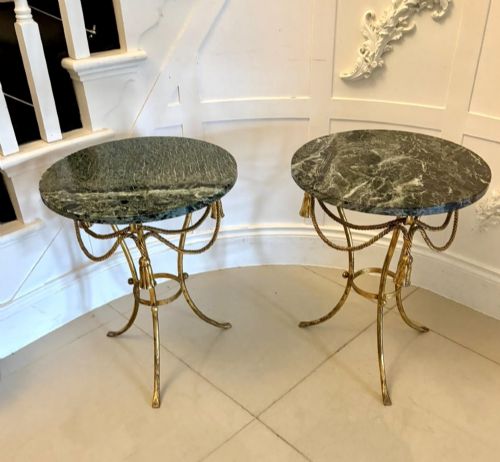
A marble and metal lamp combines heavy stone foundations with cast or spun metal components, creating a sturdy and decorative lighting fixture. The selection on this page leans heavily towards French design, with table lamps and pairs of side lamp tables incorporating both light sources and surfaces.
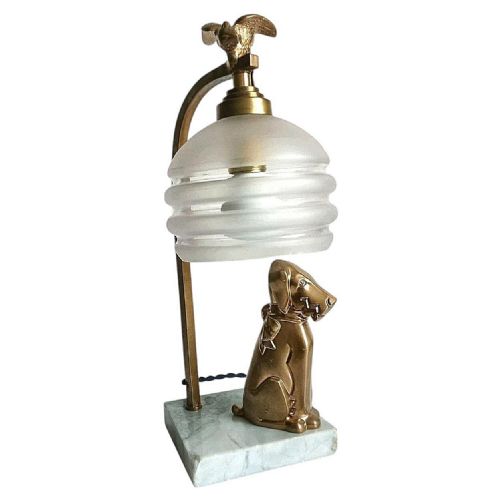
Makers utilised various periods from the Victorian era through the Edwardian years and into the 1920s and 1930s. You will encounter styles ranging from French Empire and Neoclassical revival to Art Deco figural pieces featuring animals or human figures.
The objects serve as functional illumination whilst functioning equally as decorative focal points on sideboards, desks and occasional tables. Forms include standard lamps, urn lamps and novelty table lights set upon veined marble or onyx bases.
How they were made
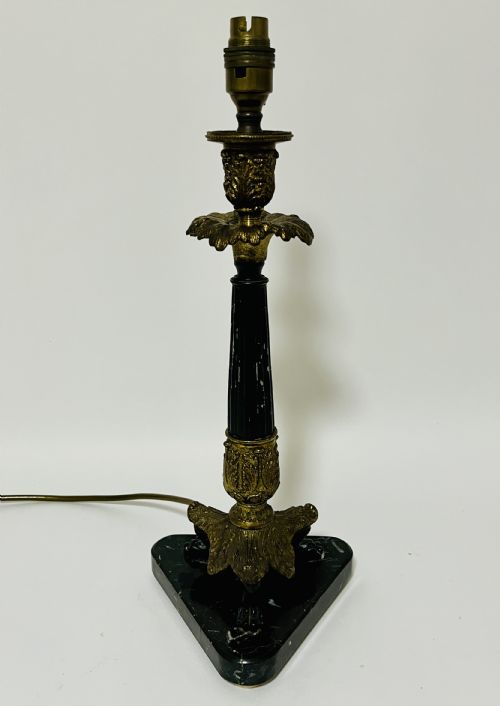
Construction relies upon the pairing of natural stone such as marble or onyx with cast metals including brass, bronze, spelter and gilt metal. Metal mounts, paw feet and decorative collars are secured to the stone bases, occasionally incorporating glass shades or fabric elements.
Foundries employed casting techniques to shape intricate metal figural elements, handles and classical ornamentation, finishing them with gilt, patination or ormolu. Stonemasons cut and polished the marble and onyx blocks to provide stable, heavy platforms for the metalwork.
Marble and Metal Lamp Retail Price Guide 2026
Typical asking prices for marble and metal lamp among the pieces listed under this phrase on Sellingantiques today, from the lower quarter to the upper quarter. They describe what is for sale here now, not the wider market.
Listings feature marble paired with brass, gilt metal, spelter and gilt bronze across table lamps, floor lamps and side tables.
What varies in quality
Quality reveals itself in the crispness of the metal casting and the depth of the chasing on bronze, brass and gilt metal components. Finer examples display deliberate attention to detail in figural modelling, such as animal fur or classical drapery.
The selection of the marble or onyx base affects the overall presence of the piece, with richer veining and careful polishing distinguishing superior examples. The integration between the heavy stone and the metal mounts demonstrates the maker's skill in construction.
P Sega
The Marble and Metal Lamp Glossary
- Ormolu
- A method of applying finely ground, high-carat gold to a bronze object using a mercury amalgam. This technique produces a rich golden finish seen on classical urn lamps and revival pieces.
- Spelter
- An alloy of zinc and lead often used as a cost-effective alternative to bronze. It accepts patination and gilding well, appearing frequently in figural table lamps from the early twentieth century.
- Onyx
- A banded variety of chalcedony quartz frequently utilised for lamp bases and side table structures. Its translucent quality allows light to catch the natural striations within the stone.
- Toleware
- Tin-plated steel painted and baked with a durable lacquer. It appears in the metal components of certain Empire style table lamps to provide a dark contrasting finish.
- Verde marble
- A dark green ornamental stone characterised by lighter veining, frequently employed in Italian and French side lamp tables.
Marble and Metal Lamp: Frequently Asked Questions
What periods do these lamps come from?
The pieces span the Victorian era, the Edwardian period, and the 1920s and 1930s. Art Deco and Neoclassical styles are particularly well represented.
Craftsmen during these decades utilised traditional casting and stone-working methods to build durable lighting fixtures.
How do I identify an Art Deco lamp?
Art Deco examples often feature stylized figures, such as dogs or human subjects, paired with geometric marble bases. The designs reflect the modern aesthetic of the 1930s.
These pieces typically emphasise streamlined shapes and dynamic poses compared to earlier classical styles.
Where should I place a lamp table?
Lamp tables combine a lighting source with a functional surface, making them suitable for placement beside seating areas. They provide both illumination and a small platform for everyday items.
Their substantial marble and metal construction ensures they remain stable in active rooms.
What metals were used in these lamps?
Makers employed brass, bronze, gilt metal, spelter and patinated metal across the various pieces. These metals were often cast into ornate mounts, paw feet or figural subjects.
Choice of metal usually aligns with the period, from Victorian bronze urns to 1930s figural spelter castings.