

Marble and Iron Table
A marble and iron table brings solid stone and forged metal together for utility and poise, turning industrial strength into a domestic centrepiece.
Marble and Iron Table
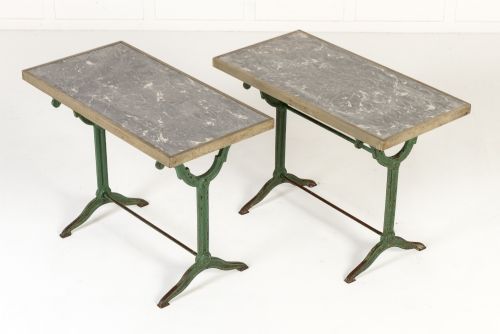
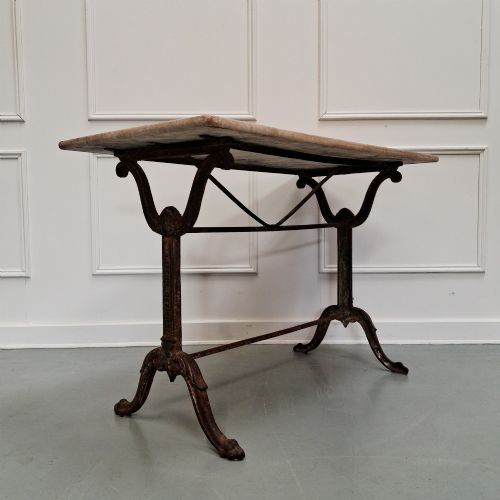
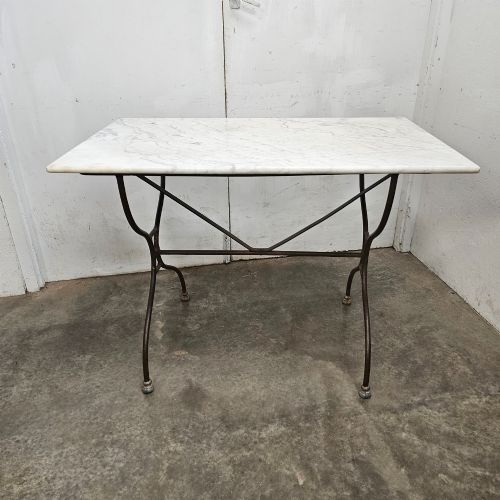
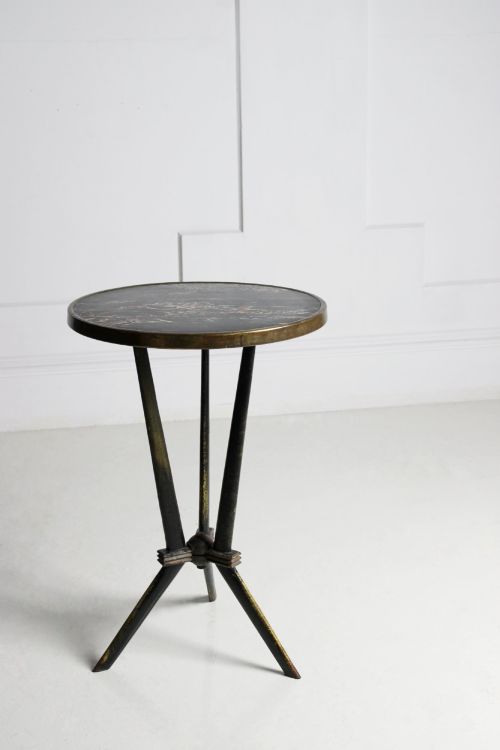
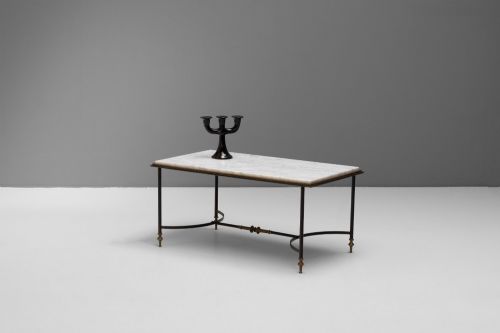
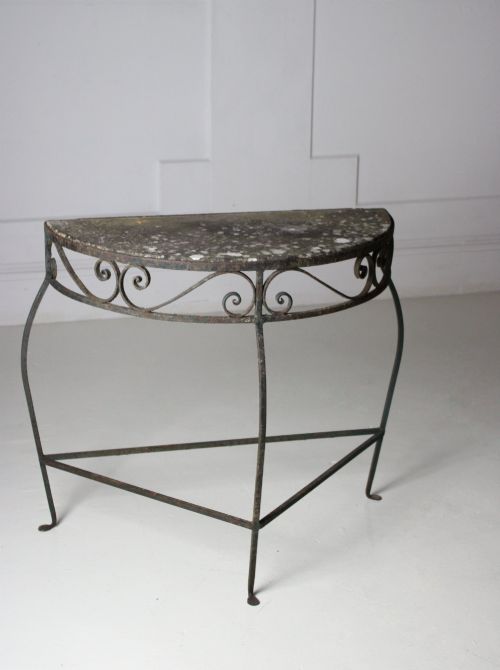
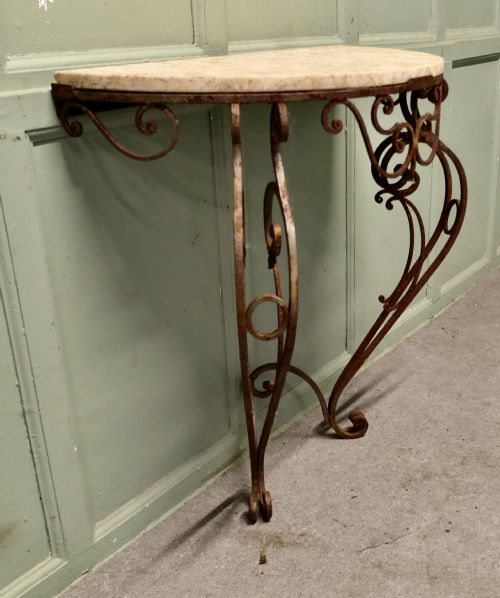
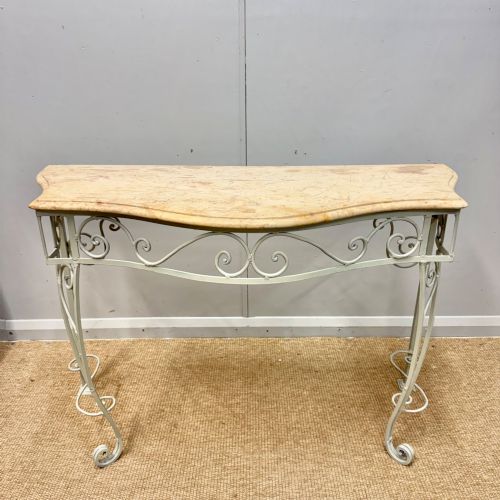
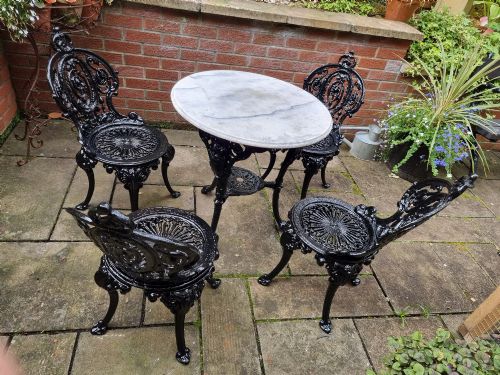
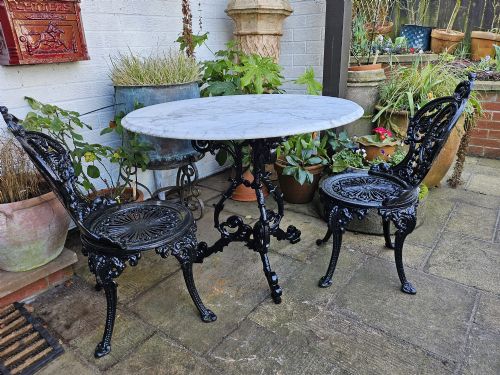
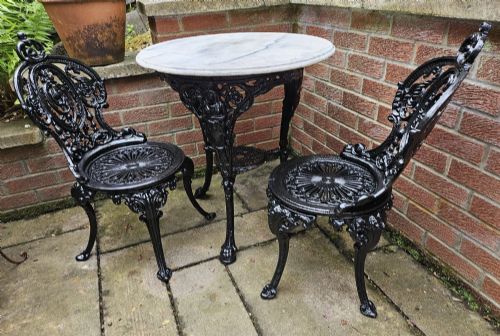
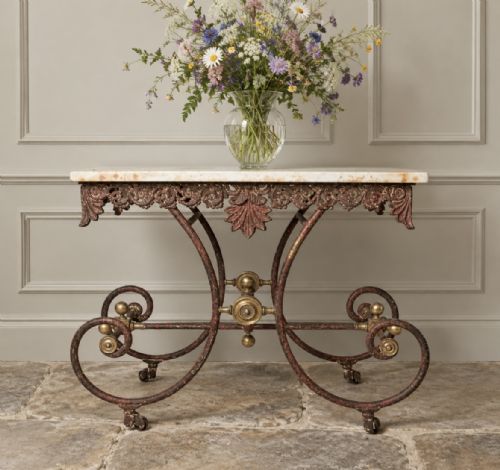
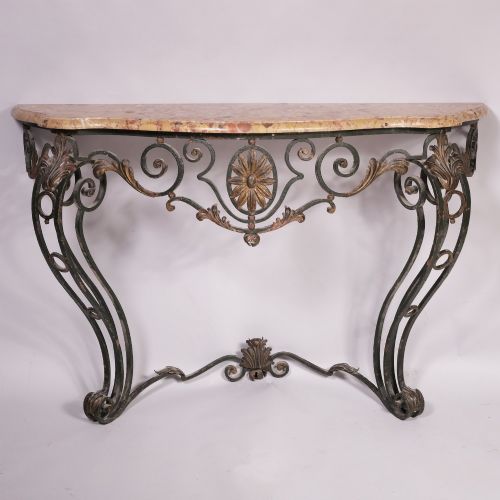
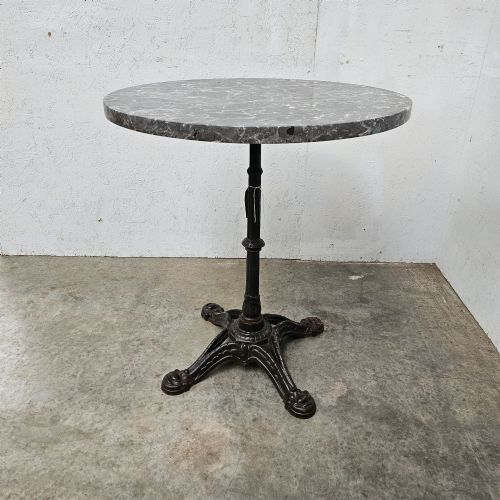
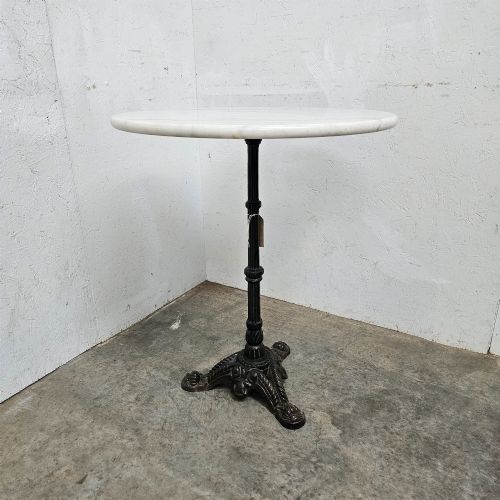
When you search for a marble and iron table, you encounter a robust mix of stone and metal designed for sustained domestic and commercial use. The pieces on this page span console tables, bistro tables, coffee tables, and garden sets.
French bistro and cafe tables dominate the selection, alongside Victorian and Edwardian consoles, garden tables, and patisserie or butchers tables. These forms bridge the gap between heavy workshop utility and refined interior decor.
Origins stretch from the 19th century through the 1920s and 1930s, showing styles from French Provincial and French Industrial to Neoclassical. The typical piece pairs a cool stone top with a dark metal base.
How they were made
Makers utilised cast iron and wrought iron for the structural bases, often incorporating brass or gold leaf details for decorative accent. Cast iron allowed for ornate, moulded legs and stands, whilst wrought iron provided hand-forged linearity.
Tops feature white marble, grey marble, green marble, black marble, or specimen marble, cut flat to provide a resilient surface. These stone slabs rest securely upon heavy metal frames designed to counteract the weight above.
Listings feature items from the 19th century, Victorian and Edwardian eras, through to the 1920s and 1930s.
What varies in quality
The sophistication of the ironwork sets finer examples apart from simpler utility items, distinguishing moulded decorative bases from plain structural supports. Pierced cast iron and carefully hammered wrought iron demonstrate superior craftsmanship.
The choice and figuring of the marble top determines visual impact, ranging from plain white slabs to complex green, black, or multi-coloured specimen marble. Originality of the stone and its snug fit to the metal frame define the integrity of the piece.
The Marble and Iron Table Glossary
- Console table
- A table designed to stand against a wall, frequently featuring a narrow marble top supported by an elaborate iron base.
- Bistro table
- A small cafe table with a round marble top and a central iron pedestal or three-legged iron base.
- Patisserie table
- A heavy-topped work table utilised by French bakers and butchers, combining durable iron with thick marble.
- Specimen marble
- A decorative surface composed of various coloured marbles arranged in geometric or mosaic patterns.
- Wrought iron
- Iron that has been heated and hammered into shape by hand, resulting in a fibrous texture and distinct forged lines.
Marble and Iron Table: Frequently Asked Questions
Where do marble and iron tables work best?
These tables find a natural home in kitchens, hallways, conservatories, and gardens where durable surfaces are an advantage. Their contrasting textures suit both rustic and formal interior schemes.
Console versions fit narrow spaces like hallways, whilst round bistro variants suit dining corners and compact rooms.
Are these tables heavy to move?
The combination of dense stone and solid metal creates substantial weight, particularly in larger console and garden formats. The marble top is often separate from the iron base to ease transport.
Care is required when lifting or shifting the pieces to protect both the floor and the stone edges.
How do I care for the marble top?
Marble is a porous natural stone that reacts to acids, oils, and moisture if left sitting on the surface. Regular wiping with a damp cloth maintains the finish without harsh chemicals.
Using coasters and placestoves prevents staining and etching on antique marble surfaces.
How do I distinguish 19th century pieces from later ones?
Earlier 19th-century examples often display hand-forged wrought iron work and heavier patisserie frames with deep stone slabs. Pieces from the 1920s and 1930s lean towards lighter bistro formats and streamlined cafe styling.
Victorian and Edwardian pieces frequently incorporate decorative cast iron mouldings and brass accents.