



Marble and Gilt Lamps
Marble and gilt lamps bring heavy stone and bright metal together to light a room with nineteenth-century French elegance.
Marble and Gilt Lamps
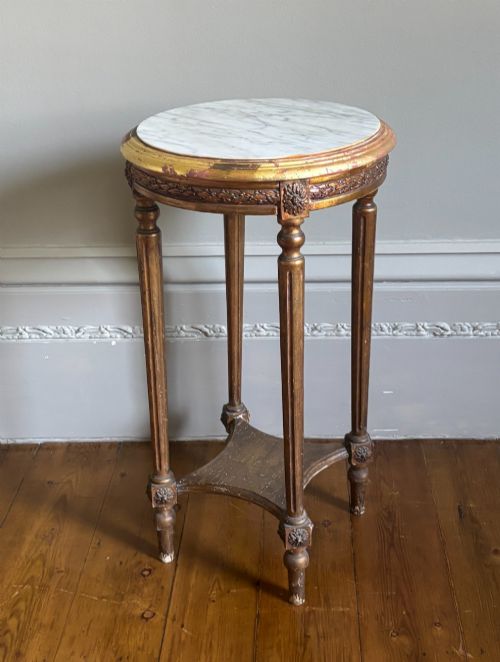
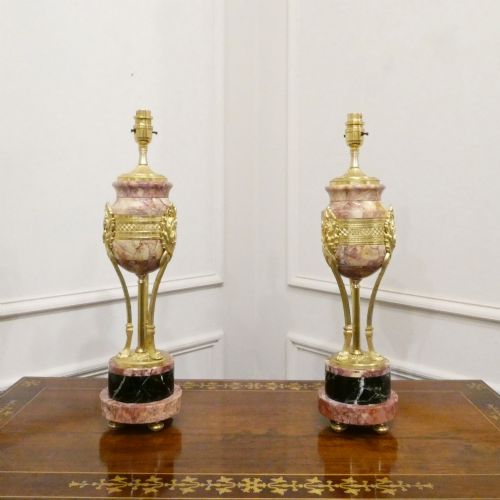
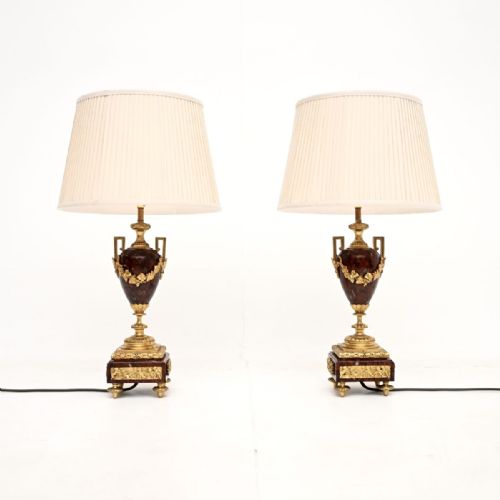
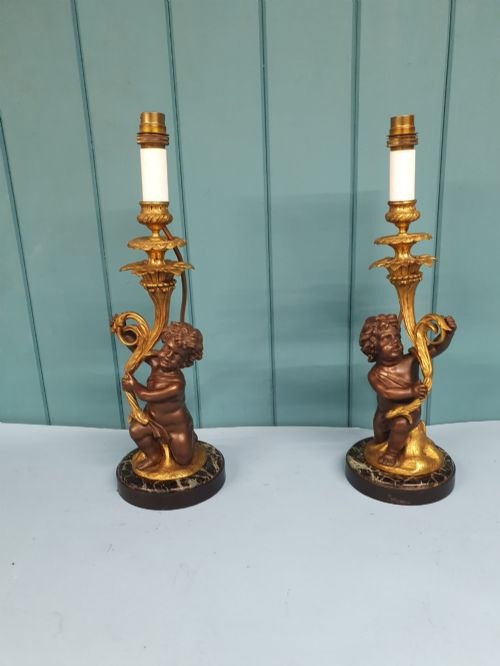
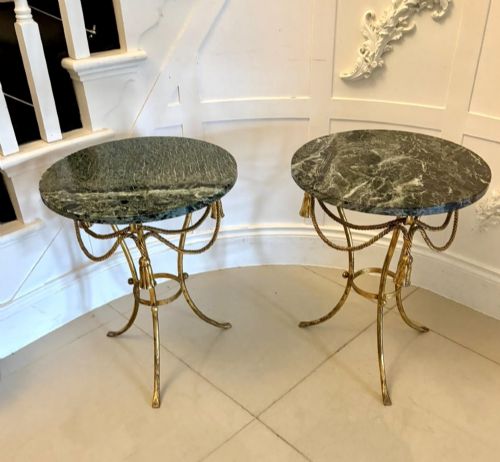
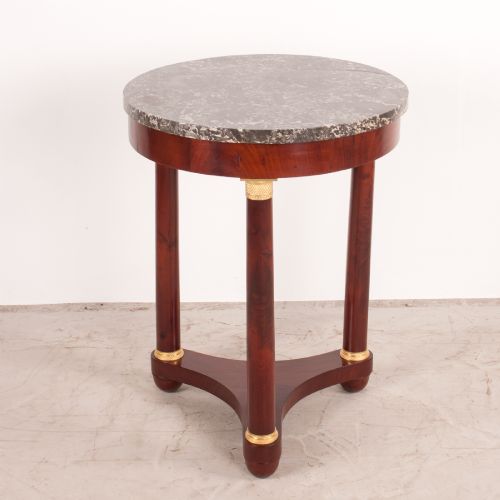
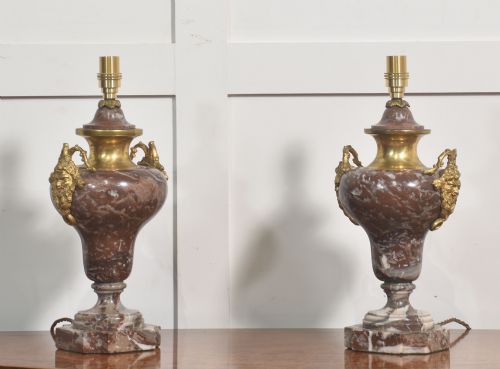
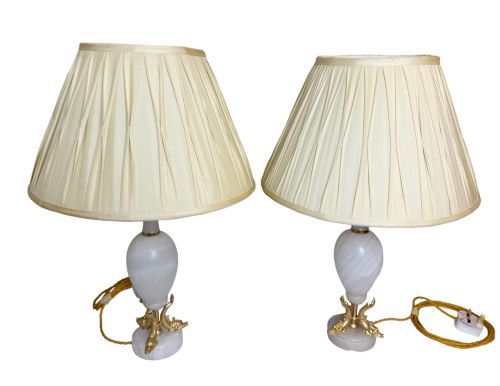
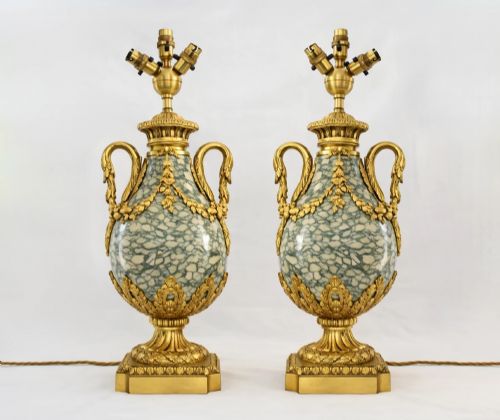
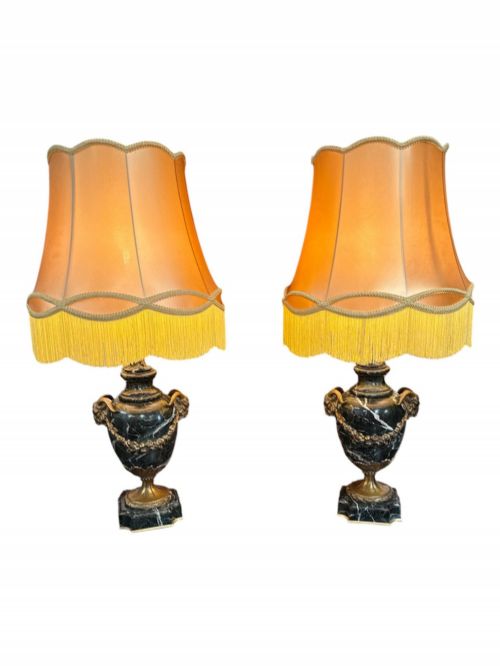
Marble and gilt lamps appear most frequently as matched pairs fashioned in nineteenth-century France during the Victorian era and the decades following. Makers adapted classical forms, turning decorative urns, cassolettes, and vases into towering table lights mounted on heavy stone bases. Alongside these dedicated lamps, the listings include occasional and side tables topped with marble and trimmed in gilt brass, designed specifically to hold lamps and decorative objects.
The decorative vocabulary draws heavily on French Neoclassical, Louis XVI, and Empire styles, translating architectural motifs into domestic lighting. Urn-shaped bodies predominate, often flanked by handles, cherubs, or bronze mounts that echo eighteenth-century palace furnishings. While many pieces date from the late nineteenth century, variants stretch from the eighteen-sixties into the nineteen-twenties, incorporating onyx alongside traditional white and rouge marble.
Materials and Construction
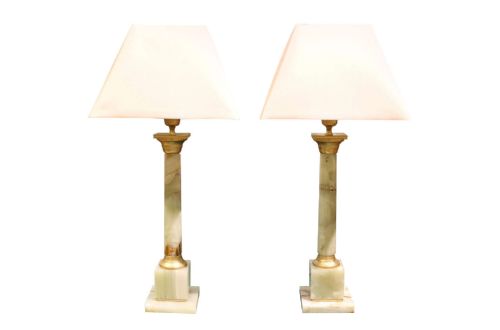
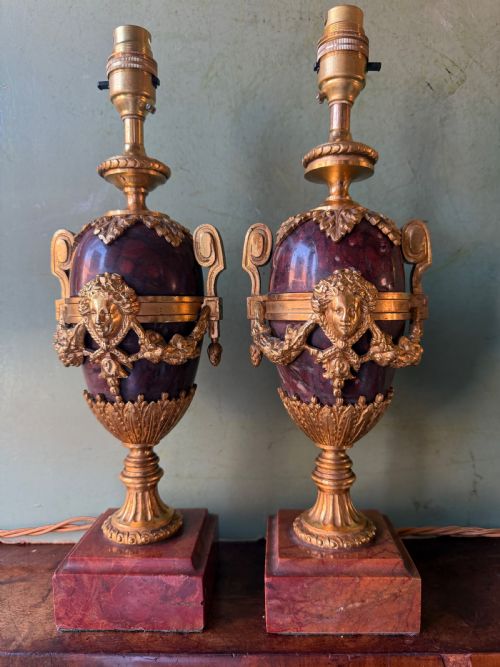
The fabrication relies on a partnership between heavy carved stone and cast metal. Bases and bodies utilise white, rouge, or verde marble and translucent onyx, which provide both structural stability and visual weight. Artisans mounted these stone elements on cast brass, gilt bronze, or ormolu mounts, securing the components with threaded rods and internal metal fixings.
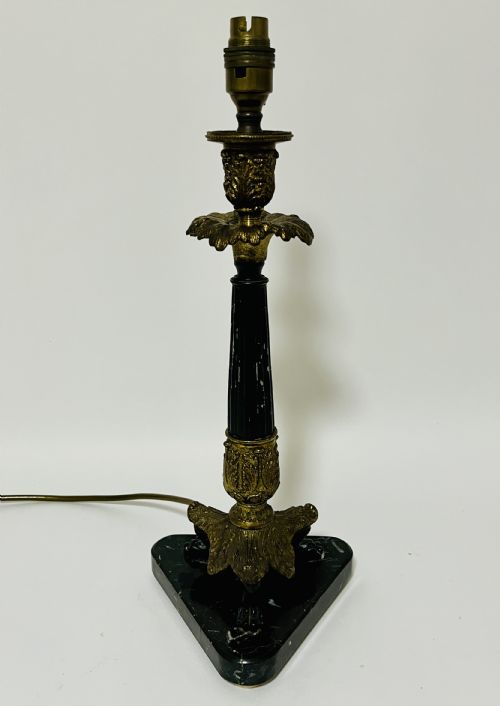
Metal components receive applied gilding through fire-gilding or ormolu techniques, creating a durable golden surface that contrasts sharply with the polished stone. Many lamps began life as decorative cassolettes, urns, or candlesticks before conversion to electrical use in later periods. Fabric shades complete the construction, sitting atop standard or custom-made brass fittings.
Marble and Gilt Lamps Retail Price Guide 2026
Typical asking prices for marble and gilt lamps among the pieces listed under this phrase on Sellingantiques today, from the lower quarter to the upper quarter. They describe what is for sale here now, not the wider market.
Bronze cherubs frequently perch on these columns, keeping eternal watch over your bedside table.
Qualities of Execution
The standard of the casting and the crispness of the chasing separate ordinary pieces from exceptional ones. Finer items exhibit sharply rendered bronze mounts with deep relief work on foliage, drapery, and figural details like cherubs, whereas lesser examples show softer, blurred edges from worn moulds.
The selection and turning of the marble itself dictate the visual impact of the piece. Superior lamps feature finely grained, uniform stone free from heavy natural fissures, paired with thick, heavy-gauge ormolu rather than thin gilt metal plating.
The Marble and Gilt Lamps Glossary
- Cassolette
- A decorative vase or urn with a reversible lid that functions either as a closed vessel or an incense burner. In lighting, these bodies form the central column of the lamp.
- Ormolu
- Finely ground high-carat gold mercury-gilded onto a bronze base. This technique produces a warm, durable finish characteristic of French decorative arts.
- Gueridon
- A small round table supported by a central column or legs, frequently topped with marble. These pieces often serve as stands for lamps and decorative urns.
- Neoclassical
- A style inspired by the classical architecture and art of ancient Greece and Rome. It emphasises symmetry, straight lines, and classical motifs like urns and acanthus leaves.
- Onyx
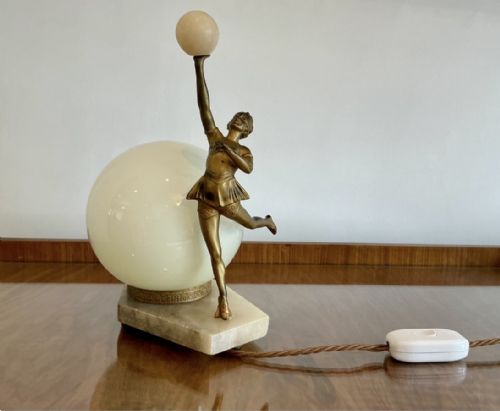
- A banded variety of chalcedony quartz often used in place of marble. It provides a translucent quality that catches and diffuses light.
Marble and Gilt Lamps: Frequently Asked Questions
How do I date a marble and gilt lamp?
Dating relies on examining the casting quality of the metal mounts, the style of the screws and fixings, and the type of marble used. Nineteenth-century pieces typically feature hand-chased bronze or ormolu and heavy turned stone bases.
Later adaptations from the early twentieth century often employ lighter gilt metal and mass-produced fixings. Comparing the decorative motifs to established French revival styles helps narrow the period further.
Were these lamps originally electric?
Most nineteenth-century marble and gilt lamps began as oil lamps, gas fixtures, or decorative cassolettes and urns. They were converted to electricity during the twentieth century to suit modern homes.
This conversion process usually involved running a cord through the central channel of the stone body and adding a standard brass lamp holder.
How should I clean the gilt metal?
Gilt bronze and ormolu require gentle dusting with a soft, dry cloth to prevent accumulation of dirt in the crevices. Avoid using abrasive metal polishes, as these will strip away the thin layer of gold leaf or mercury gilding.
If the metal requires deeper cleaning, a damp cloth with mild soap followed by immediate drying is the safest method.
What is the difference between ormolu and gilt brass?
Ormolu specifically refers to a mercury-gilding technique applied to a bronze base, producing a rich and enduring golden lustre. Gilt brass uses a different base metal and often employs modern plating methods rather than historic fire-gilding.
Ormolu mounts generally appear on higher-quality nineteenth-century French pieces and exhibit sharper hand-finished details.