




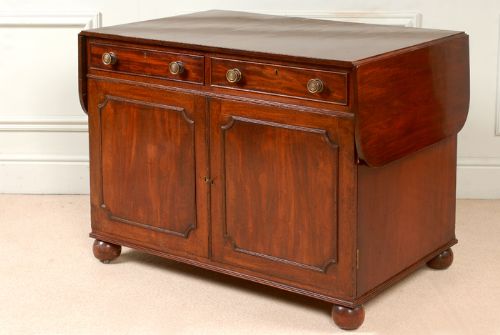


Map Chest Cabinet
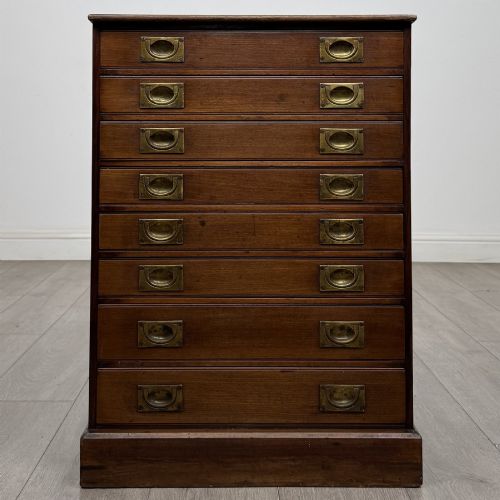
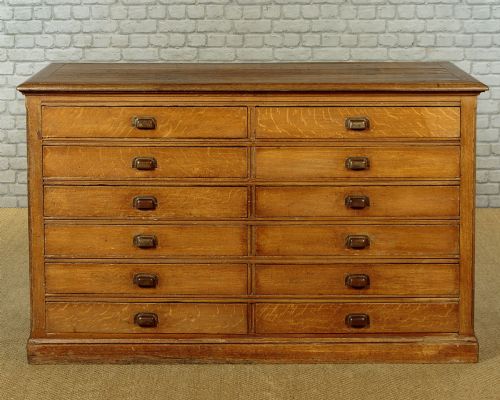
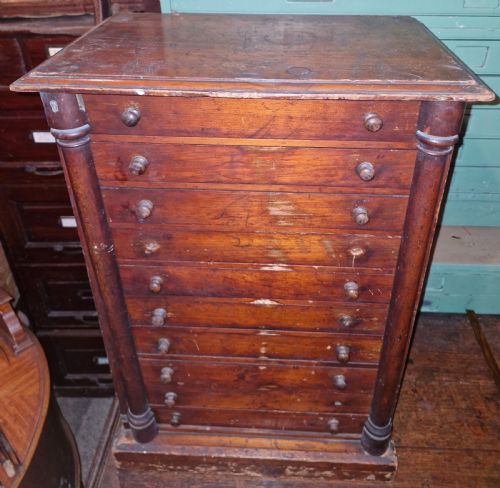
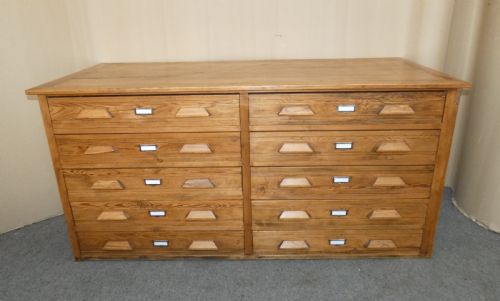
These map chest cabinet pieces are substantial storage furniture built with multiple shallow drawers, designed to hold large documents and specimens securely.
Map Chest Cabinet
A map chest cabinet combines the wide, shallow drawer format of a traditional plan chest with the enclosed cabinetry of a specialised storage unit. Buyers seeking a map chest cabinet often require robust organisation for oversized papers, geological specimens, or collections housed in domestic or studio settings.
The pieces appearing on this page span several distinct periods, running from late Georgian examples through Victorian industrial forms up to mid-century utility pieces. Common formats include tall banks of twelve to forty drawers, lift-over folio tables, and floor-standing cabinets constructed in oak, mahogany, and pine.
Materials and construction methods
Makers built these cabinets primarily using dense hardwoods such as mahogany, walnut, and satinwood, alongside durable domestic softwoods including pine and oak. Structural integrity was paramount to support heavy loads of paper or specimens across numerous wide drawers.
Map Chest Cabinet Retail Price Guide 2026
Typical asking prices for map chest cabinet among the pieces listed under this phrase on Sellingantiques today, from the lower quarter to the upper quarter. They describe what is for sale here now, not the wider market.
Listings feature woods spanning mahogany, oak, pine, satinwood, and fruitwood, alongside specialised brass and boxwood inlay details.
Distinctions in quality
Quality in these cabinets depends on the choice of primary timber and the precision of the drawer runners. Finer examples utilise solid mahogany, walnut, or figured satinwood with secondary softwood linings, whereas utilitarian pieces rely entirely on pitch pine or standard oak.
The scale and complexity of the internal drawer configuration also dictate standing. A forty-drawer cabinet with bespoke handles and secondary locking mechanisms represents a much higher tier of workshop production than a simple twelve-drawer pine storage chest.
Brady of Edmonton·Standish
The Map Chest Cabinet Glossary
- Plan Chest
- A piece of furniture comprising multiple wide, shallow drawers specifically designed for storing architectural drawings and maps flat. These form the architectural foundation for many multi-drawer storage cabinets.
- Folio Cabinet
- A tall cabinet or table designed to store large artist folios, prints, and unbound books safely. They often feature large vertical compartments or wide, low-profile horizontal drawers.
- Specimen Cabinet
- A specialised multi-drawer cabinet built to house natural history collections such as insects, minerals, or fossils. The drawers are usually shallow and frequently dust-sealed.
- Bank of Drawers
- A dense vertical arrangement of numerous small or medium drawers within a single housing unit. This configuration maximises storage capacity for small items or sorted documents.
- Dovetail
- A traditional wood joint formed by interlocking wedge-shaped fingers, prized for its tensile strength. It prevents the corners of drawers from pulling apart under heavy daily use.
Map Chest Cabinet: Frequently Asked Questions
What were map chest cabinets used for originally?
These cabinets served cartographers, architects, and artists who needed to keep large paper sheets flat, clean, and organised. Naturalists also utilised them to store delicate scientific specimens.
Over time, offices and private collectors adopted them for filing documents, prints, and small objects that required systematic sorting.
How do I care for a wooden plan chest?
Keep the wood conditioned using a mild, traditional beeswax polish and avoid placing the cabinet near direct heat sources or strong sunlight. Excessive temperature changes can cause the wide timber panels to warp.
Ensure drawers are not overloaded with excessive weight, which can cause the internal runners to wear down prematurely.
How do I distinguish Victorian from Georgian examples?
Georgian pieces often feature fine timber choices like figured mahogany with subtle bracket feet or refined moulding profiles. They tend to exhibit hand-cut joinery with precise proportions.
Victorian cabinets frequently showcase industrial utility or heavier proportions, utilising pine, oak, or walnut with robust brass hardware and standardised internal configurations.
Can I use a map chest cabinet in a modern home?
The wide, low profile and shallow drawers make these cabinets exceptionally practical as sideboards, media consoles, or bedroom storage. They fit well into modern interiors by offering substantial concealed storage without dominating floor space.
The large top surface also provides a functional display area for lamps, books, or art.